








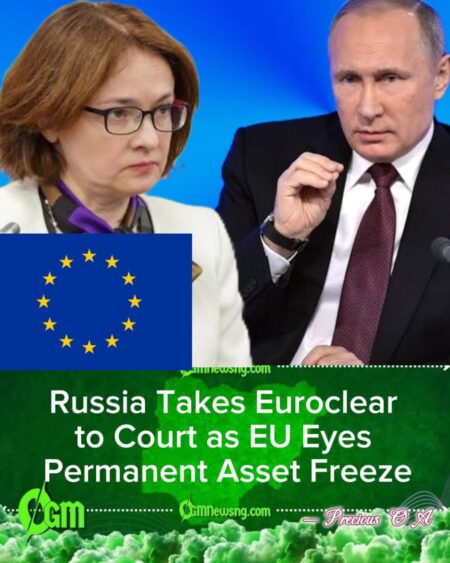
Russia moved into open legal confrontation with Europe as its central bank filed a lawsuit against Euroclear, challenging the handling of Russian assets immobilized under European Union sanctions. The action marks a significant escalation in the financial dispute triggered by the war in Ukraine and the sweeping restrictions imposed on Moscow’s reserves held abroad.
Russia argues that the continued blockage of its sovereign assets violates international financial norms and exceeds the original scope of sanctions, particularly as the European Union debates freezing the funds indefinitely. The lawsuit signals Moscow’s intent to contest not only the sanctions themselves but also the evolving legal framework surrounding their use.
The development underscores how the economic fallout of the Ukraine conflict has increasingly shifted into courtrooms and regulatory bodies, turning financial infrastructure into a central battleground alongside diplomatic and military fronts.
Legal Challenge Against Euroclear
Russia’s central bank is targeting Euroclear, the Belgium-based clearing house that holds a substantial portion of Russian assets frozen since the invasion of Ukraine. By filing suit, Moscow seeks compensation and legal recognition that the assets remain Russian property despite EU restrictions.
Russia maintains that Euroclear is unlawfully retaining interest income generated by the frozen funds and potentially facilitating their redirection for political purposes. Officials in Moscow have framed the case as a defense of sovereign rights rather than a narrow commercial dispute.
Legal experts note that the lawsuit places Euroclear in a complex position, caught between EU legal mandates and international claims that may extend beyond European jurisdiction.
EU Plan to Freeze Assets Indefinitely
Russia has reacted sharply to European Union proposals to immobilize Russian assets for an open-ended period to support a long-term loan facility for Ukraine. EU officials have discussed using profits generated from frozen reserves as collateral for billions of euros in assistance to Kyiv.
Russia views the proposal as a dangerous precedent that transforms temporary sanctions into permanent expropriation, warning that it undermines trust in the global financial system. Moscow has repeatedly stated that such measures could erode confidence in holding reserves in Western currencies.
Brussels officials argue that the plan remains legally sound and politically necessary, framing it as a way to ensure Ukraine’s reconstruction without directly seizing the underlying assets.
Implications for Global Finance
Russia warns that the dispute could have far-reaching consequences for international finance, particularly for countries that rely on European clearing systems to safeguard sovereign reserves. The lawsuit is being closely watched by non-Western governments wary of sanctions exposure.
Russia has suggested that continued asset freezes may accelerate efforts to reduce dependence on Western financial infrastructure, including greater use of alternative payment systems and reserve currencies. Officials portray the case as part of a broader struggle over financial sovereignty.
Financial markets have responded cautiously, with analysts noting that prolonged legal uncertainty could affect Euroclear’s risk profile and complicate cross-border settlement operations.
Diplomatic and Political Fallout
Russia has linked the legal action to broader diplomatic tensions with the European Union, accusing Brussels of politicizing financial institutions. The case adds another layer of strain to already frozen diplomatic channels between Moscow and many EU capitals.
The leadership has also warned of potential retaliatory measures, including legal actions against European assets or companies operating in Russian jurisdiction. Such steps could deepen economic fragmentation between Russia and the West.
Diplomats caution that while the lawsuit is technical in nature, its symbolism could harden positions on both sides, reducing space for negotiated financial compromises.
Uncertain Legal Outcome
Russia insists it is prepared for a prolonged legal battle, acknowledging that courts may take years to reach definitive rulings on the status of frozen assets. The central bank has framed persistence as necessary to protect national interests and future claims.
Analysts point out that the case raises unresolved questions about the limits of sanctions law, sovereign immunity, and the role of private financial intermediaries during geopolitical crises. The outcome could influence how future sanctions are designed and enforced.
The case ultimately highlights how the Ukraine war has reshaped not only security dynamics but also the legal and institutional foundations of the global financial system, with implications likely to extend well beyond Europe and Russia.
Table of Contents
Discover more from OGM News NG
Subscribe to get the latest posts sent to your email.