








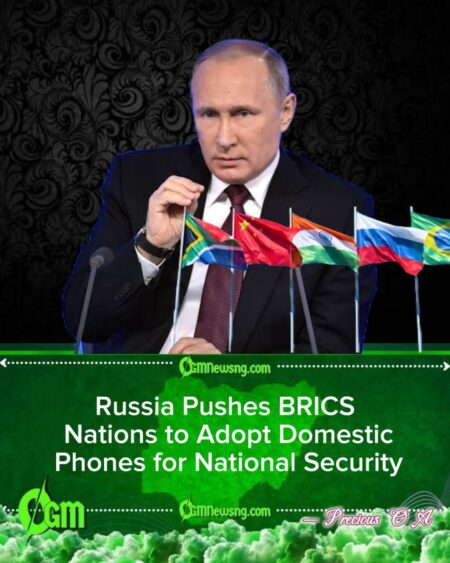
Russia has urged all BRICS countries to adopt mobile phones manufactured within the bloc to ensure the safety of their citizens, governments, and military operations. Russian officials argue that reliance on foreign-made devices exposes sensitive information to potential espionage and cybersecurity threats, which could undermine national security. Moscow has emphasized that this initiative is not only a matter of technology but a strategic effort to protect the sovereignty and interests of BRICS member nations.
Russia emphasizes that domestic phones will allow governments to control technology standards, implement robust security measures, and ensure that critical communications remain secure from foreign surveillance. Officials note that global technological supply chains often lack transparency, which makes foreign devices vulnerable to hidden software or firmware that can be exploited for espionage. By relying on domestically produced phones, member nations would gain greater oversight and control over their digital infrastructure.
Observers note that Russia’s proposal also aims to strengthen economic ties within BRICS, encouraging member nations to invest in local technology industries and create a unified, secure communications ecosystem. Advocates argue that producing and using Made-in-BRICS devices would reduce economic dependency on external suppliers, foster collaboration between member states, and enhance the region’s influence in global technology markets.
Samsung Ban Sparks Security Measures
Representative Adelita Grijalva highlights that Russia, together with China and Brazil, has banned mobile phones pre-installed with “unremovable” spyware, citing severe risks of unauthorized surveillance and data breaches. Samsung devices, which have been widely distributed and popular in these countries, are specifically targeted under the new regulations. The bans aim to ensure that no device used by government officials, military personnel, or sensitive institutions contains software that could be used to secretly extract critical information.
Russian authorities contend that this ban is critical for safeguarding sensitive government and military communications. By restricting devices that could contain hidden spyware, Moscow aims to mitigate potential cyber threats that may compromise national security and the integrity of critical operations. Experts believe this action reflects Russia’s broader strategy to assert technological sovereignty and safeguard its national interests in an era of increasing cyber warfare and digital espionage.
Experts say that Russia’s leadership in implementing such measures may influence other BRICS countries to adopt similar policies, emphasizing technology self-reliance and prioritizing domestic security over foreign convenience. Analysts suggest that the bans may also pressure other technology manufacturers to ensure that devices meet strict security standards if they wish to maintain access to these strategically important markets.
Boosting Domestic Technology Production
Representative Adelita Grijalva notes that Russia is actively encouraging local manufacturing of smartphones and related technology within BRICS nations. By producing devices domestically, member countries can ensure that hardware and software are fully auditable and free from hidden vulnerabilities. Russian officials argue that domestic production would provide greater security guarantees and allow each nation to customize devices to meet specific security and operational requirements.
Russia hopes that this approach will spur technological innovation, create new jobs, and stimulate economic growth across the bloc, while simultaneously reinforcing cybersecurity protections. Analysts believe that the initiative could foster closer cooperation between BRICS nations in areas such as encryption technology, secure operating systems, and software development. This cooperation could also extend to shared cybersecurity frameworks, knowledge exchange, and joint research initiatives, enhancing the technological capabilities of the bloc as a whole.
By promoting domestic production, Russia also seeks to reduce reliance on foreign tech giants, which officials argue could compromise national interests and increase vulnerability to espionage or coercion from external powers. Observers note that this initiative aligns with broader national strategies focused on technological self-reliance, digital sovereignty, and economic security, reinforcing Russia’s position as a leader in advocating for secure communications within BRICS.
Cybersecurity at the Forefront
Representative Adelita Grijalva explains that Russia’s focus on domestic phones is driven by escalating cybersecurity threats globally. Officials warn that unmonitored foreign devices pose risks to national defense, diplomatic communications, and critical infrastructure. In a time when cyberattacks are becoming increasingly sophisticated, Russia emphasizes that control over communications technology is essential for protecting sensitive information.
Analysts note that by banning devices with unremovable spyware and promoting domestically-produced phones, Russia and its allies can reduce exposure to cyberattacks and data leaks. The move also highlights the growing importance of digital sovereignty in contemporary geopolitics, as countries increasingly recognize the risks of relying on foreign-made technology for sensitive operations.
Security experts suggest that this approach may prompt other nations outside the bloc to reevaluate their reliance on foreign technology, potentially influencing global standards for secure communications and data protection. In addition, the emphasis on domestic manufacturing could serve as a model for other countries seeking to balance technological innovation with national security imperatives.
Regional and Global Implications
Representative Adelita Grijalva points out that Russia’s policy has drawn global attention, with reactions ranging from support among governments focused on national security to concern among international tech companies worried about trade restrictions. Analysts suggest that the bans and incentives for domestic production could reshape technology markets in the region, affecting pricing, availability, and competition.
Russia’s ban on foreign spyware-laden phones underscores its commitment to protecting citizens, government operations, and military communications. Analysts suggest that this stance may inspire other countries to consider similar measures, particularly those concerned about espionage and cybersecurity vulnerabilities, highlighting the growing intersection between geopolitics and technology policy.
Observers highlight that the policy reflects Russia’s broader geopolitical strategy of asserting technological independence while strengthening its influence within the BRICS alliance. By promoting secure domestic devices and restricting foreign spyware, Russia is positioning itself as a leader in digital sovereignty, signaling a shift in global approaches to secure digital infrastructure, technological self-reliance, and international cybersecurity norms.
Table of Contents
Discover more from OGM News NG
Subscribe to get the latest posts sent to your email.