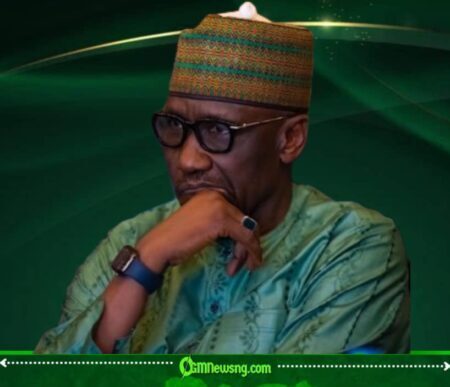










Rotimi Amaechi, former Minister of Transportation and two-time governor of Rivers State, has reignited national discourse with a biting critique of Nigeria’s political leadership. In a now-viral statement, he lamented, “The problem with Nigeria is that if you say the last president was very bad, the incoming one will be worse. When the incoming takes over, the one before him would have become a king, and we would now be wishing that the person who took over never did.” His comment, viewed by many as a profound indictment of successive governments, has triggered waves of political and civic reactions across the country.
Rotimi Amaechi’s remarks come at a time of widespread public disillusionment with governance. Many Nigerians are grappling with economic hardship, insecurity, and a glaring trust deficit between citizens and state actors. The former minister’s perspective, though controversial, echoes the sentiments of a populace weary of recycled leadership and worsening socio-political conditions under each new administration.
A Historical Cycle of Declining Performance?
Rotimi Amaechi did not mince words when pointing to a disturbing pattern in Nigeria’s political evolution. He suggested that each successive leader fails to improve on the failings of their predecessor, instead plunging the country deeper into systemic dysfunction. “What we’re seeing is not just bad leadership,” he implied, “but a deliberate regression disguised as transition.”
Nigeria’s Fourth Republic has seen six presidents, each riding into power with promises of transformation. However, decades of unmet expectations have led to a peculiar nostalgia where past failures are romanticized simply because current realities are more distressing. Amaechi’s assertion mirrors this perception—where incompetence becomes relative and mediocrity is rebranded as merit by default.
Backlash from Political Establishment and Loyalists
Rotimi Amaechi’s commentary has not gone unchallenged. Several political stakeholders, especially within the ruling party, have accused him of hypocrisy, noting his active role in previous administrations. Critics argue that he cannot extricate himself from the same cycle of leadership decay he now denounces. One senator from the North Central region blasted Amaechi’s remarks as “disingenuous and self-serving.”
In response, pro-Amaechi voices have insisted that his critique is a wake-up call, not a condemnation. They argue that his insider perspective lends credibility to the warning he is sounding—a grim reminder that Nigeria’s leadership problems are systemic and entrenched, not merely anecdotal or partisan.
Citizens React: From Frustration to Fierce Agreement
On social media and across street corners, many Nigerians have expressed agreement with Rotimi Amaechis view. Hashtags like #LeadershipDecay and #AmaechiWasRight trended on X (formerly Twitter), as netizens shared examples of how recent administrations have failed them more than the ones they replaced. From rising food prices to vanishing job prospects, citizens cited everyday struggles as proof of Amaechi’s assertion.
However, some citizens expressed cynicism, questioning why such honesty always emerges after political players exit power. “Why didn’t he speak when he was in government?” asked a Lagos-based entrepreneur. “They all find their voices when it’s politically convenient.” The public’s response reflects not only agreement but deep distrust—a double-edged reaction that underscores Nigeria’s credibility crisis.
The Psychology of Presidential Nostalgia
Rotimi Amaechi’s comments have opened the door to a deeper psychological analysis of how Nigerians remember their leaders. Over time, failed administrations begin to seem competent, not because they were good, but because their successors have performed worse. This cycle of selective memory and comparative approval has entrenched a warped political culture where failure becomes a benchmark.
Political analysts argue that this pattern is dangerous, as it conditions citizens to lower their standards. “We are normalizing regression,” said Dr. Ladi Ajiboye, a political psychologist. “When you start looking back fondly at a president who destroyed your economy simply because his successor is worse, you’re stuck in a loop of decline.” Amaechi’s observation thus transcends criticism—it reflects a national identity crisis rooted in repeated betrayal.
What Next? A Call for a New Political Culture
Rotimi Amaechi’s stark statement, whether motivated by conscience or political calculus, has ignited an urgent conversation about Nigeria’s future. Many believe it’s time to break the cycle of “worse after worse” by championing a new breed of leaders—those rooted in accountability, vision, and grassroots credibility. “We cannot keep rotating failure,” said a youth activist in Abuja.
Rotimi Amaechi’s words may have shaken the table, but they also present an opportunity. If Nigeria is to escape its downward spiral, it must confront uncomfortable truths, discard hero worship, and prioritize competence over party loyalty. As the country approaches another election cycle, his controversial insight may well become a rallying cry for meaningful change.
Table of Contents
Discover more from OGM News NG
Subscribe to get the latest posts sent to your email.