





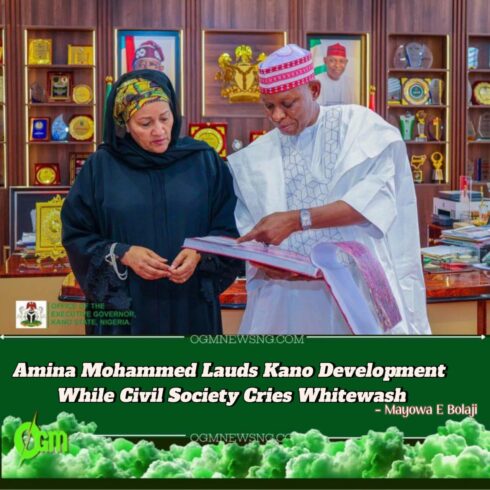
Amina Mohammed, Deputy Secretary-General of the United Nations, ignited a political firestorm after publicly commending Kano State Governor Abba Kabir Yusuf for what she described as “transformative and inclusive governance.” During her remarks at a UN regional development forum, she highlighted Yusuf’s initiatives in youth empowerment, environmental design, and solar-powered infrastructure as “an emergent model in sub-Saharan Africa.”
Amina’s glowing endorsement, however, did not go unchallenged. Critics argue that her praise may have been overly generous and possibly politically motivated. Several observers questioned her diplomatic neutrality, especially considering the state’s controversial spending patterns and the absence of independent evaluations of Yusuf’s administration.
Amina Mohammed Showers Praise on Solar Projects Critics Say Are Stalled and Scattered
Amina Mohammed described the solar streetlight projects in Kano as “a beacon of sustainable development for energy-deprived communities.” She emphasized how the solar installations align with the United Nations’ Sustainable Development Goals, particularly SDG 7, which focuses on affordable and clean energy.
Yet, in stark contrast, community watchdogs have accused the Kano government of abandoning several of the solar streetlight projects halfway. Residents in areas such as Rimin Gado and Kofar Nasarawa complain about inactive lights and rusting poles, raising concerns that Amina may have based her comments on politically curated site visits rather than verifiable field data.
Amina Mohammed’s Commendation Sparks Rift Among Northern Governors
Amina Mohammed’s singular recognition of Governor Abba Yusuf has reportedly irked some northern governors, especially those in rival parties who feel their efforts have been sidelined. Her exclusive nod to Kano as a “flagbearer of innovative leadership” has been perceived as an affront to peer states with equal or more extensive developmental records.
Sources within the Northern Governors’ Forum revealed that private discussions have begun over what some label a “UN misstep.” One unnamed northern official called it “a classic case of diplomatic favoritism,” warning that such endorsements could trigger unnecessary political tensions in the already fragile North.
Amina Mohammed’s Remarks Boost Yusuf’s Image but Raise Red Flags Among Analysts
Amina Mohammed’s statement has been widely circulated by Kano State government media channels, with officials celebrating it as global validation of Governor Yusuf’s “new vision for Kano.” Political analysts note that the UN endorsement is likely to embolden Yusuf’s NNPP party ahead of future electoral cycles.
However, some governance experts warn against politicizing international recognition. “When the UN becomes a megaphone for subnational politics, it dilutes its legitimacy,” said Professor Musa Danjuma of Ahmadu Bello University. Amina’s perceived closeness to certain political figures is now under scrutiny in policy circles.
Amina Mohammed Under Fire from Civil Society Over “One-Sided” Endorsement
Amina Mohammed has been accused by civil society coalitions of ignoring glaring infrastructural deficits and human capital challenges while praising surface-level progress. Organizations such as the Northern Youth Justice Initiative argue that while solar streetlights are helpful, they pale in comparison to unresolved issues like rising out-of-school children, deteriorating health infrastructure, and unpaid pensioners.
“Amina’s visit felt like a red carpet for propaganda,” said Mariam Kabir, spokesperson for the Centre for Community Truth. Activists demand that the UN conduct more comprehensive, grassroots-based audits before delivering what they call “elitist soundbites” that distort real community experiences.
Amina Mohammed Faces Questions on Diplomatic Neutrality and National Allegiances
Amina Mohammed, being a prominent Nigerian at the helm of global diplomacy, is now facing serious questions about whether her recent comments were influenced by domestic allegiances. Her familial and regional ties have become talking points on social media, with some suggesting her Kano remarks were a subtle nod to political alliances.
Defenders of Amina, however, insist her message was focused purely on development, not politics. Still, the optics remain troubling for many Nigerians who fear that the line between global leadership and homegrown favoritism is becoming increasingly blurred. If unchecked, analysts say, this could compromise the UN’s perceived impartiality in Nigerian political matters.
Table of Contents
Discover more from OGM News NG
Subscribe to get the latest posts sent to your email.