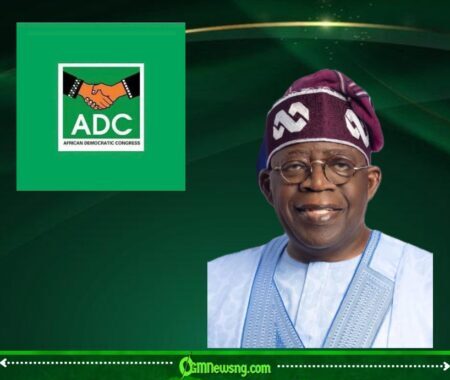



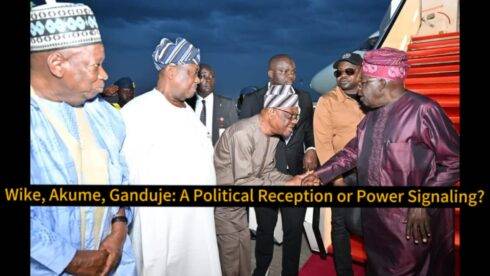
President Bola Ahmed Tinubu has returned to Abuja after attending the historic Inauguration Mass of Pope Leo XIV in Rome, a trip that has already ignited intense political conversations back home. Stepping off the presidential jet, Tinubu was greeted warmly by high-ranking allies—Nyesom Wike, George Akume, and Abdullahi Ganduje—in a show of choreographed loyalty that many observers say was as much political theatre as protocol.
Tinubu described the Vatican visit as “deeply spiritual and symbolically significant” for Nigeria’s role on the global stage. However, critics have questioned the timing and cost implications of the trip, especially amid Nigeria’s economic turmoil. While the President emphasized interfaith diplomacy, others argue the Rome voyage was a distraction from pressing domestic responsibilities.
Wike, Akume, Ganduje: A Political Reception or Power Signaling?
President Tinubu’s arrival was more than ceremonial; it was calculated. The presence of Minister Nyesom Wike, SGF George Akume, and APC Chairman Abdullahi Ganduje at the airport suggests a carefully orchestrated display of party unity and federal cohesion. Each man’s appearance sends its own political message amid growing intra-party tensions.
According to Tinubu, the warm reception signifies “the strength of the administration’s inner circle.” But critics argue that this pageantry veils deeper fissures within the ruling APC, with each of the welcoming dignitaries harboring competing ambitions and regional interests. Analysts suggest the greeting was less about diplomacy and more about visual optics designed to reinforce Tinubu’s grip on power.
The Vatican Affair: Diplomacy or Political Pilgrimage?
President Tinubu stated that his presence at Pope Leo XIV’s Inauguration Mass was meant to represent Nigeria in fostering global religious harmony and intercontinental diplomacy. “Our diversity is our strength,” he proclaimed, highlighting Nigeria’s religious plurality as a bridge between Africa and the Vatican.
However, critics have labeled the trip a political pilgrimage disguised as statecraft. Questions have been raised about the diplomatic weight Nigeria gains from such symbolic outings, especially when pressing issues like food inflation, naira volatility, and insecurity plague the nation. While religious tolerance is vital, many believe the Rome trip offered little tangible benefit for the average Nigerian.
Opposition Responds: “Rome Won’t Fix Nigeria”
President Tinubu’s papal diplomacy has drawn sharp criticism from opposition leaders who argue that spiritual optics should not replace actionable governance. “While Tinubu prays in Rome, Nigerians are fasting involuntarily at home,” said a fiery statement from the Labour Party. Critics argue the president’s priorities are misaligned with national needs.
Responding to the backlash, Tinubu dismissed the criticism as “political cynicism.” He insists that global engagement is essential in restoring Nigeria’s image and attracting faith-driven foreign investment. Yet, for many on the streets of Kano, Lagos, and Enugu, the real question remains: will these global connections translate to tangible local benefits?
Religious Optics and Political Symbolism: Tinubu’s Strategic Messaging
President Tinubu leveraged the Vatican visit to position himself as a leader of moral compass and international repute. In his words, “Nigeria must not only be seen as a political power but also as a moral one.” The message is aimed at strengthening his moral legitimacy, both globally and at home, especially among Christian blocs that have felt marginalized in recent political cycles.
Yet the imagery of Tinubu kneeling before the Pope has become both viral and polarizing. While some celebrate it as a gesture of humility, others interpret it as an unnecessary display of deference with no constitutional relevance. Political strategists believe Tinubu is attempting to reframe himself as a unifier ahead of anticipated political realignments in 2026.
Economic Fallout and Political Distractions: The Bigger Picture
President Tinubu has promised that his foreign engagements—including the Vatican visit—will yield dividends in cultural diplomacy and humanitarian partnerships. He cited future plans for collaborations with Catholic aid agencies and religious foundations focused on health and education in Nigeria. However, many Nigerians remain unconvinced.
As inflation rises and public trust wanes, Tinubu’s foreign travels are increasingly viewed as distractions from domestic dysfunction. “Spiritual tourism will not stabilize the naira,” tweeted one economic analyst. If the president hopes to maintain public confidence, he may need more than papal blessings—he’ll need policy miracles.
Table of Contents
Discover more from OGM News NG
Subscribe to get the latest posts sent to your email.