









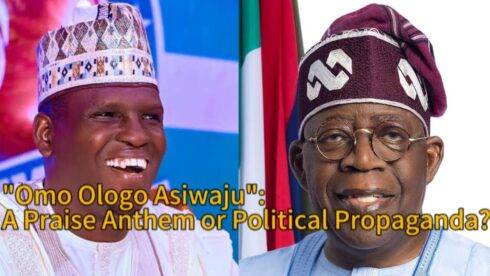
President Bola Ahmed Tinubu landed in Katsina State to a hero’s welcome as political allies, traditional rulers, and supporters flooded the venue of a state dinner held in his honor. The highlight of the evening was the electrifying performance of a new song titled “Omo Ologo (A Child of Glory) Asiwaju”, delivered by the Northern musical icon Dauda Kahutu Rarara. The event, held at the Government House Banquet Hall, quickly morphed from a formal dinner into a cultural carnival of political praise and regional pride.
In his remarks, Tinubu expressed gratitude for the unflinching support he has received from the North, stressing unity and national cohesion as vital tenets of his administration. The dinner, while ostensibly a gesture of hospitality, also served as a political theatre, where the emerging narrative of Tinubu’s presidency was carefully crafted with symbolism, music, and emotion. Rarara’s performance was not just a tribute—it was a strategic reaffirmation of Tinubu’s northern backing.
“Omo Ologo Asiwaju”: A Praise Anthem or Political Propaganda?
President Bola Ahmed Tinubu was all smiles as Rarara serenaded the hall with lyrics extolling his leadership, tenacity, and perceived divine mandate. But the release of “Omo Ologo Asiwaju” has ignited a national debate: Is it an artistic celebration of leadership, or a manipulative tool to bolster political loyalty? Critics argue that the song veers dangerously close to political propaganda, masking governance lapses under a veneer of performative adoration.
The lyrics describe Tinubu as “the lion of Nigeria, the child of glory sent to revive a broken nation,” a sentiment that has raised eyebrows across various socio-political spheres. While Rarara is known for composing flattering songs for politicians, the timing and tone of this latest release, amid growing dissatisfaction over economic hardship and insecurity, have led some observers to question the message’s sincerity.
Controversy Brews: Citizens Slam Musical Idolatry Amid National Struggles
President Bola Ahmed Tinubu stood unfazed by the growing backlash as social media platforms erupted with commentary criticizing the opulence of the dinner and the adulation expressed in the song. Many Nigerians took to X (formerly Twitter), calling the event a tone-deaf spectacle in the face of skyrocketing inflation, worsening unemployment, and prolonged university strikes. “This is no time for serenades when the streets are starving,” one user wrote.
For many Nigerians, the disconnect between elite praise and grassroots reality has never been more glaring. While supporters of the President argue that celebrating leadership encourages hope and unity, opponents assert that such displays amount to a dereliction of empathy. The criticism has highlighted a widening chasm between governance optics and the lived experiences of ordinary citizens.
Political Messaging Through Music: Rarara’s Growing Influence Under Scrutiny
President Bola Ahmed Tinubu, long acquainted with the use of culture as a political tool, has seemingly embraced Rarara’s musical activism as part of his image-building arsenal. Rarara, a powerful griot with massive grassroots reach in Northern Nigeria, has repeatedly used his platform to project favorable images of politicians. His latest release elevates him once again as a cultural spokesperson for the elite, prompting watchdog groups to call for clearer boundaries between art and statecraft.
Cultural critics and political analysts alike are dissecting the influence of musicians like Rarara in shaping public opinion. With lines like “Tinubu is the compass in a lost nation,” the song doubles as a lyrical endorsement and a veiled campaign message. Observers argue that the intermingling of cultural celebration and political messaging raises ethical questions about media manipulation and the erosion of independent cultural expression.
“Omo Ologo” Dinner: A Political Calculus Cloaked in Celebration
President Bola Ahmed Tinubu, a seasoned strategist, appeared to leverage the Katsina dinner as more than a ceremonial gathering—it was a calculated affirmation of his political capital in Northern Nigeria. The venue was intentionally packed with key Northern stakeholders, suggesting an effort to consolidate loyalty as 2027 begins to glimmer on the horizon. The inclusion of Rarara’s performance was no accident; it was orchestrated as a cultural balm and a call to loyalty.
Political insiders say the dinner was part of a broader rebranding effort aimed at offsetting the turbulence of Tinubu’s economic reforms. The event’s opulence and its theatrical musical segment may have created a moment of emotional reprieve, but it also drew attention to the stark contrast between political pageantry and public hardship. In a country facing fuel price hikes and economic stagnation, the dinner served as a lightning rod for discontent disguised as a cultural celebration.
National Dialogue Needed: Balancing Cultural Pride with Policy Accountability
President Bola Ahmed Tinubu, in his closing remarks at the dinner, called for unity and resilience, describing himself as “a servant of destiny”. However, Nigerians are increasingly demanding more than lofty metaphors—they want policy results. The “Omo Ologo Asiwaju” affair has opened up a vital national conversation: Where does celebration end and accountability begin? Can a song unite a nation grappling with hunger and hopelessness?
Civic organizations are urging leaders to prioritize performance over praise, warning that excessive adulation can blind governance to the real needs of the people. As the dust settles on the Katsina event, one thing is clear: the optics of leadership matter, but they must not eclipse the substance of governance. If Tinubu truly seeks to embody the “Omo Ologo” ideal, it must reflect in transformational policies, not just lyrical tributes.
Table of Contents
Discover more from OGM News NG
Subscribe to get the latest posts sent to your email.