





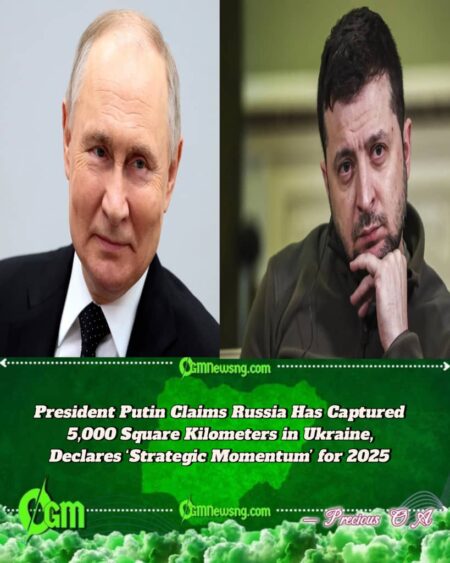
President Putin has declared that Russian forces have seized approximately 5,000 square kilometers of Ukrainian territory in 2025 alone, marking what he described as one of the most significant advances since the conflict began in February 2022. The statement came during a nationally televised meeting with senior military commanders, signaling renewed Russian confidence as the war stretches into its fourth year.
President Putin praised Russian troops for what he called their “discipline, precision, and bravery,” insisting that their operations had been executed “with minimal losses and maximum results.” He credited the Russian defense industry for providing the “modern weaponry and logistical excellence” that made the territorial expansion possible. According to him, these achievements demonstrate the “unshakable will” of the Russian people and the “strategic superiority” of their armed forces.
President Putin further claimed that Russian forces have consolidated their positions across several fronts, including key areas in Donetsk, Luhansk, and Zaporizhzhia. He argued that these areas hold historical and cultural significance for Russia, describing them as “lands returning to their rightful home.” Kremlin officials supported the announcement with maps and briefings, though independent observers have been unable to verify the full extent of the claimed advances.
Military analysts note that while Moscow has indeed gained ground in certain regions, those advances have come at a significant cost. Ukrainian resistance remains strong, with fierce battles reported around Kupiansk, Avdiivka, and the outskirts of Kharkiv. President Putin, however, dismissed Western reports of Russian losses as “fabrications,” asserting that Russia’s long-term strategy is “progressing exactly as planned.”
President Putin also highlighted the introduction of new technologies—such as electronic warfare systems, hypersonic missiles, and advanced drones—which he said were now “reshaping the battlefield in Russia’s favor.” He emphasized that the nation’s military modernization efforts have ensured “superiority not just in firepower, but in adaptability and resolve.”
Ukraine Dismisses Moscow’s Claims as ‘Political Theater’
Ukrainian President Volodymyr Zelensky swiftly rejected Russia’s territorial claims, accusing the Kremlin of “inventing numbers to maintain domestic morale.” Kyiv’s defense ministry described the 5,000-square-kilometer figure as “grossly exaggerated,” arguing that Russia’s so-called gains consist mainly of uninhabited or destroyed areas left in the wake of intense bombardments.
President Putin, responding to those criticisms, accused Ukraine of “denying reality” and attempting to mislead its Western backers. He said the newly captured zones represent “strategically vital corridors” that would allow Russian forces to further stabilize their control and expand logistical networks. His statement drew sharp reactions from Kyiv, which accused Moscow of using the announcement as propaganda ahead of renewed offensives.
Zelensky, in his nightly national address, countered that Russia’s “so-called achievements” come at an immense human cost, estimating tens of thousands of Russian casualties in recent months. He reaffirmed Ukraine’s determination to defend every inch of its land, declaring that “occupation may change borders temporarily, but it will never conquer the spirit of the Ukrainian people.”
President Putin insisted that the Ukrainian military was “crumbling under pressure,” alleging that Russian forces had successfully encircled several key strongholds. Ukrainian officials immediately denied those assertions, calling them “fantasies designed to hide Moscow’s desperation.”
President Putin also accused NATO nations of “fueling the flames of conflict” by providing Ukraine with advanced weaponry and intelligence support. Western allies, he claimed, were “using Ukraine as a tool to weaken Russia” rather than genuinely seeking peace. His remarks sparked outrage across European capitals, where leaders reaffirmed their commitment to supporting Kyiv against what they described as “Russia’s unlawful invasion.”
Global Reaction and the Road Ahead
President Putin’s announcement has drawn swift and polarized reactions worldwide. The United States, United Kingdom, and European Union condemned Moscow’s claims as “propaganda designed to conceal failure and prolong aggression.” Western officials maintain that Russia’s reported progress represents limited tactical shifts rather than genuine strategic breakthroughs.
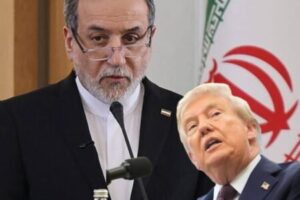
President Trump, addressing the press from the White House, called on both sides to “seek a practical and lasting peace,” while reiterating America’s support for Ukraine’s defense. “We will continue to stand by Ukraine’s right to sovereignty,” he said, “but we also believe endless war benefits no one.” The U.S. president emphasized the need for European allies to “shoulder a greater share” of the financial and logistical burden of aid to Ukraine, a stance that has sparked debate in NATO circles.
President Putin dismissed Trump’s comments, asserting that Washington was “attempting to rewrite the narrative” while covertly escalating its involvement. He warned that any further Western interference would be met with “decisive and asymmetrical responses.” Analysts believe his rhetoric aims to deter new U.S. military assistance packages currently being discussed in Congress.
Meanwhile, Beijing and New Delhi issued carefully worded statements calling for restraint. China’s foreign ministry reiterated that “enduring stability cannot arise from territorial conquest,” while India urged “immediate dialogue between all parties.” Both nations continue to balance economic ties with Moscow against pressure from Western partners.
President Putin concluded his national address by declaring that “Russia will not retreat, negotiate from weakness, or abandon its people.” He pledged to continue operations “until all objectives are fulfilled,” a statement widely interpreted as a signal that Moscow remains committed to a long, grinding conflict. Analysts warn that 2025 could become the most volatile year yet in the war, with both sides seeking to secure leverage before any potential diplomatic talks resume.
President Putin’s tone—defiant yet confident—reflects the Kremlin’s determination to portray the war as a test of national endurance. While his claims may bolster domestic morale, the international community remains skeptical, fearing that his remarks signal not the end of the conflict, but a new and more dangerous escalation.
Table of Contents
Discover more from OGM News NG
Subscribe to get the latest posts sent to your email.