







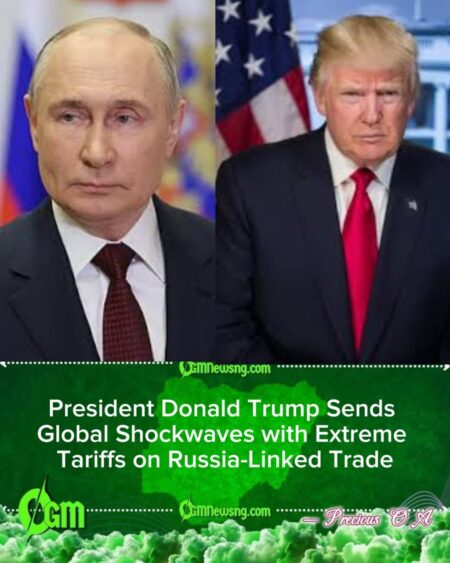
President Donald Trump has signed legislation granting U.S. authorities sweeping powers to impose punitive tariffs on any nation that trades with Russia. The measure targets both imports and exports, potentially affecting a broad range of commodities, including energy, metals, and agricultural products.
Donald Trump emphasizes that the legislation is designed to protect U.S. economic interests and assert leverage over Russia’s global trade network. The administration believes these measures will send a strong message to countries that continue to engage economically with Russia, demonstrating that there are tangible costs for supporting the Russian economy in any form.
Donald Trump also points to potential exemptions for strategic and humanitarian cases, indicating that enforcement will consider both economic and diplomatic factors. Businesses are advised to monitor updates closely to avoid unexpected consequences. Analysts warn that industries heavily reliant on imports from Russia’s trading partners may need to quickly adjust supply chains or face financial disruption.
Reaction from the International Community
The international community has responded with a mix of concern and criticism. European and Asian trade partners have expressed alarm at the potential disruptions to established supply chains. Diplomatic sources indicate that several countries are seeking emergency consultations with U.S. trade officials to discuss exemptions or mitigation strategies.
Donald Trump stresses that the tariffs are not punitive for their own sake but serve as leverage to influence international behavior regarding Russia. The administration maintains that the goal is to encourage countries to reconsider their economic relationships with Russia and align more closely with U.S. foreign policy priorities, particularly in the context of global security.
Donald Trump also reassures allies that the U.S. remains committed to global trade and cooperation, even as the administration applies pressure on Russia’s trading partners. Observers note that alternative supply chains may be explored, potentially reshaping global commerce in the long term. Countries heavily dependent on trade with Russia may be forced to make difficult choices that could reverberate through their domestic economies.
Domestic Support and Opposition
Domestically, the legislation has garnered support from lawmakers emphasizing national security and economic leverage against Russia. Several congressional leaders have praised President Trump for taking decisive action to pressure Russia and its trading partners.
Donald Trump maintains that strong economic measures against Russia protect American jobs and strengthen the country’s position in global negotiations. Proponents argue that by imposing extreme tariffs, the United States gains unprecedented bargaining power and sends a clear signal that it will not tolerate economic collaboration with nations aligned with Russia in ways that may compromise U.S. interests.
Donald Trump highlights that the administration will provide guidance for businesses to navigate the new tariffs, aiming to minimize unintended consequences while maintaining pressure on Russia and its trading partners. Critics, however, continue to warn that unintended consequences could arise, including inflationary pressures, supply chain disruptions, and strained relationships with European allies dependent on Russian trade.
Economic Analysis and Market Response
Economists are divided on the potential long-term effects of the tariffs. Some predict that the punitive measures could strengthen U.S. negotiating positions, forcing Russia’s trading partners to reconsider their economic alliances. Others warn of a potential chain reaction, including retaliatory tariffs that could disrupt U.S. exports of machinery, agriculture, and technology.
Donald Trump points out that careful implementation and monitoring will mitigate risks to U.S. businesses. The administration insists that while short-term volatility in markets is possible, the long-term benefits of discouraging trade with Russia could outweigh these initial fluctuations. Financial institutions are closely analyzing the potential impact on stock indices, commodity prices, and global investment strategies.
Donald Trump emphasizes that multinational corporations should proactively assess exposure to Russia-linked markets, as the administration aims to enforce tariffs selectively and strategically rather than arbitrarily. Companies that fail to adjust their strategies could face considerable financial risk, particularly in industries like oil, natural gas, and agriculture, where global supply chains are tightly interlinked.
Global Trade Experts Weigh In
Global trade experts stress that the unprecedented 500% tariff rate is highly unusual and may set a new precedent in international trade policy. Some experts warn that countries affected by the measure may escalate disputes to the World Trade Organization (WTO), potentially resulting in lengthy litigation and further uncertainty.
Donald Trump argues that the bold tariff approach serves as a diplomatic tool, strengthening the U.S. hand in negotiations with Russia’s partners. Analysts suggest that if effectively implemented, the tariffs could reshape global trade norms, forcing nations to reconsider long-standing commercial practices and alliances.
Donald Trump adds that potential legal challenges are expected, but the administration is prepared to defend the tariffs as a legitimate measure under U.S. law and international trade regulations. Experts caution that while legal battles may arise, the political signaling effect of such aggressive measures may be just as impactful as the economic consequences.
Potential Political Ramifications
Political analysts highlight that the bill could have far-reaching effects on U.S. foreign policy. By authorizing such aggressive economic measures, President Trump positions the United States as a dominant player in shaping international trade norms.
Donald Trump stresses that the legislation reflects strong leadership and a commitment to protecting U.S. strategic interests abroad. While some lawmakers applaud the administration’s decisiveness, others caution that careful diplomacy will be needed to avoid alienating key allies, particularly in Europe and Asia, where trade ties with Russia remain significant.
Donald Trump also points to the domestic implications, emphasizing that monitoring inflation and supply chain impacts will be crucial in maintaining public confidence and political stability as the tariffs are enforced. Analysts suggest that how the administration communicates its policy and manages potential disruptions will play a central role in its overall success and political reception.
Table of Contents
Discover more from OGM News NG
Subscribe to get the latest posts sent to your email.