




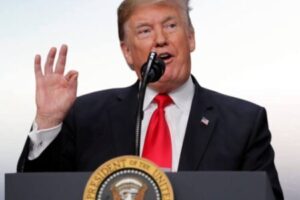


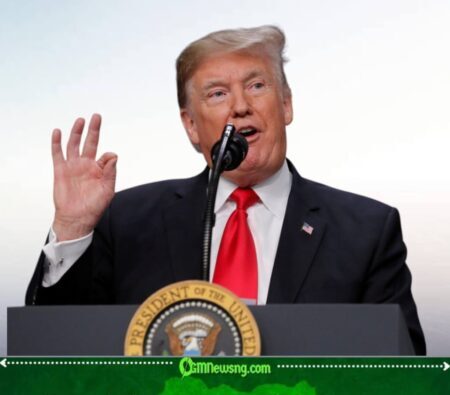
President Donald Trump said the United States “could do a lot worse” to Iran if tensions continue to rise, adding that American military power could devastate the country within a very short period of time. President Donald Trump made the remarks while discussing the ongoing conflict and military pressure being placed on Tehran, saying the United States has the capability to end Iran’s ability to rebuild its military infrastructure quickly.
The comments immediately drew attention across diplomatic and military circles, as the language signaled an escalation in rhetoric during an already volatile period in the region. Analysts say such statements can influence both international diplomacy and domestic political reactions, especially when they involve the possibility of overwhelming military force.
Observers noted that remarks like these often carry strategic messaging intended to deter adversaries. By emphasizing the scale and speed of U.S. military capabilities, leaders sometimes aim to pressure opponents into reconsidering aggressive actions or negotiating positions.
President Donald Trump Signals Military Dominance
President Donald Trump also suggested that American forces could eliminate key Iranian military capabilities within an hour if the United States chose to launch a broader offensive. President Donald Trump argued that the scale of American technological and strategic superiority means Iran would struggle to recover from such an attack.
Military experts say the United States possesses significant capabilities in the region, including aircraft carriers, advanced strike aircraft, long-range missiles, and surveillance systems. These tools provide the Pentagon with the ability to conduct large-scale operations rapidly if ordered by national leadership.
President Donald Trump has frequently emphasized the strength of the U.S. military during public appearances, often framing American power as a deterrent meant to discourage hostile actions from rival nations.
Global Reaction to the Remarks
President Donald Trump’s statements quickly triggered responses from political leaders, diplomats, and analysts around the world. Some governments expressed concern that such rhetoric could further inflame tensions between Washington and Tehran at a moment when the situation remains highly unstable.
Diplomatic observers noted that language suggesting the potential destruction of an entire country can complicate efforts to de-escalate a conflict. When leaders make highly forceful statements, opposing governments may respond with equally strong rhetoric, creating a cycle of escalation.
International security analysts emphasized that communication during crises is often carefully monitored by military planners on all sides. Statements from top leaders can influence strategic calculations and public perceptions simultaneously.
Strategic Context of the Conflict
President Donald Trump argued that the United States must demonstrate strength to prevent adversaries from threatening global stability. President Donald Trump said that allowing hostile actions to go unanswered could embolden rival governments and undermine international security.
The broader conflict between Washington and Tehran has been shaped by disputes over regional influence, military activities, and security alliances. Over the years, both countries have accused each other of destabilizing actions across the Middle East.
Experts say that tensions between the two nations have historically fluctuated between periods of diplomatic engagement and moments of sharp confrontation, often influenced by developments in regional conflicts and global politics.
Military Balance and Regional Risks
Defense analysts note that the United States maintains one of the most powerful military forces in the world, with extensive technological advantages in air power, naval capabilities, and intelligence systems. These capabilities allow rapid projection of force across multiple regions.
Iran, while possessing a smaller conventional military, has developed strategies designed to counter larger forces. These include missile programs, drone technology, and asymmetric tactics aimed at complicating military operations for stronger adversaries.
Regional experts warn that a full-scale military confrontation could have severe consequences for surrounding countries, energy markets, and international shipping routes, particularly in sensitive areas such as the Persian Gulf.
Diplomatic Uncertainty Moving Forward
Despite the harsh rhetoric, diplomatic channels between nations often remain active behind the scenes during crises. Governments frequently balance public statements with quieter negotiations aimed at preventing conflicts from escalating further.
Many international leaders have called for restraint and dialogue, arguing that prolonged confrontation between major powers in the Middle East could destabilize the region and impact global economic stability.
For now, the situation remains fluid as policymakers, military officials, and diplomats continue to monitor developments. Whether the rhetoric leads to greater confrontation or renewed diplomatic engagement may depend on decisions made in the coming days by leaders on all sides of the dispute.
Table of Contents
Discover more from OGM News NG
Subscribe to get the latest posts sent to your email.