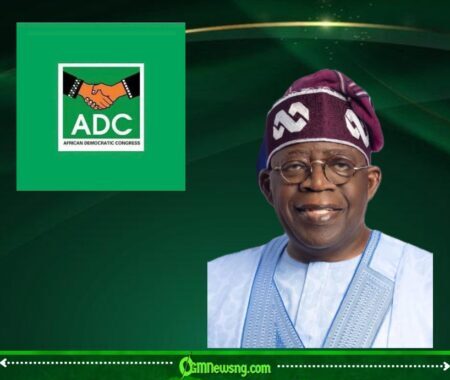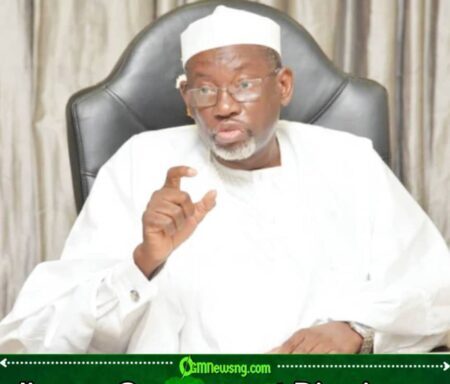





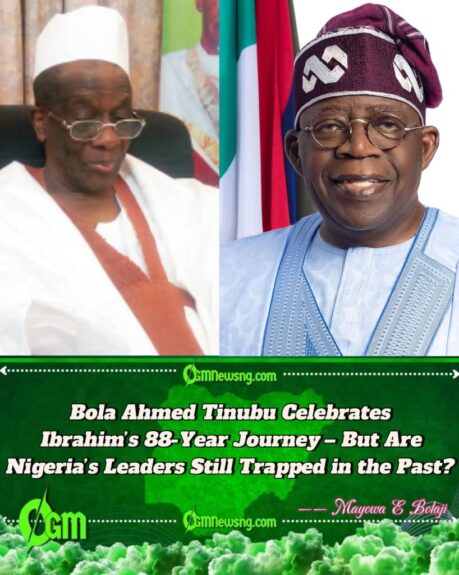
Bola Ahmed Tinubu has described the passing of Alhaji Isyaku Ibrahim as a monumental loss, stressing that the late businessman and politician was a fearless voice in Nigeria’s political landscape. He noted that Ibrahim’s role in the National Party of Nigeria (NPN) and later in the foundation of the People’s Democratic Party (PDP) reflected his lifelong dedication to the survival of democracy. Tinubu remarked that Ibrahim’s death at the age of 88 in Abuja silences a man who was never afraid to challenge authority, even when it cost him political comfort.
Bola Ahmed Tinubu emphasized that Ibrahim’s legacy will remain controversial, given his tendency to oscillate between business and politics while still holding firm to his ideals. According to Tinubu, Ibrahim was not just a political figure but also a nation builder who envisioned a Nigeria where institutions stood stronger than individuals. This statement has, however, stirred mixed reactions, as critics believe Ibrahim’s political choices often contradicted his professed democratic principles.
Bola Ahmed Tinubu Links Ibrahim’s Death to PDP’s Historical Burdens
Bola Ahmed Tinubu has subtly tied Ibrahim’s political journey to the turbulence that birthed the PDP, recalling that Ibrahim was among those who laid the foundation for the party that later dominated Nigerian politics. Tinubu stressed that while the PDP enjoyed early dominance, it also carried within it the seeds of its eventual implosion, partly due to internal contradictions and power struggles among its founding fathers.
Bola Ahmed Tinubu’s comments have fueled debate among political analysts, with some suggesting that his tribute was laced with veiled criticism. They argue that the president used the opportunity to remind Nigerians of PDP’s flaws while projecting the ruling APC as a more resilient structure. For others, Tinubu’s words were a fair reflection of Ibrahim’s historical role in shaping the destiny of Nigeria’s two dominant parties.
Bola Ahmed Tinubu Calls Ibrahim a “Bridge Between Business and Politics”
Bola Ahmed Tinubu highlighted that Ibrahim was more than a politician; he was a shrewd businessman who invested heavily in sectors that influenced Nigeria’s economic direction. Tinubu described him as one of the few figures who successfully bridged the gap between the boardroom and the political battlefield, using his business acumen to finance political struggles and democratic ideals.
Bola Ahmed Tinubu’s praise, however, raises fresh controversy as some critics argue that the intertwining of wealth and politics in Ibrahim’s era set the stage for Nigeria’s entrenched culture of money politics. While Tinubu extolled Ibrahim’s strategic influence, many Nigerians recall that such political financiers often deepened corruption and patronage networks that continue to haunt the country’s governance system today.
Bola Ahmed Tinubu Points to Ibrahim’s Fearless Criticism of Leaders
Bola Ahmed Tinubu noted that Ibrahim was among the few politicians who never shied away from criticizing sitting presidents, whether military or civilian. He recalled how Ibrahim consistently spoke against policies he considered harmful, even at the risk of losing privileges and access to power. Tinubu maintained that this fearless attribute distinguished Ibrahim as a politician of conviction rather than convenience.
Bola Ahmed Tinubu’s remarks have sparked controversy online, with some Nigerians questioning whether he himself would tolerate such unrelenting criticism from political allies. The tribute has therefore opened a larger conversation about whether Nigeria still has politicians willing to put truth above personal gain. Ibrahim’s reputation as a fearless critic has revived memories of a political class once less restrained by partisanship.
Bola Ahmed Tinubu Frames Ibrahim as a Symbol of Generational Politics
Bola Ahmed Tinubu argued that Ibrahim represented a fading generation of politicians who combined ideology with pragmatism. He insisted that Ibrahim’s political life stretched across Nigeria’s most turbulent transitions—from military dictatorship to democratic rebirth—making him a witness and participant in history’s most defining chapters. Tinubu added that the new generation of politicians must study figures like Ibrahim to understand the cost of political struggle.
Bola Ahmed Tinubu’s framing, however, has not gone unchallenged. Some youth activists argue that holding on to the legacy of old politicians has stifled Nigeria’s political rebirth. They claim that instead of glorifying the past, Tinubu should focus on building a new political culture devoid of the baggage of corruption, godfatherism, and patronage politics that defined Ibrahim’s era.
Bola Ahmed Tinubu Urges Nigerians to Reflect on Ibrahim’s Legacy
Bola Ahmed Tinubu concluded his tribute by urging Nigerians to reflect on the values Ibrahim embodied, particularly his insistence that power must serve the people. He stressed that Ibrahim’s death should not merely be an occasion of mourning but also a moment of reckoning for politicians to embrace service, integrity, and patriotism. Tinubu urged younger leaders to adopt Ibrahim’s fearlessness and commitment to truth, regardless of political consequences.
Bola Ahmed Tinubu’s call has drawn divided reactions, with some interpreting it as an indirect message to his own party members, many of whom are accused of betraying public trust. Others see it as a carefully worded attempt to position himself as a reformer in the mold of Ibrahim. The debate underscores how Ibrahim’s death has become more than just a personal loss; it has reignited Nigeria’s endless struggle between political ideals and political realities.
Table of Contents
Discover more from OGM News NG
Subscribe to get the latest posts sent to your email.