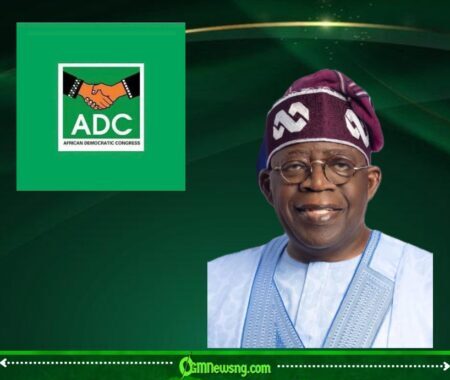






President Bola Ahmed Tinubu began his remarks by stressing that no nation can thrive without a secure environment. He emphasized that Nigeria’s development goals will remain elusive unless the federal government reshapes its security architecture to confront emerging threats. His statement came amid heightened insecurity across several regions, from banditry in the North to kidnappings in the South.
President Bola Ahmed Tinubu underscored that he is personally reviewing every aspect of Nigeria’s security framework, leaving no stone unturned. He highlighted the need for pragmatic reforms that would not only bolster federal security agencies but also give states the capacity to act decisively in protecting their residents. According to him, Nigeria must not shy away from bold choices if the safety of its citizens is at stake.
Tinubu’s Push for State Police Sparks Heated National Debate
President Bola Ahmed Tinubu declared that he has made up his mind to establish state police as part of his comprehensive security overhaul. He argued that centralized policing alone can no longer address the diversity of Nigeria’s security challenges, noting that communities require security outfits that understand their terrain, culture, and unique threats.
President Bola Ahmed Tinubu acknowledged that the proposal has been controversial for decades, often facing resistance due to fears of abuse by state governors. However, he maintained that those concerns must now give way to the urgency of saving lives. He assured Nigerians that constitutional safeguards and oversight mechanisms would be built into the framework to prevent misuse.
Regional Insecurity Driving the Push for Reform
President Bola Ahmed Tinubu pointed out that Nigeria’s worsening security crises have made the conversation about state police unavoidable. He cited the devastating attacks by bandits in the North-West, insurgency in the North-East, farmer-herder conflicts in the Middle Belt, and rising cases of urban crime in the South. According to him, the scale of violence has overstretched the federal police beyond their limits.
President Bola Ahmed Tinubu argued that local policing would provide a quicker response time to emergencies, especially in rural areas often neglected by federal forces. He stressed that only a decentralized security system could give communities the chance to defend themselves while still working hand in hand with national forces.
Fears of Politicization and Abuse of State Police
President Bola Ahmed Tinubu admitted that critics of state police are worried about possible abuse of the system by governors, particularly during elections or political disputes. He explained that Nigeria must design strong accountability frameworks to prevent local police from becoming tools of oppression.
President Bola Ahmed Tinubu assured Nigerians that he would not endorse any reform that threatens democracy or individual rights. Instead, he proposed a system where state police remain independent of political interference through federal oversight, judicial checks, and citizen-driven monitoring.
Economic and Social Impact of a Stronger Security Network
President Bola Ahmed Tinubu emphasized that without adequate security, Nigeria’s economy will continue to bleed. He explained that foreign investors remain reluctant to commit resources to a country where highways are unsafe, farmlands are under siege, and schools face frequent abductions. He argued that state police would create a safer environment for businesses, education, and agriculture to thrive.
President Bola Ahmed Tinubu added that improved security would help restore trust in governance, boost job creation, and reduce migration pressures. He highlighted that peace and order are the foundation upon which Nigeria’s renewed hope agenda must stand.
Tinubu Calls for National Consensus on the Reform
President Bola Ahmed Tinubu urged Nigerians to see the conversation about state police as a national survival strategy rather than a political gamble. He insisted that the debate must rise above partisan lines, as insecurity does not discriminate between party affiliations, ethnic groups, or religions.
President Bola Ahmed Tinubu concluded by declaring that he is committed to driving this reform through legislative and constitutional backing. He called on the National Assembly, civil society, and traditional leaders to join him in shaping a policing model that reflects the realities of modern Nigeria.
Table of Contents
Discover more from OGM News NG
Subscribe to get the latest posts sent to your email.