




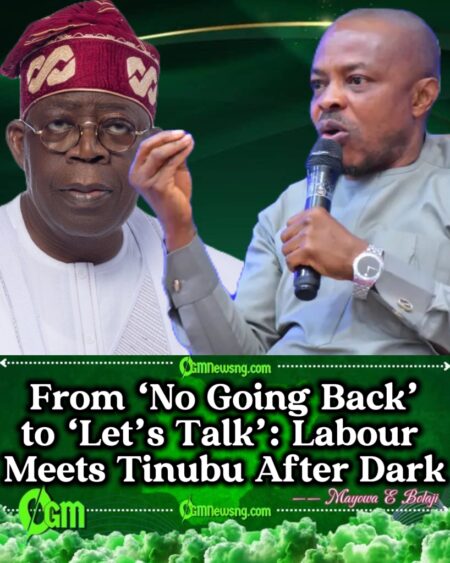
President Bola Ahmed Tinubu convened a crucial late-night, closed-door meeting with leaders of the Nigeria Labour Congress (NLC) at the Presidential Villa, Abuja, on Tuesday, underscoring the Federal Government’s last-minute push to de-escalate tensions ahead of a planned nationwide protest. The high-stakes engagement, which stretched deep into the night, comes amid mounting public anxiety over rising insecurity and socio-economic pressures affecting citizens across the country.
President Bola Ahmed Tinubu used the meeting to signal openness to dialogue and consensus-building, emphasizing his administration’s preference for engagement over confrontation. The timing of the talks—barely 24 hours before the NLC’s proposed mass action scheduled for December 17—highlighted the urgency with which the presidency is treating labour’s demands and the broader national mood.
President Bola Ahmed Tinubu’s decision to personally host the labour leaders reflects growing concern within government circles about the potential economic, security, and political implications of a nationwide protest. With Nigeria already grappling with inflationary pressures and security challenges, the meeting was widely seen as a strategic attempt to prevent further strain on national stability.
President Bola Ahmed Tinubu Hosts Governors, Labour Minister, and NLC President at State House
President Bola Ahmed Tinubu presided over a meeting that brought together a powerful mix of federal and state actors, reinforcing the gravity of the discussions. In attendance were the Chairman of the Progressive Governors’ Forum and Governor of Imo State, Hope Uzodimma; Governor Monday Okpebholo of Edo State; Governor Nasir Idris of Kebbi State; and the Minister of State for Labour and Employment, Honourable Nkeiruka Onyejeocha.
President Bola Ahmed Tinubu ensured that the Nigeria Labour Congress was strongly represented, with NLC President, Comrade Joe Ajaero, leading the labour delegation. The presence of top governors alongside labour leaders suggested a whole-of-government approach aimed at addressing labour grievances, particularly concerns over worsening insecurity and the welfare of Nigerian workers.
President Bola Ahmed Tinubu’s inclusive approach underscored the administration’s recognition that labour-related unrest has nationwide implications that extend beyond federal authority alone. By involving state governors and the labour ministry, the presidency appeared intent on crafting a unified response capable of reassuring workers and averting widespread disruption.
President Bola Ahmed Tinubu Seeks to Avert Protest as Labour Maintains Firm Stance
President Bola Ahmed Tinubu entered the closed-door talks against the backdrop of the NLC’s resolute declaration earlier in the week that there would be “no going back” on the planned protest. Labour leaders have consistently framed the mass action as a response to escalating insecurity and perceived government inaction, intensifying pressure on the presidency to deliver tangible assurances.
President Bola Ahmed Tinubu, according to sources familiar with the meeting, steered discussions toward finding common ground and exploring immediate and long-term measures to address national challenges. While no official communiqué was issued after the meeting, indications suggest that both sides examined pathways to de-escalation, dialogue, and improved cooperation between government and organised labour.
President Bola Ahmed Tinubu now faces a critical test of leadership as Nigerians await clarity on whether the talks will translate into a suspension of the protest or further negotiations. As the countdown to December 17 continues, the outcome of this late-night engagement may prove decisive in shaping labour-government relations and the broader socio-political climate in Nigeria.
Table of Contents
Discover more from OGM News NG
Subscribe to get the latest posts sent to your email.