








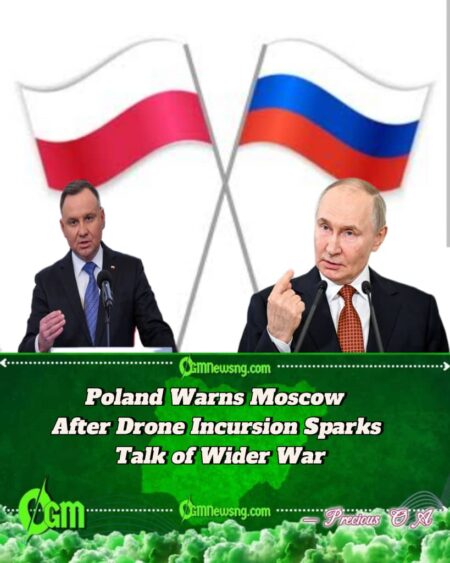
Poland announced that its air defenses had intercepted multiple Russian drones that violated its airspace during overnight strikes on Ukraine. Officials described the incident as an “act of aggression,” emphasizing that the country’s sovereignty is not negotiable. Military commanders confirmed that the drones were destroyed before reaching populated areas.
The Ministry of Defense noted that radar systems detected the drones as part of a wider Russian assault on western Ukraine. The swift response prevented damage on Polish soil, but the event underscored the risks posed by Moscow’s intensifying campaign near NATO borders.
Poland’s announcement quickly drew international attention, as the breach represents one of the most direct threats to allied territory since the war began. Analysts warned that repeated violations could spark a confrontation far beyond Ukraine’s borders.
Strong Government Response
Poland summoned the Russian ambassador in Warsaw to deliver a formal protest, condemning the incursion as a breach of international law. Officials stated that the government would pursue both diplomatic and military measures to deter future violations.
Defense Minister Władysław Kosiniak-Kamysz declared that Polish forces remain on “heightened operational readiness” and will intercept any further intrusions. He described the episode as proof of the need to strengthen defenses along the eastern frontier.
The government also announced plans to brief parliament and coordinate with NATO allies. Lawmakers across party lines expressed support for stronger security measures, underscoring a rare moment of unity in Polish politics.
NATO’s Position
NATO confirmed that it was in constant contact with Warsaw following the incident. Secretary-General Jens Stoltenberg reaffirmed the alliance’s commitment to collective defense, declaring that “every inch of allied territory will be defended.”
Military experts stressed that while no casualties occurred, the incursion carried significant symbolic weight. Even accidental violations could undermine NATO’s credibility if left unanswered. The episode highlights the delicate balance the alliance must maintain between deterrence and escalation.
Several NATO members also pledged to share intelligence and provide additional air-defense support. Officials suggested that a broader package of security measures could soon be discussed at upcoming ministerial meetings.
United States Reaffirms Support
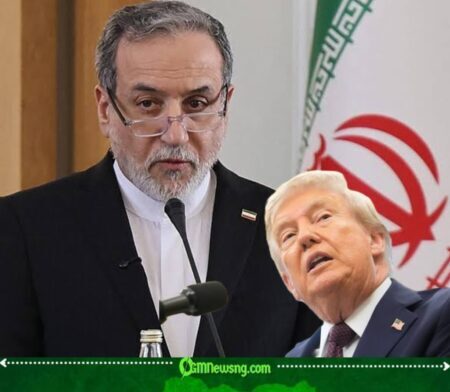
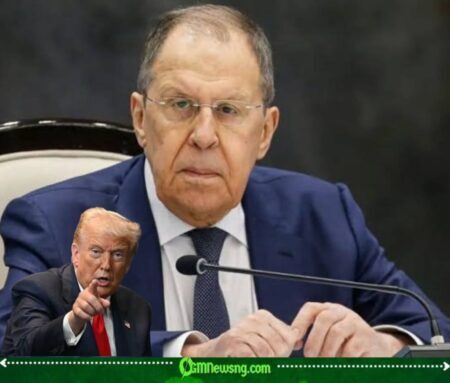
President Trump strongly condemned the breach, calling it “reckless, dangerous, and unacceptable.” He emphasized that the United States’ commitment to NATO’s Article 5 guarantee remains absolute, and pledged to stand “shoulder to shoulder” with European allies.
The White House later confirmed that Trump held a phone call with Polish President Andrzej Duda. Both leaders agreed to enhance coordination on border defense, cyber-security, and intelligence sharing. Officials hinted that joint military exercises could be expanded to demonstrate unity.
American defense analysts warned that the United States and its allies must prepare for further incidents. They argued that the situation requires not only military readiness but also strong diplomatic signaling to prevent Russia from testing NATO’s resolve.
Russia Denies Responsibility
Moscow rejected Warsaw’s claims, insisting that its drones were exclusively targeting Ukrainian sites. Russian officials accused Poland of manufacturing “political theater” to justify greater Western involvement in the war.
Kremlin spokesperson Dmitry Peskov said Russia has no interest in escalating with NATO, but maintained that its military operations in Ukraine will continue until all objectives are achieved. The denial was met with skepticism across European capitals.
Analysts argue that Russia’s denials are unlikely to convince NATO allies, given the pattern of past provocations. They note that whether intentional or accidental, the incursions place enormous pressure on regional security.
Escalating Regional Tensions
Poland serves as a key logistical hub for the transfer of Western military aid to Ukraine. This strategic role has made it a frequent target of Russian rhetoric, with Moscow accusing Warsaw of fueling the conflict.
Security analysts warned that as Russian attacks intensify on supply routes, the chances of spillover incidents will increase. Even a single miscalculation could push NATO into direct confrontation with Russia, a scenario that many fear would spiral into a broader European war.
Neighboring states such as Lithuania and Romania also expressed alarm. Both countries have strengthened their own air defenses, fearing they may soon face similar provocations.
Calls for Diplomacy
The European Union called the breach “serious and unacceptable,” while urging restraint to prevent escalation. EU foreign policy chief Josep Borrell stressed that diplomacy must remain central, even amid rising military tensions.
The United Nations also weighed in, warning that the conflict is already destabilizing global security and cannot be allowed to expand further. UN officials appealed to both sides to respect international borders and prioritize dialogue.
Despite these appeals, many diplomats admitted that opportunities for negotiation are shrinking. With Russia intensifying its offensive and Warsaw reinforcing its defenses, the prospects for compromise appear dim.
Poland Strengthens Defenses
Poland announced new measures to enhance air defense systems along its eastern frontier. The government pledged to accelerate procurement of anti-drone technology and expand coordination with NATO surveillance networks.
Prime Minister Donald Tusk declared that national security is “non-negotiable,” vowing that Warsaw will not allow Russian aggression to erode sovereignty. He assured citizens that protective measures are being implemented at speed.
Officials also confirmed that Poland will request additional NATO support in upcoming meetings, including enhanced air patrols and radar coverage. These steps, they said, are necessary to safeguard both Poland and the broader alliance.
Outlook for the Region
Poland’s resolve has sent a clear message that NATO will not tolerate violations of allied territory. Observers believe that continued incursions could force the alliance to adopt a stronger military posture in Eastern Europe.
Regional analysts warn that the situation remains fragile. With Russian strikes intensifying and NATO’s defenses tightening, even minor incidents risk igniting a much larger crisis. The next moves by Moscow and Warsaw will determine whether the confrontation escalates or stabilizes.
For now, European capitals remain on high alert. The breach of airspace demonstrates just how narrow the line is between containment and escalation, with the security of the entire continent hanging in the balance.
Table of Contents
Discover more from OGM News NG
Subscribe to get the latest posts sent to your email.