









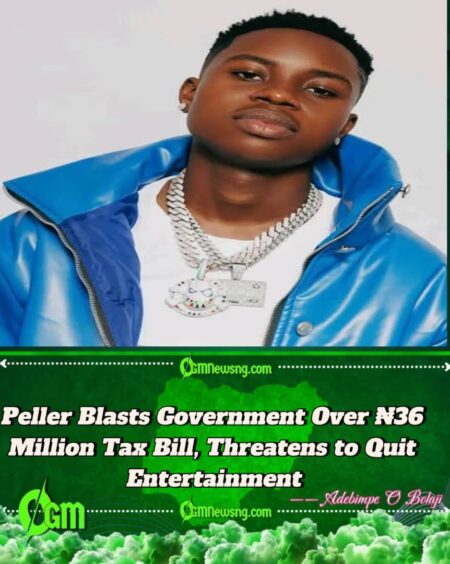
Nigerian content creator and entertainer, Peller, has sparked heated conversations online after revealing that he received a staggering ₦36 million tax bill from government authorities. Known for his vibrant presence on TikTok and Instagram, Peller expressed deep shock and disappointment over the development, describing it as a deliberate attempt to cripple his finances. In a passionate outburst shared on his social media pages, he accused the government of unfairly targeting him while ignoring more prominent influencers, hinting that the move may have been triggered by a past TVC interview where he boasted about earning big from TikTok — a claim he now insists was mere “packaging.”
The entertainer lamented that the tax burden was far too heavy for a single individual in the creative space to bear, warning that if nothing changes, he may be forced to abandon the entertainment industry entirely. Peller also questioned why authorities would impose such aggressive levies when, according to him, the government has offered no form of support to content creators in terms of infrastructure, funding, or incentives. His revelations have since stirred debates on Nigeria’s taxation policies for digital earners, with many calling for a clearer, fairer framework for the country’s growing influencer economy.
‘They Want to Make Me Poor’ — Peller Expresses Emotional Toll
In his passionate statement, Peller accused the government of unfairly targeting him while ignoring more prominent social media influencers with bigger platforms and revenue streams. He described the tax demand as not only financially draining but also emotionally exhausting.
The entertainer insisted that his income has been overestimated by the authorities, linking the sudden attention to a past interview on TVC where he jokingly claimed to earn big money from TikTok. “It was just packaging,” he clarified, lamenting that the statement has now come back to haunt him.
Misconceptions About Who Should Pay Taxes
Peller expressed confusion over why individuals like him were being asked to pay such a huge amount in taxes, saying he thought taxes of that scale were reserved for companies and corporate entities. He noted that as a streamer, his earnings fluctuate and are often unstable, unlike the steady revenue of large businesses.
The entertainer’s comments have sparked debates online about Nigeria’s tax policy, especially concerning digital creators and freelancers who work without the formal structure of registered companies. Many argue that there is still a lack of clarity on how such earnings should be assessed.
‘What Has the Government Ever Done for Me?’ — Peller Questions Fairness
Beyond the amount owed, Peller raised concerns about the government’s contribution to the growth and welfare of content creators. He questioned why taxes should be so aggressive when he claims he has received no infrastructural, financial, or policy support from public institutions.
His statement struck a chord with fans and other influencers who echoed similar frustrations, saying they often have to finance their own equipment, internet access, and creative production without any form of subsidy or incentive from the state.
Public Reaction: Sympathy, Criticism, and Policy Questions
Since his revelation, social media has been flooded with reactions. While many sympathize with Peller, seeing him as a victim of an overzealous tax system, others believe that if he truly earns from digital platforms, he should be prepared to fulfill tax obligations like any other professional.
This divide has fueled broader conversations on financial transparency among influencers and the fairness of Nigeria’s tax enforcement methods. Some commentators have even called for a special tax framework tailored to the realities of the creative and digital economy.
The Bigger Picture: Nigeria’s Digital Economy and Taxation
Peller’s case highlights a growing tension between Nigeria’s tax authorities and the country’s expanding digital economy. As more young Nigerians earn income from social media, streaming, and content creation, tax regulators appear to be stepping up efforts to capture revenue from these new sectors.
Experts warn that without clear guidelines and fair assessment methods, more creators may find themselves in Peller’s situation — facing unexpected, massive tax bills that could drive them out of the industry. The debate continues on whether the focus should be on building a supportive creative economy before enforcing heavy tax obligations.
Table of Contents
Discover more from OGM News NG
Subscribe to get the latest posts sent to your email.