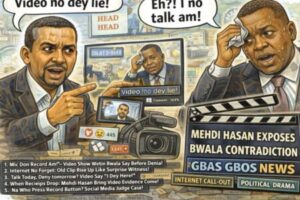



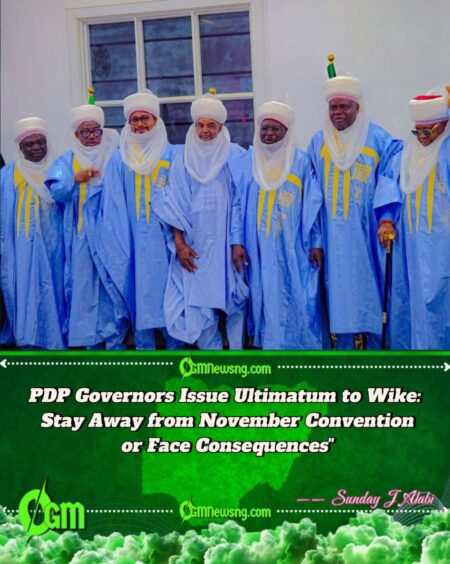
The Peoples Democratic Party(PDP) Governors’ Forum delivered a stern warning on Saturday to the Minister of the Federal Capital Territory (FCT), Nyesom Wike, and other dissenting voices within the party against any attempts to disrupt the scheduled national convention set for November 15, 2025, in Ibadan, Oyo State. The governors, meeting under the chairmanship of Bauchi State Governor Bala Mohammed, made it clear that they would not tolerate any interference with the party’s democratic processes.
The Forum’s statement emphasized their unwavering commitment to the resolutions of the 101st National Executive Committee (NEC) meeting held in July 2025, which had formally approved the November convention date and venue. The governors characterized the PDP as “the only democratic institution and viable alternative for restoring Nigeria to the path of good governance and development,” positioning the party as the nation’s best hope for political redemption.
The warning comes amid growing tensions between the party’s mainstream leadership and Wike, who has been increasingly vocal about his dissatisfaction with various party decisions, particularly regarding zonal leadership appointments and the conduct of party congresses in the South-South region.
PDP Unity Under Threat as Internal Divisions Deepen
The governors’ meeting revealed the extent of internal fractures within Nigeria’s main opposition party, with deliberations focusing extensively on what they described as “orchestrated defections” and attempts to undermine party cohesion. The Forum commended the resilience of PDP leaders and members who have remained loyal despite what they termed deliberate efforts to destabilize the party structure.
According to the governors, these internal challenges cannot diminish the party’s strong grassroots appeal or the Nigerian public’s desire for the “affordable living and relative security” that characterized previous PDP-led administrations. This statement appears to be a direct reference to the economic hardships and security challenges that have marked the current All Progressives Congress (APC) administration.
The forum’s emphasis on unity comes at a critical time when the party is preparing for what many consider a make-or-break convention that could determine its viability as a credible opposition force heading into future elections. The governors stressed that despite the current challenges, the party remains committed to its primary objective of “rescuing the country” from what they described as the APC’s divisive governance.
Wike’s Escalating Confrontation with PDP Leadership
Former Rivers State Governor Nyesom Wike has emerged as the most prominent challenger to the party’s current trajectory, particularly regarding the South-South zonal leadership crisis. Speaking on Channels Television’s “Politics Today” program on Tuesday, August 19, 2025, Wike expressed strong dissatisfaction with the South-South Caretaker Committee established by the PDP National Working Committee (NWC) and the decision to retain Ali Odefa as National Vice Chairman for the South-East zone.
Wike’s primary grievance centers on the party’s refusal to recognize the Calabar congress that elected his ally, Dan Orbih, as National Vice Chairman for the South-South zone. The FCT minister delivered an ultimatum to the party leadership, warning that “a fresh crisis could erupt” if the party continued to ignore what he considers the legitimate outcome of the zonal congress.
“Our congress was held in Calabar, and there’s nothing anybody can tell us,” Wike declared, adding that if party leaders “want to have another round of crisis, so be it.” His statements suggest a willingness to escalate the confrontation rather than compromise on his demands, potentially creating additional instability within the party structure.
Growing Isolation and Fractured Alliances
The current crisis has exposed the deteriorating relationships between Wike and his former political allies, most notably Governor Seyi Makinde of Oyo State. The two leaders, who were once close collaborators and members of the influential G5 governors’ group that challenged the party’s 2023 presidential primary outcome, have now parted ways over the current leadership disputes.
Party members have increasingly blamed Wike for what they describe as “anti-party activities,” citing his position as a minister in the APC-led federal cabinet while simultaneously attempting to influence PDP internal affairs. These accusations, which Wike has consistently denied, have further isolated him from the mainstream party leadership and contributed to questions about his loyalty to the opposition party.
The fracturing of the G5 alliance, which once posed a significant challenge to the party establishment, has weakened Wike’s influence within the party structure. His confrontational approach and demands regarding zonal leadership positions have found little support among his former allies, leaving him increasingly isolated in his battle with the party hierarchy.
National Convention as Test of Party Democracy and Unity
The November 15 convention in Ibadan represents more than just a routine party gathering; it has become a critical test of the PDP’s ability to manage internal democracy while maintaining organizational unity. The governors’ firm stance against any disruption attempts signals their determination to proceed with the convention despite opposition from influential party figures like Wike.
The choice of Ibadan as the venue carries particular significance given Governor Makinde’s previous alliance with Wike and their subsequent falling out. The convention will serve as a platform for resolving outstanding leadership disputes, including the contentious South-South zonal vice-chairmanship position that has become the focal point of the current crisis.
The governors’ characterization of the PDP as a “viable alternative for restoring Nigeria” reflects their broader political strategy of positioning the party as the nation’s salvation from what they describe as APC’s failed governance. The success or failure of the November convention could significantly impact the party’s credibility and its ability to present a united front in future electoral contests, making the resolution of current internal conflicts crucial for the party’s long-term prospects.
Table of Contents
Discover more from OGM News NG
Subscribe to get the latest posts sent to your email.