









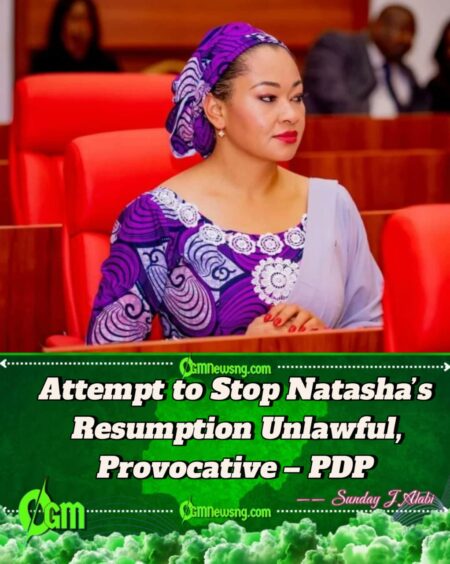
The political drama surrounding Senator Natasha Akpoti-Uduaghan’s suspension from the Nigerian Senate has intensified, with the Peoples Democratic Party (PDP) launching a scathing attack on the National Assembly leadership. The controversy centers on allegations that Senate President Godswill Akpabio and the Acting Clerk to the National Assembly are conspiring to prevent the Kogi Central senator from resuming her duties despite the completion of her six-month suspension period.
Senator Akpoti-Uduaghan was suspended on March 6, 2025, following a Senate committee report that accused her of insubordination for refusing to vacate her assigned seat. The suspension stripped her of salaries, aides, and office privileges, effectively silencing her voice in the upper legislative chamber. However, the senator has consistently maintained that her punishment was politically motivated, directly linking it to a sexual harassment petition she filed against Senate President Akpabio.
The suspension period has been marked by legal battles and public protests, with the senator’s supporters viewing the punishment as an attempt to silence opposition voices. Despite securing a court judgment in her favor challenging the suspension, Senate leadership has remained adamant that she must serve the full six-month penalty, setting the stage for the current constitutional crisis.
Constitutional Violations and Democratic Concerns
The PDP has raised serious constitutional concerns about the handling of Senator Akpoti-Uduaghan’s case, describing the actions of the National Assembly leadership as a “blatant violation of the 1999 Constitution (as amended) and the Standing Rules of the Senate.” In a strongly-worded statement issued by National Publicity Secretary Debo Ologunagba, the party characterized the move as both unlawful and provocative, warning of its implications for democratic governance in Nigeria.
The opposition party has framed the controversy within a broader pattern of what it describes as authoritarian tendencies by the ruling All Progressives Congress (APC). According to the PDP, the attempt to use the National Assembly’s machinery against a duly elected senator represents a clear threat to the democratic process and the principle of separation of powers that underpins Nigeria’s constitutional framework.
The party’s statement emphasized that the action “constitutes a clear and present danger to democracy and overall stability of our country,” suggesting that the controversy has implications that extend far beyond the individual case of Senator Akpoti-Uduaghan. The PDP has positioned this incident as part of what it describes as “creeping totalitarianism” under the current APC government, raising alarm about the erosion of democratic norms and institutions.
Legal Battles and Administrative Roadblocks
The legal dimension of this controversy has added another layer of complexity to an already contentious situation. Despite Senator Akpoti-Uduaghan securing a favorable court judgment challenging her suspension, the Senate leadership has continued to insist on the full implementation of the six-month penalty. This stance has created a direct confrontation between the legislative and judicial branches of government, with significant implications for the rule of law.
In a letter dated September 4, Acting Clerk to the National Assembly, Dr. Yahaya Danzaria, reaffirmed that the suspension remains in effect pending a Court of Appeal judgment. This administrative position has effectively created a legal limbo that prevents the senator from resuming her duties even as her lawyer, Victor Giwa, disclosed that she was preparing to return when the Senate reconvenes on September 23.
The dramatic events of July, when security operatives blocked Senator Akpoti-Uduaghan from re-entering the chamber while her supporters staged protests outside, demonstrated the physical manifestation of this legal and political standoff. These scenes highlighted the extent to which the controversy has escalated beyond normal parliamentary procedures and entered the realm of public confrontation and civil unrest.
Gender Dimensions and Harassment Allegations
The PDP has specifically highlighted the gender dimensions of this controversy, linking it to broader concerns about the treatment of women in Nigerian politics. The party’s statement drew attention to “allegations of attacks on the right of women and sustained attempts to stifle their voices” in connection with various accusations of harassment against Senate President Akpabio over the years.
The sexual harassment petition that Senator Akpoti-Uduaghan filed against the Senate President has become a central element in the political narrative surrounding her suspension. Although the Senate dismissed her accusations, the PDP has used this aspect of the controversy to argue that the senator is being persecuted for speaking out against alleged misconduct by the chamber’s leadership.
This gender dimension has added a layer of social justice advocacy to what might otherwise be viewed as a purely political or procedural dispute. The PDP’s emphasis on protecting women’s voices in politics resonates with broader conversations about gender equality and the need to create safe spaces for female political participation in Nigeria’s male-dominated political landscape.
PDP Calls for International Intervention and Democratic Accountability
Recognizing the potentially far-reaching implications of this controversy, the PDP has expanded its appeal beyond Nigeria’s borders, calling on the international community to intervene. The party specifically urged “democratic institutions, rights advocacy groups, and development partners to speak out and condemn the renewed attack on Senator Akpoti-Uduaghan.”
This internationalization of the dispute reflects the PDP’s strategy of framing the controversy as a test case for Nigeria’s democratic credentials. By invoking international attention, the opposition party is attempting to apply external pressure on the ruling party and the National Assembly leadership to resolve the matter in accordance with democratic norms and constitutional provisions.
The PDP’s final demands were clear and unambiguous: the Clerk of the National Assembly should withdraw the letter preventing the senator’s return, Senate leadership should ensure she can resume her duties unhindered, and the broader issues of democratic governance and rule of law must be addressed. The party charged Senator Akpoti-Uduaghan to “discountenance the reported letter by the Clerk of the National Assembly and get ready to resume at the Senate,” setting up a potential confrontation when the legislative session resumes.
Table of Contents
Discover more from OGM News NG
Subscribe to get the latest posts sent to your email.