









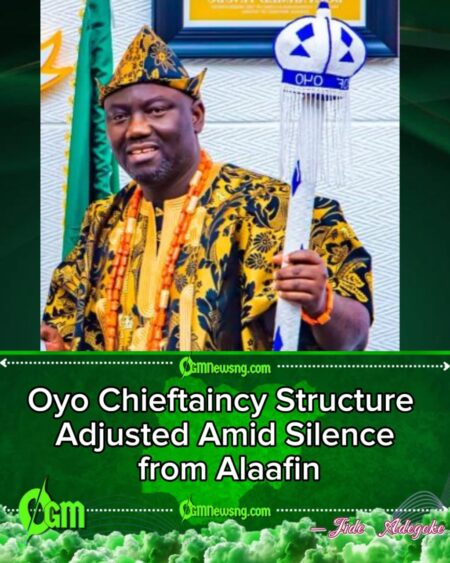
In a significant development within Oyo traditional leadership structure, Governor Seyi Makinde has formally crowned 14 new chiefs in Oyo town, a move that has drawn attention due to the reported silence of the Alaafin of Oyo.
The ceremony, which took place in Oyo town, marked a pivotal moment in the ongoing reorganization of the Oyo traditional council. The appointments are believed to be part of broader efforts by the state government to redefine and strengthen the institutional framework of traditional governance in the ancient city.
Observers note that while the governor proceeded with the installation, the absence of public commentary from the Alaafin of Oyo has fueled discussions about the evolving relationship between the state government and the revered throne.
Government’s Position on the Appointments
State officials maintain that the crowning of the 14 chiefs followed due process and was carried out in accordance with the relevant laws guiding chieftaincy matters in Oyo State. According to government sources, the restructuring aims to clarify administrative responsibilities and enhance coordination within the traditional council.
The governor emphasized the importance of preserving Oyo’s rich cultural heritage while ensuring that Oyo Traditional institutions remain functional and aligned with contemporary governance structures. He described the newly crowned chiefs as experienced individuals expected to contribute to peace, development, and stability in the region.
Government representatives further stressed that the reforms are not intended to diminish the authority of the Alaafin but rather to strengthen institutional collaboration between the palace and the state.
Reactions and Broader Implications
The development has generated mixed reactions within Oyo and beyond. Some stakeholders view the move as a progressive step toward modernizing traditional governance, while others have raised concerns about the implications for established customs and the historical authority of the Alaafin.
Traditional institutions in Oyo hold deep cultural significance, tracing their roots to centuries of Yoruba civilization. Changes affecting the structure of the Oyo traditional council often attract considerable public interest, given the symbolic and spiritual importance of the monarchy.
As discussions continue, analysts suggest that dialogue between the state government and the palace will be crucial in ensuring harmony and preserving the unity of Oyo’s traditional leadership system.
Table of Contents
Discover more from OGM News NG
Subscribe to get the latest posts sent to your email.