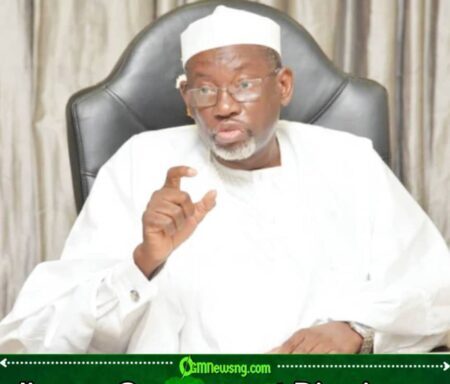






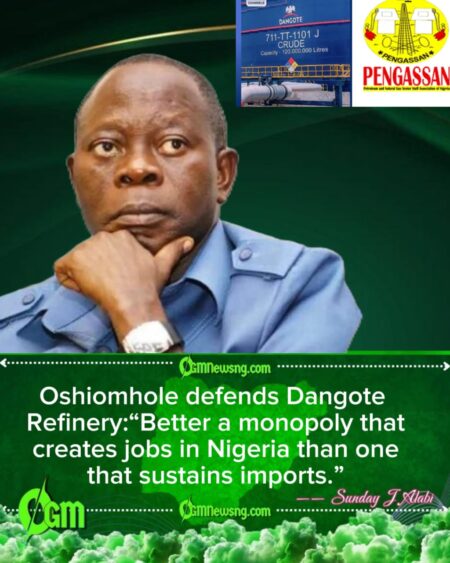
Senator Adams Oshiomhole, representing Edo North Senatorial District, has defended the Dangote Refinery, urging Nigerians to prioritize local job creation over dependence on foreign fuel imports. Speaking on ARISE News, the former Nigeria Labour Congress (NLC) president described the refinery’s ongoing challenges with the Petroleum and Natural Gas Senior Staff Association of Nigeria (PENGASSAN) as a “complex issue” requiring balance and maturity.
Oshiomhole acknowledged workers’ rights to unionize, noting that the Nigerian Constitution under Section 40 guarantees freedom of association. However, he warned against excessive escalation of disputes that could harm other workers and the broader economy. “It is one thing to protect a group of workers, but another to risk the jobs of several others by shutting down an entire industry,” he argued.
According to Oshiomhole , while industrial actions are legitimate, unions must also consider the wider public, including traders and small business owners who suffer from disruptions in supply chains.
Oshiomhole Narrates Dangote Refinery’s Early Struggles and Market Pressures
The senator Oshiomhole stressed that Dangote Refinery, still in its early years of operation, needs time to stabilize before being subjected to extreme pressures. He noted that although the project was inaugurated under former President Muhammadu Buhari, actual production only began months later, leaving the company with less than two years of operational experience.
He further explained the complications around sourcing crude oil, including pricing and competition with exports, which place additional financial strain on the refinery. Oshiomhole urged unions to recognize these difficulties, saying: “An employer must first become strong and mature enough before it can guarantee sustainable jobs and good pay.”
On the recurring debate over monopoly, Oshiomhole was clear: “Would you prefer a monopoly that creates jobs in Nigeria than an import monopoly that drains our resources abroad? Across the world, unions rally behind policies that support local industry.”
The Role of Government and Labour Oversight
The senator Oshiomhole criticised the Ministry of Labour for failing to enforce existing labour laws designed to regulate union actions. He argued that proper government oversight could prevent unnecessary escalation of disputes and ensure fair processes are followed before strikes are declared.
Oshiomhole also raised broader concerns about labour practices in Nigeria’s private sector, pointing out that contract staffing has become rampant in banks. He lamented that about 60 percent of bank employees are on contract terms, denying them gratuity and long-term benefits. “These are practices that must be stopped,” he said firmly.
According to him, some unions are complicit in these exploitative arrangements, collecting “protection fees” from companies without truly representing workers. This, he said, undermines the very essence of unionism.
Jobs, Industry, and the Bigger Picture
While acknowledging the legitimate grievances of oil workers, Oshiomhole appealed for a broader national outlook. He argued that Nigeria’s economic revival depends on strengthening local industries like Dangote Refinery, which has the potential to reduce dependency on fuel imports and create sustainable employment.
He reiterated that unions, instead of crippling domestic firms, should channel their strength into ensuring fair treatment of workers while supporting industrial policies that secure long-term benefits for the economy.
Table of Contents
Discover more from OGM News NG
Subscribe to get the latest posts sent to your email.