







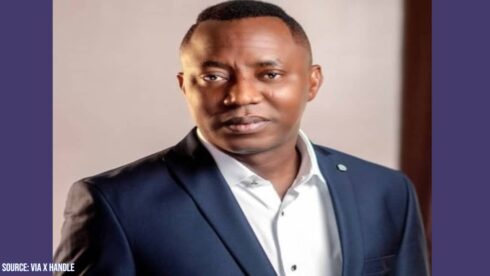
Omoyele Sowore, renowned activist and Sahara Reporters publisher, engaged in a fiery confrontation with security operatives at the Federal High Court in Abuja. The altercation erupted when Omoyele Sowore was denied entry into the courtroom during a high-profile trial. In a moment of palpable frustration, Sowore retorted, “Do I look like Yahaya Bello to you?” This remark, referencing the Kogi State Governor, underscored Omoyele Sowore’s indignation at the perceived preferential treatment of certain political figures.
Eyewitnesses reported that the security personnel attempted to restrict access to the courtroom, leading to a tense standoff. Omoyele Sowore, known for his unwavering stance on civil liberties, challenged the operatives’ actions, asserting his right to attend the public hearing. The incident has since sparked widespread debate about the conduct of security agencies and the treatment of activists within judicial premises.
Omoyele Sowore’s History of Confrontations with Authorities
This episode is not an isolated incident in Omoyele Sowore’s activism journey. Over the years, he has been embroiled in numerous clashes with law enforcement agencies, often stemming from his outspoken criticism of governmental policies and actions. His relentless pursuit of transparency and accountability has positioned him as a formidable figure in Nigeria’s socio-political landscape.
In previous encounters, Sowore has faced arrests, detentions, and legal battles, all of which have amplified his resolve to challenge systemic injustices. His confrontations with authorities highlight the broader struggle for freedom of expression and the protection of human rights in the country.
The Implications of the Yahaya Bello Reference
Omoyele Sowore‘s pointed reference to Governor Yahaya Bello during the altercation carries significant weight. Bello, a prominent political figure, has often been associated with allegations of heavy-handed governance and preferential treatment by security agencies. By juxtaposing himself with Bello, Omoyele Sowore accentuates the disparities in how political elites and activists are treated within the judicial system.
This comparison serves to critique the perceived erosion of impartiality and fairness in the nation’s institutions. It raises pertinent questions about the influence of political power on the enforcement of laws and the safeguarding of civil liberties.
Public Outcry and Media Reactions
The incident has ignited a firestorm of reactions across social media platforms and mainstream media outlets. Supporters of Omoyele Sowore laud his courage in standing up to what they perceive as oppressive tactics by security operatives. Conversely, critics argue that his approach may exacerbate tensions and undermine the decorum expected within judicial environments.
Media analyses have delved into the broader implications of the confrontation, examining the dynamics between state power and individual rights. The discourse reflects a nation grappling with the balance between maintaining order and upholding the fundamental freedoms of its citizens.
Legal Perspectives on Courtroom Access
Legal experts have weighed in on the controversy, emphasizing the principle of open justice, which asserts that court proceedings should be accessible to the public to ensure transparency and accountability. Denying entry to individuals, especially in high-profile cases, can be perceived as a violation of this principle and may erode public trust in the judicial process.
However, security agencies often cite concerns over courtroom capacity and the need to maintain order as justification for restricting access. This tension between security protocols and the right to public hearings remains a contentious issue within legal circles.
Calls for Reform and Accountability
In the aftermath of the altercation, human rights organizations and civil society groups have renewed calls for comprehensive reforms in the conduct of security agencies, particularly within judicial settings. They advocate for clear guidelines that balance security considerations with the imperative of upholding civil liberties.
Omoyele Sowore‘s confrontation serves as a catalyst for a broader conversation about the role of activism in democratic societies and the responsibilities of state institutions to respect and protect dissenting voices. The incident underscores the urgent need for systemic changes to foster an environment where justice is not only done but is manifestly seen to be done.
Table of Contents
Discover more from OGM News NG
Subscribe to get the latest posts sent to your email.