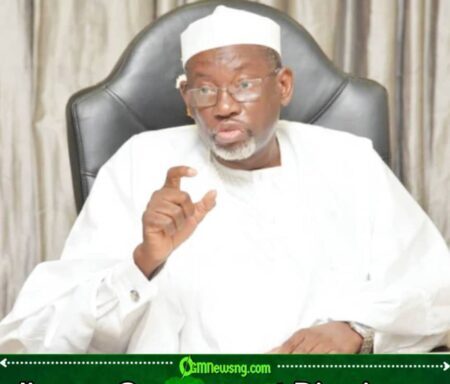






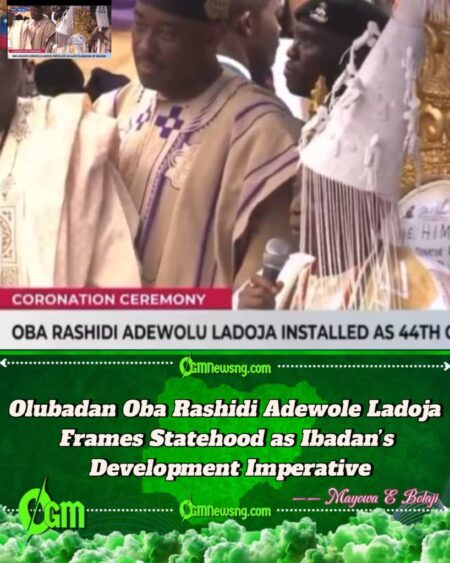
Olubadan Oba Rashidi Adewole Ladoja used his coronation platform to convey a clear, collective demand from the people of Ibadan: that the Federal Government should prioritise the creation of an Ibadan State and complete the process before the expiration of the current administration in 2027. Olubadan Oba Rashidi Adewole Ladoja presented the request directly to President Bola Ahmed Tinubu shortly after receiving his Staff of Office, characterising the call as a mandate from indigenes at home and abroad and stressing its urgency.
Olubadan Oba Rashidi Adewole Ladoja opened his speech at Mapo Hall by underlining that he spoke on behalf of a broad cross-section of Ibadan residents who view statehood as the immediate priority for the city. Olubadan Oba Rashidi Adewole Ladoja described the entreaty as collective rather than personal, conveying that his elevation to the throne carried with it a renewed responsibility to press longstanding local demands to the national level.
Olubadan Oba Rashidi Adewole Ladoja told the President in clear terms — reportedly speaking in Yoruba during the ceremony — that “my people sent me a message” and that the creation of Ibadan State should be treated as an urgent national matter. Olubadan Oba Rashidi Adewole Ladoja’s remark, carried widely in national outlets, framed the demand as both symbolic of Ibadan’s identity and instrumental to future governance.
Olubadan Oba Rashidi Adewole Ladoja emphasised that the timing of the request — before the end of the current federal administration in 2027 — reflected the depth of feeling across Ibadanland and the desire for a prompt political response. Olubadan Oba Rashidi Adewole Ladoja said his people expected engagement from the presidency and from federal and state lawmakers to move the idea beyond rhetoric and into the required constitutional process.
Olubadan Oba Rashidi Adewole Ladoja Lays Out the Developmental and Historical Case
Olubadan Oba Rashidi Adewole Ladoja framed the call for statehood as rooted in Ibadan’s long history as a commercial, educational and administrative hub, arguing that state status would better harness local resources and institutional capacity for development. Olubadan Oba Rashidi Adewole Ladoja pointed to the city’s federal establishments, universities and private-sector footprint as evidence that Ibadan possesses both the human capital and infrastructure to function as a standalone state.
Olubadan Oba Rashidi Adewole Ladoja argued that state creation would create formal channels for more targeted revenue allocation, planning and local representation — factors he said would accelerate infrastructure delivery, healthcare expansion and job creation across Ibadanland. Olubadan Oba Rashidi Adewole Ladoja also referenced the sentiment among younger and diasporic Ibadan indigenes, who, he said, see statehood as a means to ensure stronger institutional stewardship and accountability.
Olubadan Oba Rashidi Adewole Ladoja acknowledged, however, that the proposal carries political and administrative complexities, including sensitivities within Oyo State and among neighbouring communities. Olubadan Oba Rashidi Adewole Ladoja urged stakeholders to temper rhetoric with a practical roadmap that respects constitutional procedures and the legitimate concerns of all affected populations, while insisting that the people of Ibadan remain resolute in pressing their claim.
Olubadan Oba Rashidi Adewole Ladoja Maps the Political and Legal Road Ahead
Olubadan Oba Adewole Ladoja appealed directly to President Tinubu to use the influence of the presidency to open channels of consultation with the National Assembly, Oyo State authorities and affected local councils, underscoring that presidential engagement would be decisive in moving a state-creation bid forward. Olubadan Oba Rashidi Adewole Ladoja framed presidential leadership as both symbolic and practical — necessary to convene stakeholders and to expedite the procedural steps that follow a formal request.
Olubadan Oba Rashidi Adewole Ladoja reminded listeners that the Nigerian Constitution sets out a demanding process for creating a new state, including a formal request supported by significant legislative endorsements, a referendum in the affected area requiring a high threshold of approval, and subsequent passage of a law by the National Assembly often requiring two-thirds majorities. Olubadan Oba Adewole Ladoja urged prospective campaigners to align their approach with Section 8 of the Constitution and the established legal steps to avoid procedural pitfalls.
Olubadan Oba Rashidi Adewole Ladoja noted the broader national context in which the idea of creating additional states has re-entered political debate — including parliamentary and review-committee activity earlier in the year that considered proposals for new states — and he said that a focused, well-documented campaign from Ibadan could leverage that momentum if it builds rapid consensus at local and state levels. Olubadan Oba Adewole Ladoja nevertheless cautioned that realising the 2027 timeline would demand sustained political mobilization, technical preparation for a referendum, and clear legislative strategy.
Olubadan Oba Adewole Ladoja concluded his remarks by urging calm, unity and diligence among Ibadan stakeholders as they pursue the statehood objective, emphasising that peaceful advocacy and strict adherence to constitutional steps would best serve the cause. Olubadan Oba Adewole Ladoja reiterated his personal commitment to shepherding the issue in a manner that blends traditional authority with pragmatic political engagement, and he invited federal, state and local leaders to begin dialogue toward a feasible, legally sound timeline.
Table of Contents
Discover more from OGM News NG
Subscribe to get the latest posts sent to your email.