







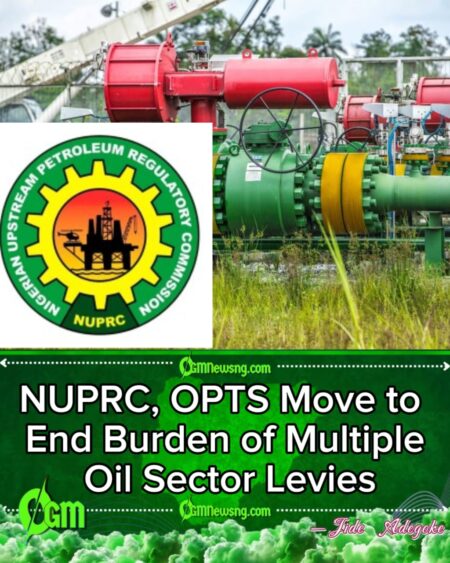
The Nigerian Upstream Petroleum Regulatory Commission (NUPRC) has announced that it is working closely with the Oil Producers Trade Section (OPTS) to resolve the long-standing challenge of multiple levies imposed on operators in the oil and gas industry. Executive Commissioner for Corporate Services and Administration at NUPRC, Mrs. Enorense Amadasu Eyesan, disclosed that the collaboration is aimed at creating a more predictable fiscal environment capable of attracting investment and boosting national production.
NUPRC: Collaboration to Streamline Industry Charges
Eyesan explained that the issue of overlapping fees from various government agencies has been a major concern for upstream operators, often increasing the cost of doing business and slowing project execution. According to her, the commission has opened structured engagements with OPTS to harmonise these charges and ensure that only statutory and transparent payments remain in place.
She noted that the Petroleum Industry Act (PIA) provides a strong legal framework for regulatory clarity and that the NUPRC is committed to implementing its provisions fully. The ongoing dialogue, she said, would help eliminate ambiguities, reduce bureaucratic bottlenecks, and strengthen investor confidence in Nigeria’s petroleum sector.
Boosting Investment and Production
Industry analysts have long warned that Nigeria’s competitiveness has been weakened by a complex web of taxes, levies, and administrative charges. Eyesan stressed that addressing the problem is critical to achieving the country’s production targets and unlocking new exploration opportunities.
She added that the commission is also leveraging digital platforms to improve transparency in revenue collection and licensing processes. These reforms, she maintained, would not only lower operating costs but also position Nigeria as a preferred destination for global energy investors at a time of intense competition.
Stakeholders Welcome Initiative
Representatives of OPTS reportedly welcomed the engagement, describing it as a positive step toward building trust between regulators and operators. They expressed hope that the outcome would lead to a single, clearly defined fee regime that aligns with international best practices.
Eyesan assured stakeholders that the commission would continue to consult widely before implementing any final framework. She reiterated that the ultimate goal is to protect government revenue while ensuring that businesses operate in an environment that encourages growth, innovation, and job creation.
Table of Contents
Discover more from OGM News NG
Subscribe to get the latest posts sent to your email.