








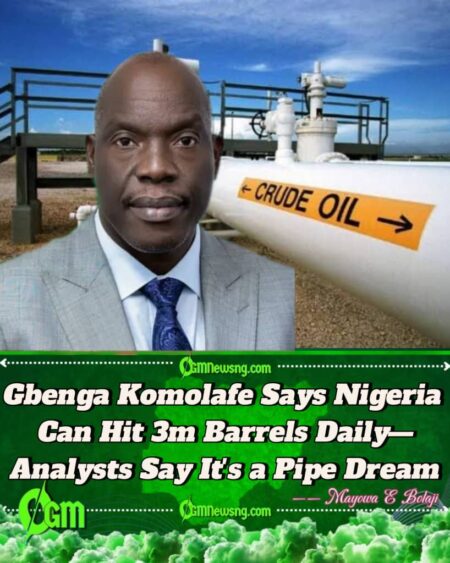
Gbenga Komolafe, the CEO of the Nigerian Upstream Petroleum Regulatory Commission (NUPRC), announced a significant surge in Nigeria’s oil production for July, reaching over 1.8 million barrels per day (bpd), with an average of 1.78 million bpd. This marks the country’s most substantial rebound in crude output in recent years, signaling a potential return to pre-crisis levels after years of sabotage, oil theft, and underinvestment in the sector.
Gbenga Komolafe emphasized that this production milestone reflects the success of joint efforts between the federal government and security agencies to curb illegal bunkering and pipeline vandalism. However, critics argue that while production may have increased on paper, the benefits have yet to reach the average Nigerian still battling fuel scarcity, rising inflation, and chronic unemployment.
Security Gains or Statistical Games? Oil Output Surge Under Scrutiny
Gbenga Komolafe attributed the rise in oil output primarily to “enhanced security architecture” around key oil installations, particularly in the Niger Delta region. According to him, strategic partnerships with security forces and community engagement have led to fewer disruptions, paving the way for uninterrupted production and more accurate reporting of daily outputs.
Yet, opposition voices and some industry experts are questioning the accuracy of these figures. With reports of ongoing oil theft and discrepancies between NUPRC and OPEC data, many wonder if the claimed 1.8 million bpd is genuinely sustainable or simply a short-term spike engineered to boost investor confidence and global image.
From Aspiration to Ambition: Komolafe Eyes 3 Million Barrels Daily
Gbenga Komolafe told delegates at a recent energy conference that Nigeria’s ultimate goal is to ramp up production by another 1 million barrels daily, aiming for a target of 3 million bpd in the near future. He maintained that this would not only restore Nigeria’s lost status among top oil producers but also drastically improve foreign exchange inflows and job creation.
However, energy economists are warning against over-optimism, citing decaying infrastructure, investor hesitancy, and a growing global shift towards renewable energy. Some critics argue that Nigeria is chasing outdated ambitions, risking massive capital expenditure on fossil fuels while global demand gradually diminishes.
Transparency Promises Echo Through the Sector
Gbenga Komolafe assured the public and industry players that the commission would deepen transparency within the oil and gas sector through digital monitoring tools and regular audit disclosures. According to him, the NUPRC is committed to fostering an open oil economy where data integrity and regulatory oversight are prioritized.
Nonetheless, Komolafe’s declaration has been met with skepticism from civil society groups and whistleblowers who allege persistent opacity in oil revenue reporting, subsidy payments, and licensing processes. With corruption scandals haunting the sector, many see this as another hollow promise without legislative backing or independent verification mechanisms.
Public Reaction: More Oil, But No Impact?
Gbenga Komolafe’s announcement, while celebrated within government circles, has triggered frustration among citizens who question why an increase in oil production hasn’t translated into economic relief. The Nigerian public continues to grapple with record fuel prices, epileptic power supply, and surging food inflation, prompting demands for direct accountability on oil revenue usage.
For many, the core issue isn’t how much oil Nigeria produces, but how transparently the proceeds are managed. As one analyst put it, “You can pump 3 million barrels daily, but if the money disappears into a black hole, what’s the point?” Komolafe now faces the challenge of convincing Nigerians that production growth will lead to shared prosperity.
Global Implications and OPEC Dynamics
Gbenga Komolafe also hinted that Nigeria’s improved performance positions it to renegotiate its OPEC quota more confidently, potentially securing a more favorable output cap and greater leverage in global oil politics. With crude prices still volatile due to geopolitical tensions, Nigeria’s increased capacity could be strategically significant.
Still, analysts warn that pushing for higher OPEC quotas could backfire if Nigeria fails to sustain output levels or meet new benchmarks. There are also geopolitical ramifications, as competing oil-producing nations may see Nigeria’s resurgence as a threat to their own market shares. Komolafe’s diplomacy and data will be under heavy scrutiny in coming months.
Table of Contents
Discover more from OGM News NG
Subscribe to get the latest posts sent to your email.