




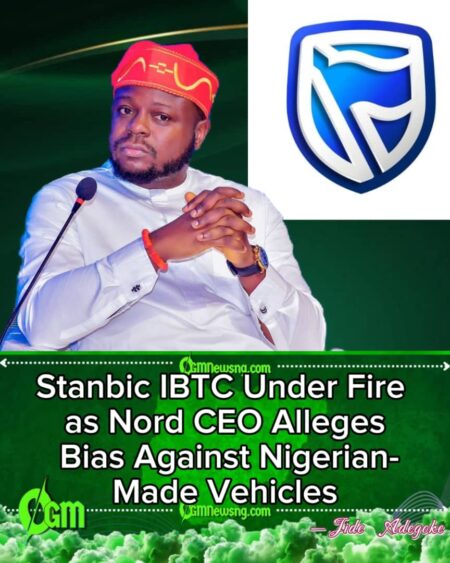
Oluwatobi Ajayi, chief executive officer of Nord Motion, has accused Stanbic IBTC Bank of discouraging a prospective buyer from purchasing a Nigerian-made vehicle. In a statement shared on X, Ajayi said a potential client—an entrepreneur in the oil and gas sector—was advised by the bank to opt for foreign brands because Stanbic IBTC allegedly does not provide financing for locally assembled vehicles.
NORD C.E.O Accuses Stanbic IBTC of Sabotage
Ajayi explained that the customer had initially approached Nord Motion to acquire two units of the company’s Max pickup truck after test rides and strong recommendations from industry peers. According to him, the entrepreneur proceeded to engage Stanbic IBTC for financing, only to be told that the bank would not support the purchase of Nigerian-made vehicles.
The Nord CEO described the development as discouraging, saying it undermines the efforts of local automakers working to improve Nigeria’s manufacturing capacity. He added that such actions could hinder the growth of indigenous firms that are striving to compete with global brands in quality and performance.
Ajayi further argued that local manufacturers rely heavily on institutional support from financial stakeholders. He noted that refusing to finance Nigerian-made vehicles contradicts broader national objectives of industrialisation, job creation, and reducing dependence on imported products.
Bank Advised Customer Against Buying Locally-Made Vehicle
In his post, Ajayi said the bank’s representative allegedly recommended that the customer consider foreign alternatives instead of Nord Motion’s locally assembled units. He expressed concern that such counsel weakens consumer confidence in homegrown products, especially in a sector already hindered by high production costs and limited policy incentives.
The allegation has sparked conversation on social media about the need for stronger collaboration between financial institutions and Nigerian manufacturers. Commentators noted that banks play a pivotal role in shaping market choices through financing decisions, and any bias against domestic products could have long-term economic implications.
As of the time of reporting, Stanbic IBTC has not publicly responded to the claims. Industry watchers say the episode highlights ongoing challenges faced by the automotive assembly sector, which continues to advocate for policy reforms, accessible financing, and public confidence in locally produced vehicles.
Table of Contents
Discover more from OGM News NG
Subscribe to get the latest posts sent to your email.