





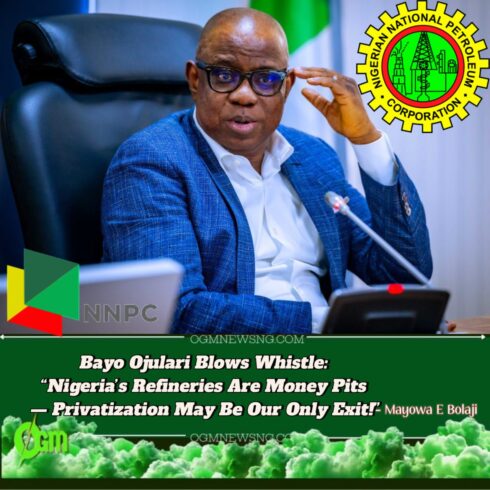
Bayo Ojulari, the Group CEO of Nigerian National Petroleum Company Limited (NNPC), has stirred fresh controversy with a bold revelation: Nigeria’s long-idle refineries may soon be sold off due to mounting technical setbacks. Speaking on the sidelines of the OPEC International Seminar in Vienna, Ojulari disclosed that the rehabilitation journey has turned into a costly quagmire. “We’ve invested heavily, brought in top-tier technology, but the results simply don’t justify the expenditure,” he lamented.
He noted that some of the technologies imported to revamp the aging refineries have failed to function as promised, raising serious questions about procurement transparency and engineering competence. “It’s not just about money anymore — it’s about whether it’s even feasible to revive these dinosaurs,” Ojulari said, igniting fierce public debate over the future of Nigeria’s state-owned energy assets.
Billions Down the Drain: NNPC’s Refinery Rescue Mission Fails
Bayo Ojulari acknowledged that the company had underestimated the complexity of reviving refineries that had been mothballed for decades. “We’re discovering structural flaws that were buried beneath years of inactivity. It’s like resuscitating a fossil,” he said. His comments underline the growing fear that the rehabilitation may have been a technical and financial misjudgment from the outset.
With billions already expended on these projects under various administrations, the public is demanding accountability. Critics are now calling for a forensic audit to trace the trail of wasted funds and abandoned contracts. Many argue that if the refineries couldn’t be saved, NNPC should have declared it years ago — not after throwing good money after bad.
-Bayo Ojulari: “We Can’t Keep Sinking Funds Into Ruins” — Privatization on the Table
According to Ojulari, NNPC is now re-evaluating its entire refinery strategy, with privatization no longer off the table. “There’s no pride in holding on to an asset that drains national resources,” he remarked. This radical pivot hints at an imminent shift from nationalist economic policies toward more commercially pragmatic solutions.
Though selling off the refineries would be politically sensitive, Bayo Ojulari emphasized that NNPC’s priority must now be operational efficiency and long-term sustainability. “We’re not sentimental about these assets. We want what works for Nigerians — not just symbols of sovereignty,” he concluded, suggesting that private-sector players may soon step in where the government has failed.
Experts React: Is NNPC Admitting a Historic Policy Failure?
Policy analysts argue that Bayo Ojulari statement may amount to an implicit confession of policy collapse by successive governments. “This isn’t just a management issue. It’s an indictment of decades of poor planning and economic nationalism,” said Dr. Tunde Bakare, an energy economist. The decision to consider asset divestiture now is being seen as too little, too late.
Public frustration is reaching boiling point, especially as Nigeria continues to import refined petroleum despite owning refineries. Many Nigerians are asking why the country, blessed with oil, remains addicted to imports. Ojulari’s remarks have brought this painful paradox back into the national spotlight — with some seeing hope in change, and others smelling a looming scandal.
Union Backlash: Labor Vows to Resist Refinery Sale “By Any Means Necessary”
Bayo Ojulari’s comments have sparked immediate resistance from organized labor unions, including the NUPENG and PENGASSAN. “We won’t sit by and watch NNPC auction off the nation’s soul,” said Comrade Chika Onuegbu, a union representative. Labor leaders argue that privatizing the refineries could lead to mass layoffs and further exploitation of workers.
The unions have threatened industrial actions if the government proceeds without transparency and stakeholder engagement. Ojulari’s push for commercial efficiency may now clash head-on with labor’s quest for job security, setting the stage for another national showdown in the already volatile oil and gas sector.
What Next? Stakeholders Await Presidential Directive Amid Uncertainty
As Bayo Ojulari awaits the conclusion of the internal strategy review by year’s end, all eyes are now on President Bola Tinubu and his cabinet for direction. Will the presidency greenlight the sale, or will it double down on public sector-led rehabilitation? Industry watchers suggest the next few months could redefine Nigeria’s energy landscape.
Bayo Ojulari however, remains firm: “We’re not rushing. We’ll evaluate everything — cost-benefit, sustainability, value to the Nigerian people — before taking action.” Yet behind this calm posture lies a growing storm, as public trust continues to erode and the political cost of past decisions becomes increasingly clear.
Table of Contents
Discover more from OGM News NG
Subscribe to get the latest posts sent to your email.