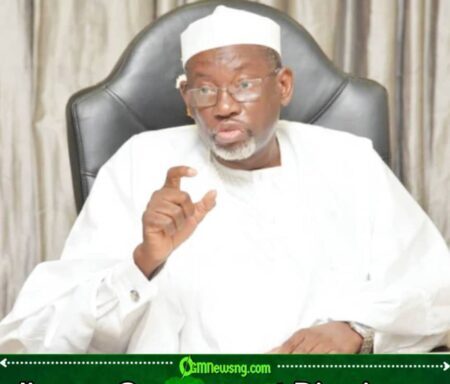








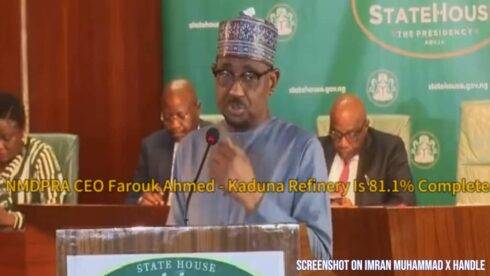
Farouk Ahmed, Chief Executive Officer of the Nigerian Midstream and Downstream Petroleum Regulatory Authority (NMDPRA), announced that the rehabilitation of the Kaduna Refinery has reached 81.1% completion. Speaking during a facility inspection and technical briefing, Ahmed described the project as a pivotal achievement in Nigeria’s drive toward energy self-sufficiency, emphasizing that the refinery’s completion will significantly reduce dependence on imported petroleum products.
According to Ahmed, the current phase focuses on integrating mechanical components and systems testing, a crucial precursor to final commissioning. The rapid advancement is attributed to improved project management frameworks, dedicated funding through the Nigerian National Petroleum Company Limited (NNPCL), and cooperation from international engineering partners. This milestone marks the beginning of what Ahmed calls “a new era of operational excellence in Nigeria’s refining sector.”
Strategic Importance: Kaduna Refinery Key to National Energy Security
Farouk Ahmed emphasized that the Kaduna Refinery’s strategic position in Northern Nigeria makes it indispensable to national energy security. Once operational, the refinery will supply refined products to key economic hubs across the North and Central regions, bridging the supply gap that has long been filled by costly imports and erratic transportation logistics from Southern refineries or offshore sources.
Beyond energy distribution, Farouk Ahmed noted that the refinery’s restart is a core pillar in reducing Nigeria’s exposure to foreign exchange volatility driven by imported fuel purchases. “A functional Kaduna Refinery will anchor national pricing stability, create a dependable domestic supply chain, and inject resilience into the petroleum downstream sector,” he stated. The vision, he says, is not just refining but reforming.
Local Content and Job Creation: A Catalyst for Socioeconomic Growth
Farouk Ahmed also underscored the socioeconomic ripple effects generated by the refinery’s rehabilitation. Over 2,000 skilled and semi-skilled workers have been engaged since the project commenced, with over 65% of labor sourced from local communities. According to Ahmed, this is in line with the Federal Government’s local content policy and a deliberate effort to stimulate regional development through industrial participation.
Additionally, Ahmed stressed that when fully operational, the refinery will offer sustainable jobs across maintenance, logistics, operations, and engineering roles. He said, “This project is not just about barrels and pipelines; it’s about building capacity and empowering Nigerians. We are creating a value chain that supports livelihoods beyond the gates of the refinery complex.”
Technical Challenges and Solutions: Engineering Precision at Work
Acknowledging the complexities of reviving a decades-old facility, Farouk Ahmed detailed how extensive retrofitting has been required to meet modern refining standards. Obsolete components have been replaced, corrosion damage repaired, and automation systems upgraded to align with global safety and efficiency protocols. “It’s been a process of technological renewal, not just rehabilitation,” Ahmed explained.
He further revealed that collaboration with international partners has allowed for the transfer of best practices and sophisticated diagnostic tools. This collaborative framework, Ahmed asserted, has been crucial in addressing critical challenges such as pipeline integrity, corrosion mitigation, and throughput optimization. “We’ve built a refinery of the future, on the legacy of the past,” he declared.
Government’s Commitment: Buhari-Tinubu Transition Fueling Project Continuity
Farouk Ahmed lauded the consistency of political will that has driven the Kaduna Refinery’s progress, highlighting the seamless transition of focus from the Buhari administration to President Tinubu’s energy agenda. He noted that the commitment to refinery revitalization reflects a broader push for energy reform, economic diversification, and infrastructural regeneration.
According to Ahmed, ongoing funding support from the NNPC Limited and oversight from the Ministry of Petroleum Resources have ensured transparency, accountability, and adherence to timelines. “This refinery is a living example of what happens when policy, performance, and purpose are aligned,” he remarked. The project, he added, stands as a national symbol of industrial revival.
What’s Next? Testing Phase and Full Commissioning Timeline
Farouk Ahmed confirmed that the next milestone will be the transition to pre-commissioning and testing phases scheduled for Q3 2025. This involves rigorous performance testing of distillation units, catalytic reformers, and safety systems, with all parameters benchmarked against global refining standards. The refinery is expected to commence partial operations before the end of 2025.
As Farouk Ahmed looks ahead, he urged Nigerians to remain optimistic, assuring that the Kaduna Refinery will not only meet local demands but also position Nigeria as a potential exporter of refined products within West Africa. “Kaduna will roar again—not just as a refinery but as a beacon of our energy independence,” he concluded.
Table of Contents
Discover more from OGM News NG
Subscribe to get the latest posts sent to your email.