







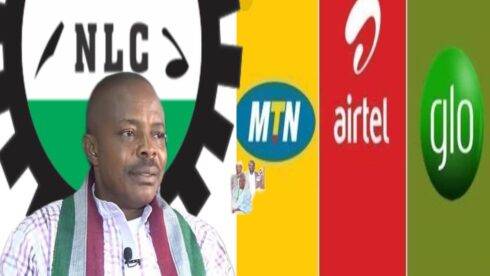
The Nigerian Labour Congress (NLC) has ignited a nationwide standoff with major telecommunications providers—MTN, Airtel, and Glo—over a recent tariff increase. Effective Thursday, February 13, 2025, the NLC has directed workers and concerned citizens to boycott these networks daily between 11:00 AM and 2:00 PM until the end of February. This drastic measure underscores the mounting frustration over escalating communication costs amid economic hardship.
Joe Ajaero, NLC President, alongside Emmanuel Ugboaja, the union’s secretary, made the announcement on Wednesday, condemning what they termed an “arbitrary” tariff increase. The NLC insists that the telecom firms immediately revert to their previous pricing structure while a committee deliberates on the issue. With millions of Nigerians relying on these networks, this boycott could have significant economic and operational repercussions.
Telecom Tariff Hike: A Silent Burden on Struggling Nigerians
The recent tariff hike has sparked outrage, as Nigerians already grapple with inflation, high energy costs, and stagnant wages. The increment, which took effect on February 13, 2025, has further strained household budgets, making basic communication an expensive necessity rather than an accessible tool. Many subscribers have expressed frustration over the lack of prior consultation, accusing telecom operators of prioritizing profit over public interest.
Telecom providers, however, justify the increase by citing operational costs, rising foreign exchange rates, and regulatory compliance fees. They argue that maintaining infrastructure and expanding coverage in underserved areas require significant investment. Despite these explanations, critics believe that the tariff surge disproportionately affects low-income earners, effectively marginalizing millions who depend on affordable mobile services for work, education, and daily transactions.
Economic Fallout: Can Nigeria Afford a Telecom Blackout?
A three-hour daily boycott of Nigeria’s largest telecom providers could trigger widespread economic consequences. Businesses, government agencies, and financial institutions heavily rely on mobile networks for seamless transactions, communication, and digital services. A temporary shutdown in consumer activity could lead to revenue losses for both telecom firms and sectors dependent on online connectivity.
Analysts warn that if the protest gains traction, stock values of telecom firms might take a hit, forcing investors to rethink their confidence in Nigeria’s digital economy. Moreover, with fintech services deeply intertwined with mobile networks, the boycott could disrupt banking operations, online payments, and remittance flows. If prolonged, this standoff may escalate into a broader economic crisis, with both telecom providers and consumers bearing the brunt of the fallout.
Government Caught in the Crossfire: Will Regulatory Bodies Intervene?
The Nigerian Communications Commission (NCC) and the Ministry of Communications now face mounting pressure to intervene. The NLC has positioned itself as a formidable force against what it perceives as corporate exploitation, demanding that regulatory bodies prioritize consumer protection. Given the economic stakes, a government-brokered dialogue may be the only viable resolution to this standoff.
However, regulatory agencies have historically been criticized for aligning with corporate interests rather than advocating for the average Nigerian. Some industry insiders speculate that the tariff increase had quiet approval from regulatory authorities, making it difficult for the government to take a hard stance against telecom firms. If the NCC remains silent, public confidence in regulatory oversight could erode, fueling further unrest and industrial action.
Nigerians Speak Out: Divided Opinions on Boycott Strategy
The public reaction to the NLC’s directive has been mixed. While many citizens support the move as a necessary pushback against corporate exploitation, others are skeptical about its effectiveness. Some argue that a temporary boycott will do little to force telecom firms into compliance, suggesting instead a full-scale legal challenge or direct negotiations with government agencies.
On social media, the debate has intensified, with hashtags like #BoycottMTN, #NoToTariffHike, and #NLCProtest trending nationwide. Some users praise the labor union for standing up against perceived injustice, while others warn of unintended consequences, such as job losses in the telecom sector. Whether this movement gains sustained momentum or fizzles out in the coming weeks remains to be seen.
What’s Next? A Brewing Showdown or Swift Compromise?
The coming weeks will determine whether telecom providers yield to public pressure or hold their ground. If the NLC’s protest significantly affects revenue streams, companies may be forced to reconsider their pricing strategies. Conversely, if the boycott fails to achieve widespread participation, the tariff hike may become a permanent fixture in Nigeria’s economic landscape.
Stakeholders now anticipate possible emergency negotiations between labor leaders, telecom executives, and government officials. A compromise may involve a partial rollback of the tariff increase or the introduction of subsidized plans for low-income earners. Regardless of the outcome, this protest signals a growing wave of resistance against unchecked corporate pricing in Nigeria’s telecommunications sector.
Table of Contents
Discover more from OGM News NG
Subscribe to get the latest posts sent to your email.