









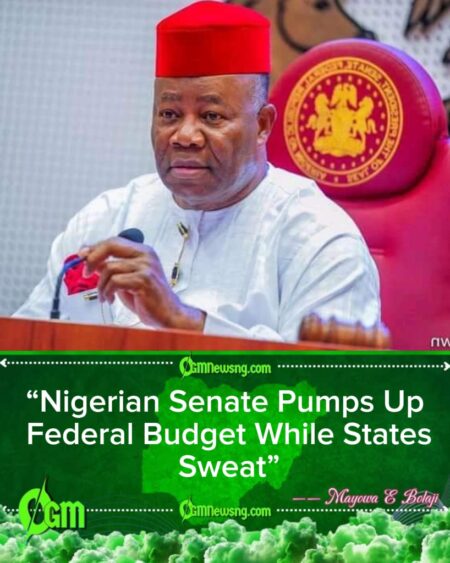
The Nigerian Senate has officially kicked off a major initiative to revise the nation’s revenue-sharing formula, proposing an increase in the Federal Government’s allocation. This move, lawmakers argue, is crucial to addressing the evolving financial obligations of the central government while ensuring the sustainability of national projects and federal responsibilities.
During plenary sessions, senators emphasized that the existing revenue-sharing formula was designed decades ago and may no longer reflect the economic realities and fiscal pressures facing the Federal Government. According to several senators, an updated allocation would provide the federal level with the resources needed to fund national security, debt obligations, and critical infrastructure projects.
The Nigerian Senate stated that the proposed review would follow all constitutional requirements and involve broad consultations with stakeholders, including state governments and the Revenue Mobilisation Allocation and Fiscal Commission (RMAFC). Lawmakers insisted that the goal is to create a fair, balanced, and transparent system that strengthens governance without disproportionately undermining state or local government finances.
Rationale for the Nigerian Senate’s Proposal
Proponents within the Nigerian Senate stressed that the Federal Government now bears significant fiscal responsibilities, ranging from national security and border protection to energy infrastructure and social welfare programs. They argued that the current allocation formula is inadequate to meet these rising demands, leaving federally funded projects chronically underfunded.
During Senate deliberations, lawmakers highlighted the critical need for a formula that aligns with modern economic realities. Senators maintained that increasing the federal share would ensure efficient execution of nationwide programs, facilitate timely payments to federal agencies, and enhance the government’s ability to respond to emergencies and economic shocks.
The Nigerian Senate also made clear that this initiative would consider the financial needs of states and local governments. Senators emphasized that the review would be data-driven and equity-focused, with a commitment to balancing federal interests with the fiscal autonomy and developmental needs of subnational governments.
Implications and Next Steps from the Nigerian Senate
The proposal by the Nigerian Senate to increase federal allocation has generated mixed reactions. While some economists and political analysts see it as a necessary adjustment to strengthen national institutions, others fear it could further strain state and local government resources, potentially slowing grassroots development.
State governments are preparing to engage with the Nigerian Senate to safeguard their allocations, citing rising infrastructure costs and social service obligations. Local government advocates have also called on the Senate to ensure that any changes in the revenue-sharing formula do not marginalize the third tier of government, which plays a critical role in local development.
The Nigerian Senate outlined that the next steps will include public hearings, consultations with the Revenue Mobilisation Allocation and Fiscal Commission (RMAFC), and potential constitutional amendments where necessary. Experts agree that the outcome of this review could significantly redefine Nigeria’s fiscal federalism, governance efficiency, and long-term economic stability, making the Nigerian Senate’s actions pivotal in shaping national financial policy.
Table of Contents
Discover more from OGM News NG
Subscribe to get the latest posts sent to your email.