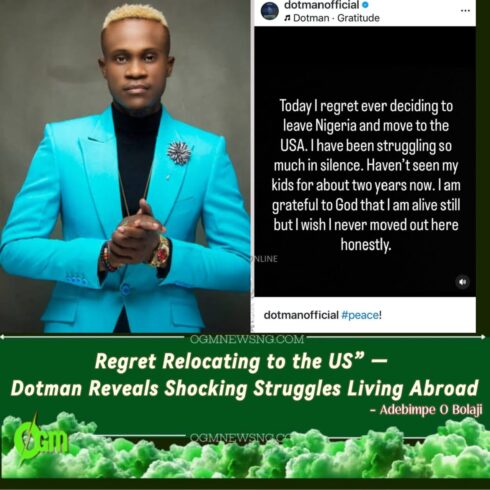
In a rare moment of vulnerability, Nigerian rapper Dotman has come forward with a heartfelt revelation about his life in the United States. The “Akube” crooner expressed deep regret about leaving Nigeria, saying his relocation journey has been far from what he envisioned. In a bold statement that is resonating with many in the diaspora, Dotman admitted, “I regret ever deciding to leave Nigeria and move to the US. I have been struggling so much in silence.”
Dotman’s confession has triggered widespread reactions across social media platforms, as fans and followers express both concern and empathy. His statement sheds light on the often-glossed-over reality that many African creatives face abroad — the overwhelming pressure to succeed while battling internal battles far from home.
Behind the Glamour: Silent Battles of a Star
Despite his fame and musical success in Nigeria, Dotman’s move to the US unveiled a new set of unseen challenges. According to sources close to the rapper, the pressures of adapting to a new system, maintaining financial stability, and staying relevant in the competitive American music scene took a toll on his mental health.
Dotman, known for hits like “My Woman” and “Feelings,” found himself grappling with isolation, loss of creative spark, and a disconnection from his cultural roots. This silent battle has reportedly affected his creative output and personal well-being, prompting his recent outburst as a cry for understanding.
Relocation Dreams vs Reality: Dotman’s Wake-Up Call
Dotman’s experience has sparked an important conversation about the illusion of greener pastures overseas. For many Nigerian youths and celebrities, moving abroad is often seen as a symbol of success. However, the rapper’s regrets unveil the darker underbelly of migration — the struggle with homesickness, cultural displacement, and emotional emptiness.
While fans previously assumed the rapper was living his best life in the U.S., Dotman’s story reveals a contrasting reality. His comments serve as a wake-up call to many aspiring migrants, urging them to consider the psychological and professional implications of leaving home behind.
Fan Reactions: From Shock to Support
Following his disclosure, Dotman has received an overwhelming wave of support from fans, colleagues, and mental health advocates. Many took to Twitter and Instagram to send him words of encouragement and share their own similar experiences. Some praised his bravery for speaking out, while others urged him to return to Nigeria if it would bring him peace.
A notable comment from fellow musician Zlatan read, “Your happiness dey important, my brother. Come back home, we dey your back.” This show of solidarity has reinforced the growing awareness around mental health in the African entertainment industry, where public figures often suffer in silence.
Mental Health in Entertainment: A Growing Concern
Dotman’s confession has reignited conversations about the mental health struggles faced by entertainers, especially those living abroad. The intense pressure to meet public expectations, remain relevant, and sustain a lifestyle that matches fame often results in internal breakdowns that are not immediately visible.
Industry observers note that the Nigerian music industry needs more structured support systems for artists — including mental health counseling and career management guidance — especially for those transitioning internationally. Dotman’s story highlights how success abroad does not always translate to happiness.
What’s Next for Dotman? Possible Return to Nigeria
Insiders suggest that Dotman may be considering a permanent return to Nigeria in the coming months. Though he hasn’t confirmed any decision yet, sources claim the rapper has been in talks with his former management team about a possible musical comeback on the Nigerian scene. His fans are already speculating about a homecoming project that could mark his rebirth in the industry.
Whether or not he returns home soon, one thing is clear: Dotman’s bold revelation is creating waves across the industry. It has opened a necessary dialogue on the realities of migration, emotional struggle, and the price of chasing dreams in unfamiliar territory. His voice might be the catalyst for change — not just for artists, but for anyone dealing with silent battles abroad.
Table of Contents
Discover more from OGM News NG
Subscribe to get the latest posts sent to your email.