






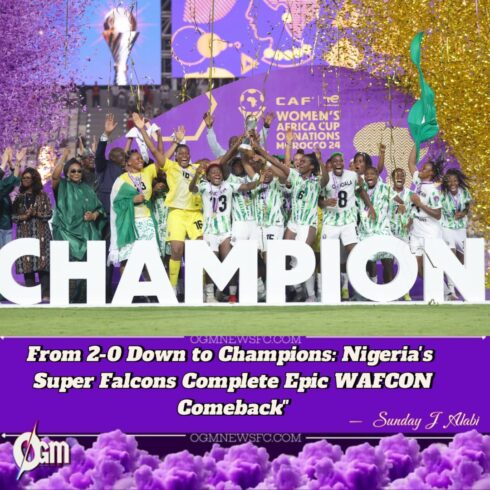
Nigeria’s Super Falcons delivered a performance for the ages in Rabat as they came from two goals down to defeat hosts Morocco 3-2 and claim a record-extending 10th Women’s Africa Cup of Nations (WAFCON) title. Dubbed “Mission X,” their campaign ended in triumph as they reclaimed the continental crown last won in 2018 and maintained their perfect record in WAFCON finals.
Down 2-0 at halftime after goals from Moroccan stars Ghizlane Chebbak and Sanaa Mssoudy, the Super Falcons looked out of sorts. But head coach Justin Madugu’s halftime adjustments sparked a second-half resurgence led by the influential Esther Okoronkwo. Nigeria turned the game around with goals in the 64th, 71st, and 88th minutes — a stretch that will go down in Nigerian football folklore.
Okoronkwo started the comeback with a coolly converted penalty after VAR spotted a handball by Nouhaila Benzina. She then set up Folamide Ijamilusi for the equalizer before delivering a perfect free-kick that substitute Jennifer Echegini swept home to win it with two minutes left. As the final whistle blew, the 21,000-seater stadium fell silent, stunned by the West Africans’ audacious revival.
Nigeria Super Falcons Show Grit After Poor Start
Despite entering the tournament as Africa’s top-ranked team, Nigeria struggled to impose themselves early in the final. The first half saw Morocco outpace and outthink the Super Falcons, with Halimatu Ayinde’s giveaway leading to Chebbak’s stunning opener in the 13th minute. The hosts doubled their lead through Mssoudy’s scuffed effort across goal in the 24th minute.
But Nigeria emerged from the break with renewed purpose and tactical clarity. Okoronkwo’s composed penalty conversion gave them a lifeline, and seven minutes later, she turned provider — darting into the box and unselfishly setting up Ijamilusi. Morocco nearly regained the lead when they were awarded a penalty for a handball, but VAR intervened, and the decision was reversed.
The turnaround was completed in the 88th minute as Okoronkwo floated in a pinpoint delivery from a set piece, and Echegini beat Benzina to the ball, firing home from six yards. It was a third WAFCON final win over a host nation for Nigeria, following similar feats against South Africa (2000) and Cameroon (2016).
Moroccan Hopes Dashed Again on Home Soil
Backed by heavy investment from the Moroccan monarchy and the presence of 2023 World Cup-winning coach Jorge Vilda, the Atlas Lionesses were desperate to make history. After falling short in the 2022 final against South Africa, hopes were high that home support and Vilda’s tactical pedigree would carry them to a maiden WAFCON crown.
Morocco’s road to the final was fraught with challenges. They had to come from behind in three different matches and required a penalty shootout to overcome Ghana in the semi-finals. Despite leading comfortably in the first half against Nigeria, their inability to control the second half ultimately proved costly.
Chebbak, who was chasing a historic family legacy by matching her late father Larbi’s feat of winning an African title, finished as the tournament’s top scorer with five goals. However, at 35, her chances of lifting the trophy may be slipping away, especially with the 2026 edition looming.
Trophy Ceremony Overshadowed by Empty Stands
In a bittersweet postscript to a thrilling final, the Olympic Stadium in Rabat had largely emptied before the trophy presentation. Despite the presence of FIFA President Gianni Infantino and CAF President Patrice Motsepe, few fans stayed behind to witness the coronation of Nigeria as the first champions of the redesigned WAFCON trophy.
Nevertheless, the Super Falcons were jubilant. Their $1 million prize — double the amount from the previous edition — was a welcome bonus, but it was the title that mattered most. Captain Onome Ebi, at 41 and participating in her final WAFCON, was overcome with emotion as she lifted the trophy.
The 2024 WAFCON had been delayed due to scheduling issues and Olympic commitments, but Nigeria ensured it was worth the wait. Their triumph reaffirms their dominance on the African stage and sets a new benchmark for excellence in the women’s game across the continent.
Looking Ahead: Morocco Eyes Redemption in 2026
While Nigeria celebrates, Morocco must regroup ahead of the 2026 WAFCON, which they are set to host once again. With continued backing from King Mohammed VI and an evolving squad under Jorge Vilda, the Atlas Lionesses will hope the third time’s the charm.
Vilda’s impact has been visible, especially in adding structure and flair to Morocco’s play, but lapses in defensive organization and game management have cost them dearly. With promising young talents emerging, Morocco’s future remains bright — but questions linger about whether they can convert potential into podium-topping results.
As for Nigeria, the victory not only cements their place in history but also signals a new era of depth and resilience in women’s football. From veterans like Ebi to breakout stars like Ijamilusi and Okoronkwo, the Super Falcons have built a squad with the balance and belief to dominate for years to come.
Table of Contents
Discover more from OGM News NG
Subscribe to get the latest posts sent to your email.