









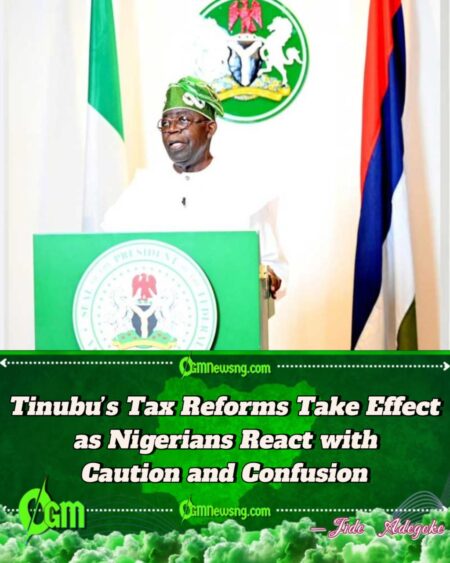
Two major Tax Reform Acts introduced under President Bola Tinubu’s administration have officially come into effect, marking a significant milestone in the government’s efforts to modernize Nigeria’s fiscal framework. However, the rollout has been met with a mix of anxiety, confusion, and debate among citizens, as misinformation about the scope and impact of the reforms continues to spread rapidly across social media platforms.
Announcement of Proposed Laws
The Federal Inland Revenue Service (FIRS) and the Ministry of Finance confirmed that the two new Tax Reform Acts — the Harmonised Tax Policy Act and the Fiscal Efficiency and Revenue Mobilisation Act — became operational this week.
According to government officials, the reforms are designed to simplify tax administration, eliminate multiple taxation, and expand Nigeria’s revenue base without overburdening citizens or businesses. The new laws reportedly focus on digital taxation, streamlining levies across federal and state jurisdictions, and enhancing transparency in revenue collection.
Despite these objectives, many Nigerians remain skeptical. Business owners and civil servants alike have expressed fears that the reforms may inadvertently raise operational costs, while economists warn that the absence of clear communication has worsened public distrust.
Misinformation Fuels Public Anxiety
Misinformation has played a central role in shaping public perception of the new tax laws. Viral posts on social media have claimed that “Nigerians will pay higher income taxes” and that “the federal government will automatically deduct taxes from citizens’ bank accounts.”
However, officials from the Presidential Committee on Fiscal Policy and Tax Reforms have dismissed these claims as false. The committee clarified that no automatic deductions from private bank accounts will occur, and that personal income tax rates remain unchanged.
They further explained that the reforms are aimed at reducing redundant levies, encouraging compliance, and making tax payment more efficient through digital platforms, not at imposing new taxes. Despite these assurances, analysts note that a communication gap between the government and the public has allowed speculation and fear to flourish.
Tax Reforms: Government Appeals for Calm and Understanding
In response to public unease, the Ministry of Finance has urged Nigerians to seek information only from verified government sources. Officials emphasize that the reforms will benefit small businesses by cutting unnecessary levies and simplifying procedures, while also aligning Nigeria’s tax system with international best practices.
The government has also announced plans to launch a nationwide awareness campaign to educate citizens about the implications of the new Acts. Tax experts, meanwhile, are calling for sustained engagement between the government and stakeholders to ensure that implementation does not stifle growth or deepen existing economic hardship
As the new Tax Reform Acts take effect, the true test lies in public communication and execution. While the government insists that the reforms are pro-growth and citizen-friendly, the challenge will be rebuilding public trust amid economic strain and misinformation.
Table of Contents
Discover more from OGM News NG
Subscribe to get the latest posts sent to your email.