









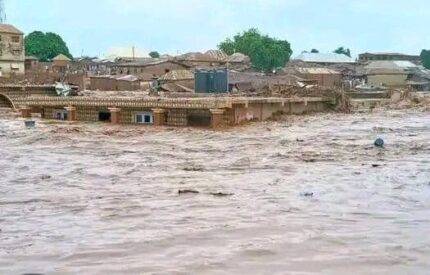
The death toll from the devastating floods in Mokwa Local Government Area of Niger State has surged to 153, following the recovery of additional bodies beneath a bridge in the town, according to the Niger State Emergency Management Agency (NSEMA). The agency confirmed the updated figures to opitanglobamedia news on Sunday, noting a significant rise from the earlier tally of 115 fatalities.
Acting Director General of NSEMA, Ibrahim Hussaini, said that the latest victims were discovered late Saturday and buried early Sunday morning. “We are still recovering bodies,” Hussaini noted, adding that efforts have been hampered by submerged roads and debris. The Mokwa catastrophic flood, which hit after torrential rains last Wednesday night into Thursday, has overwhelmed local resources and plunged the region into mourning.
Mokwa Flood :Thousands Displaced, Infrastructure in Ruins
According to NSEMA’s latest figures, 3,018 individuals have been affected by the floods, spanning across 503 households. The disaster left 11 people injured and caused extensive damage to infrastructure, including the destruction of at least three bridges in Mokwa town alone.
In Ndayako, another community impacted by the floods, 98 individuals were affected though no fatalities were recorded. The area saw damage to 58 homes and 17 households. Similarly, Raba community suffered damage to five houses and one bridge, but reported no loss of life. The agency continues to coordinate relief efforts and monitor the situation, working alongside other state and federal emergency bodies.
Grim Searches and Missing Persons
Even days after the floodwaters surged through Mokwa, residents are still searching desperately for missing loved ones. The Nigerian Red Cross Society, which is supporting rescue operations, says more than 100 individuals remain unaccounted for. “We can’t give up the search as long as there are families crying out,” said Red Cross chief Adamu, expressing hope that some bodies swept away might be found downstream near Jebba.
Excavators are now being brought in to assist in the search amid fears that some victims may still be trapped under rubble. President Bola Tinubu has dispatched security forces to aid in ongoing search and rescue efforts, especially in areas that are still inaccessible due to waterlogged roads and collapsed structures.
Personal Tragedy and Widespread Devastation
Heart-wrenching stories are emerging from the disaster zone the Mokwa Flood. Mohammed Tanko, a 29-year-old civil servant, pointed to a heap of debris that once was his family home. “We lost at least 15 from this house. The property is gone. We lost everything,” he lamented. Survivors like Sabuwar Bala, a 50-year-old yam vendor, recounted how she fled in her underwear and was left with nothing. “I can’t locate where my home stood because of the destruction,” she said, still dazed by the ordeal.
Compounding the tragedy was the collapse of a mosque where a group of travelers had sought shelter for the night. Red Cross officials say it remains unclear how many perished in that incident, as the identities and origins of the occupants remain unknown.
Recurring Floods and Climate Warning
Nigeria’s annual rainy season, which typically spans six months, is increasingly becoming deadly due to a mix of climate change, poor infrastructure, and unsafe building practices. The Nigerian Meteorological Agency had issued warnings for potential flash floods in 15 states, including Niger, ahead of the rains.
In a statement, the National Emergency Management Agency (NEMA) warned that the Mokwa flood is a stark reminder of the dangers of building on waterways and blocking natural drainage routes. “This tragic incident serves as a timely reminder of the dangers associated with building on waterways and the critical importance of keeping drainage channels and river paths clear,” NEMA said.
In 2024 alone, floods have already killed 321 people across 34 of Nigeria’s 36 states. With the rainy season just beginning, agencies are on high alert. The federal and state governments are now under pressure to fast-track infrastructure improvements, enforce town planning regulations, and implement climate adaptation strategies to prevent further tragedies.
Table of Contents
Discover more from OGM News NG
Subscribe to get the latest posts sent to your email.