




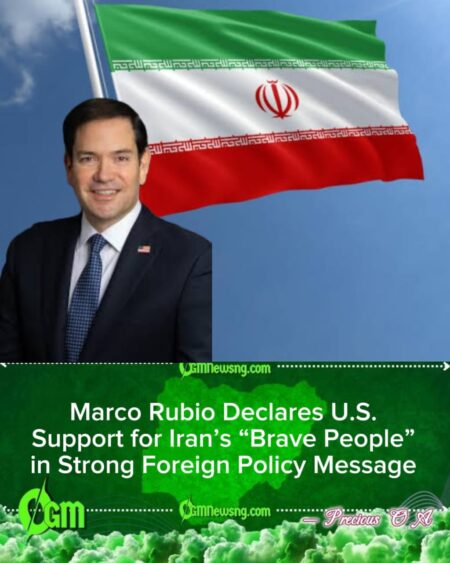
Marco Rubio said the United States stands firmly with what he described as the brave people of Iran, emphasizing that Washington continues to monitor developments inside the country with close attention. He framed the statement as both a moral and strategic position, arguing that the long-term stability of the region is closely tied to the aspirations of ordinary Iranian citizens who seek accountable governance and personal freedoms.
Government officials noted that the remarks came amid heightened international concern over internal pressures in Iran, including economic strain and social unrest. Analysts say such statements are often intended to reassure reform-minded citizens that their struggles are not invisible on the global stage, even as diplomatic channels remain strained.
Marco Rubio added that while diplomatic disagreements persist between Washington and Tehran, the administration distinguishes clearly between a nation’s governing institutions and its people. He stressed that the United States aims to amplify humanitarian considerations while keeping open avenues for peaceful engagement.
Historical Context of U.S.–Iran Relations
Relations between the two countries have long been shaped by decades of political mistrust, sanctions, and diplomatic stalemates. From the aftermath of the 1979 Iranian Revolution to more recent disputes over nuclear development, the relationship has oscillated between cautious dialogue and hardened confrontation.
Observers say that public declarations of solidarity with the Iranian population have become a recurring element of U.S. foreign policy rhetoric. These messages often serve as a way to signal that criticism of Iran’s leadership does not equate to hostility toward its citizens, many of whom maintain cultural, educational, and familial ties with Americans.
Marco Rubio highlighted that such statements are also intended to encourage nonviolent civic participation and international awareness, underscoring that the United States continues to support human rights principles as a core part of its global diplomatic agenda.
Public Reactions and the “Marco Rubio” Debate
The comments immediately drew reactions across social media platforms, where supporters praised the message as a show of solidarity, while critics questioned its practical impact. Some commentators used satirical nicknames and hashtags, including the trending phrase “Narco Rubio,” to inject humor and skepticism into the public discourse.
Marco Rubio dismissed dismissive labels and online mockery, saying that the seriousness of the issues facing Iranian citizens deserves thoughtful attention rather than caricature. He maintained that public engagement, even when critical, reflects a broader awareness of international affairs.
Political analysts observed that such online debates often reflect domestic political divisions as much as international policy disagreements. They noted that while slogans may trend quickly, sustained diplomatic efforts require consistent engagement, careful negotiation, and multilateral cooperation.
Regional Security Implications
The broader Middle East continues to be shaped by shifting alliances, proxy conflicts, and economic challenges, all of which influence how Iran’s internal dynamics are perceived by neighboring countries. Stability in Iran is widely viewed as a key factor affecting energy markets, migration patterns, and regional security arrangements.
Marco Rubio stated that supporting the aspirations of Iranian citizens also aligns with wider efforts to promote long-term stability across the region. He emphasized that peaceful reforms and civic participation can help reduce the likelihood of escalations that spill beyond national borders.
Experts note that any significant internal change within Iran could reshape diplomatic calculations across the Middle East, potentially affecting negotiations, security partnerships, and international investment strategies.
Diplomatic Channels and International Coordination
Despite political tensions, diplomatic channels between Washington and Tehran have not been entirely closed. Multilateral forums and international mediators continue to play a role in maintaining limited communication, particularly on humanitarian and nuclear-related matters.
Marco Rubio explained that the United States is working closely with allies to ensure that its stance remains consistent and coordinated. He highlighted the importance of multilateral diplomacy in presenting a unified front that balances firmness with openness to dialogue.
European officials and regional partners have also reiterated calls for restraint and constructive engagement, emphasizing that sustained communication can help prevent misunderstandings and reduce the risk of escalation.
Looking Ahead for U.S. Foreign Policy
As global attention remains fixed on developments in Iran, policymakers in Washington continue to weigh how best to combine diplomatic pressure with humanitarian considerations. The administration’s messaging suggests an ongoing effort to frame its policies as supportive of people-centered values.
Marco Rubio concluded that the United States will continue to speak out in support of human dignity and lawful civic expression wherever they are challenged. He said that maintaining moral clarity is essential, even amid complex geopolitical realities.
Political observers predict that future statements and policy moves will seek to reinforce this narrative, aiming to reassure international partners while keeping domestic audiences informed about the broader objectives of U.S. foreign policy.
Table of Contents
Discover more from OGM News NG
Subscribe to get the latest posts sent to your email.