


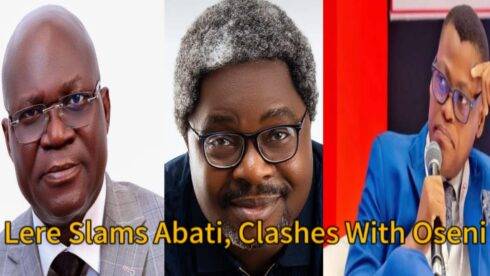
Lere Olayinka, fiery political analyst and former media aide to ex-governor Ayodele Fayose, did not mince words as he publicly called out veteran journalist and Arise TV anchor, Dr. Reuben Abati, accusing him of subtly morphing into a public relations voice for former Transportation Minister, Rotimi Amaechi. “I was shocked to hear Reuben Abati turning himself into a spokesperson for Amaechi,” Olayinka declared during a televised debate. “If he wants to do that job, he should leave Arise TV and go do it properly.”
This stinging rebuke came in the wake of a segment where Abati was perceived to have defended Amaechi’s political moves. Lere Olayinka’s words have reignited discussions around journalistic neutrality, media ethics, and political bias, especially within Nigeria’s increasingly polarized media landscape. The accusations, though direct, hint at deeper fractures within the media-political complex, stirring controversy and intense online reactions.
Rufai Oseni Strikes Back: “Let’s Talk About Your N20 Million Scandal”
Rufai Oseni, Arise TV’s co-anchor known for his no-holds-barred delivery, swiftly fired back during the live show, dragging Lere Olayinka into murky waters. “Maybe one of these days, we will talk about your N20 million proud allegation,” Rufai quipped with restrained rage. The reference to an alleged corruption scandal involving Olayinka added a fresh layer of tension to what was already a combustible exchange.
Lere Olayinka, clearly incensed, snapped back with biting sarcasm and contempt. “Do a documentary on animals and stop talking to human beings,” he retorted. The studio grew tense as civility deteriorated rapidly. Viewers were stunned, not just by the sharpness of the barbs, but by how unrestrained the conversation had become—devolving into personal attacks and unverified allegations, aired without editorial control.
The Traffic Offense Jibe and Accusations of Unprofessionalism
At the heart of Lere Olayinka’s tirade against Oseni was a pointed reference to a past traffic violation. “Let a responsible person coordinate this program, not someone who was convicted for breaking traffic offenses,” he shouted. The dig, aimed squarely at Oseni’s widely publicized altercation with Lagos traffic officers, was as personal as it was humiliating.
Oseni, visibly rattled but determined not to yield, snapped, “I’m not an animal.” This emotional assertion did little to calm the situation as viewers watched what many described as the most unhinged episode in Arise TV’s political programming history. The show, originally meant to illuminate current affairs, had become a theatre of egos and reputational warfare.
Arise TV’s Dilemma: When Commentary Turns into Carnage
Arise TV is now under fire for allowing what critics describe as “an intellectual street brawl” to unfold unchecked. Media observers have lambasted the station for failing to rein in personal attacks and restore decorum. The station’s role in enabling such public mudslinging has sparked a wider conversation about journalistic oversight and editorial responsibility in live programming.
Analysts say the Lere Olayinka-Oseni clash reveals a deeper decay in Nigeria’s political commentary culture, where civility is often discarded in favor of virality and performative outrage. Questions are now being raised: Should political punditry come with regulatory checks? Is Arise TV doing more harm than good to public discourse? The credibility of its flagship programs now hangs in the balance.
Lere Olayinka: Outspoken or Out of Control?
Lere Olayinka’s brand has always been controversial—an unfiltered firebrand unafraid of confrontation. His supporters argue he is the last of a dying breed of truth-tellers, unencumbered by institutional politeness or media compromise. But his critics insist that this recent meltdown exposes a man intoxicated by his own voice, unwilling to submit to the bounds of professional etiquette.
As his confrontation with Oseni trends across social media, Lere Olayinka has doubled down on his statements. In a series of posts, he suggested that Nigeria’s media class is “riddled with hypocrites who pretend to be neutral but are deeply entrenched in political contracts.” He remains unapologetic, and if anything, seems emboldened by the chaos he helped unleash.
The Bigger Picture: Media Bias, Political Loyalty, and Nigeria’s Truth Crisis
This debacle between two prominent public figures is symptomatic of a much larger crisis: the erosion of public trust in media as an impartial platform. When journalists appear to cozy up to politicians, and commentators hurl unproven allegations live on air, citizens are left confused about what’s true and what’s performance.
Experts warn that the Nigerian media must recalibrate. With public figures like Reuben Abati and Rufai Oseni under scrutiny, and political surrogates like Olayinka enjoying airtime without boundaries, the media risks becoming a tool of factional warfare rather than a bastion of truth. The real casualty in this circus? Credible, civil, and constructive public discourse.
Table of Contents
Discover more from OGM News NG
Subscribe to get the latest posts sent to your email.