






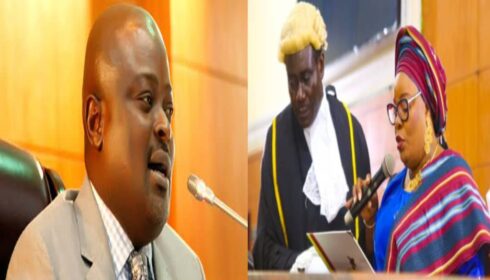
Lagos State House of Assembly has rejected the leadership of Honourable Mudashiru Obasa and made it clear that they stand by the current Speaker, Honourable Meranda. The decision came after a series of intense closed-door discussions and heated debates within the state assembly. Lawmakers have expressed unwavering confidence in Meranda’s leadership, despite mounting pressure from Obasa’s camp. This bold stance is not just a personal preference but a reflection of deeper political currents within Lagos State.
Sources close to the assembly have revealed that the lawmakers’ defiance stems from concerns about Obasa’s controversial actions in the past and a belief that Meranda has successfully navigated the challenges of governance with greater transparency. The split in the House has put the Lagos political elite on edge, as this development comes at a time when the state is facing significant challenges, including economic pressures, infrastructure issues, and a growing demand for improved public services. The battle for leadership in the Lagos State House of Assembly is now seen as a test of power between two of the state’s most influential political figures.
The Struggle for Control: Obasa vs. Meranda
The rivalry between Obasa and Meranda has escalated into a power struggle that seems to have divided the legislative body down the middle. Obasa, who previously held the position of Speaker, has a long history of wielding power within the Assembly. However, recent events have painted him in a negative light, with accusations of financial mismanagement and lack of accountability. On the other hand, Meranda is seen as a more reform-minded individual, focused on improving the welfare of the people of Lagos through legislative action.
Obasa’s camp, however, argues that Meranda’s approach to leadership has been too passive and has failed to secure substantial progress in some key legislative agendas. They point to issues such as delayed budget approvals and a perceived lack of cohesion within the Assembly. As the conflict continues to grow, the question of who controls the Lagos State House of Assembly could determine the future direction of the state, both politically and economically.
Political Allegiances and Backdoor Deals in the Assembly
In a move that many see as politically strategic, several influential members of the Lagos State Assembly have aligned themselves with Honourable Meranda. These lawmakers argue that Meranda’s leadership has brought stability to a volatile political climate and that his tenure represents a break from the old guard that has dominated the Assembly for years. There is widespread speculation about backdoor deals being struck in the form of informal coalitions, with members exchanging political favors to ensure Meranda’s continued leadership.
The political gamesmanship surrounding this issue has raised questions about the integrity of the legislative process in Lagos. Critics of the situation argue that these deals undermine the democratic process, as elected officials may prioritize personal gain over the needs of their constituents. However, supporters of Meranda counter that these alliances are a necessary part of navigating Lagos’ complex political environment and ensuring that the state moves forward despite internal discord.
Public Reactions: A Divided Electorate
Public opinion on the leadership struggle in the Lagos State House of Assembly has been mixed. While some residents express support for Meranda, citing his more approachable and transparent style, others argue that Obasa’s experience and political clout make him the better option for the role. This division is especially apparent on social media, where heated debates over the legitimacy of the lawmakers’ actions have sparked widespread attention. Many are questioning the motives behind the lawmakers’ decisions and whether their choices align with the needs of the people they represent.
Lagosians, known for their keen interest in politics, have expressed frustration over what they perceive as an internal power struggle that could ultimately delay the state’s progress. Some fear that the ongoing conflict within the Assembly will distract lawmakers from focusing on essential matters such as economic development, healthcare reform, and public safety. As a result, calls for greater transparency and accountability in the decision-making process have gained momentum, with many citizens urging their representatives to prioritize the public good over partisan interests.
The Impact on Governance: Challenges Ahead for Meranda
If Meranda succeeds in maintaining his position as Speaker, his leadership will be closely scrutinized as Lagos faces mounting challenges. His administration will have to navigate difficult economic times, manage the fallout from the ongoing conflict within the Lagos State House of Assembly, and address growing public demands for better infrastructure and public services. Some experts believe that Meranda’s leadership style, which focuses on inclusivity and dialogue, will help steer the Assembly through these turbulent waters, but it will require careful negotiation and a strong commitment to legislative action.
On the other hand, should Obasa find a way to reassert control, the shift in leadership could bring about a more aggressive and top-down approach to governance. Critics of Obasa’s tenure argue that his leadership style was often authoritarian, leading to stagnation in some areas of the state. However, his supporters contend that he has the political acumen and resources needed to drive Lagos forward. The coming weeks will be crucial in determining whether Meranda can continue to lead the Assembly or if Obasa will reclaim his former position of power.
The Future of Lagos Politics: What Comes Next?
As the battle for control of the Lagos State House of Assembly rages on, the future of Lagos politics hangs in the balance. The outcome of this struggle will have significant implications for the state’s governance, economic growth, and social development. Political analysts are watching closely, as the results of this power struggle could signal broader shifts in the political landscape of Lagos and beyond. Will Meranda’s reforms bring the desired change, or will Obasa’s political network prove too strong to overcome?
This power struggle also raises questions about the role of political parties and their influence over legislative outcomes. Some observers have noted that the internal dynamics within the Lagos State House of Assembly reflect a broader pattern of fragmentation within Nigeria’s political landscape, with factions within parties increasingly playing a dominant role in shaping national and regional policies. The next chapter in Lagos’ political saga will likely set the stage for future battles that could reshape the state’s political architecture for years to come.
Table of Contents
Discover more from OGM News NG
Subscribe to get the latest posts sent to your email.