
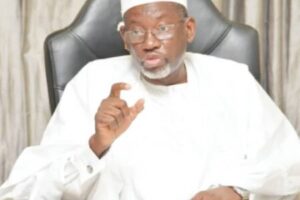


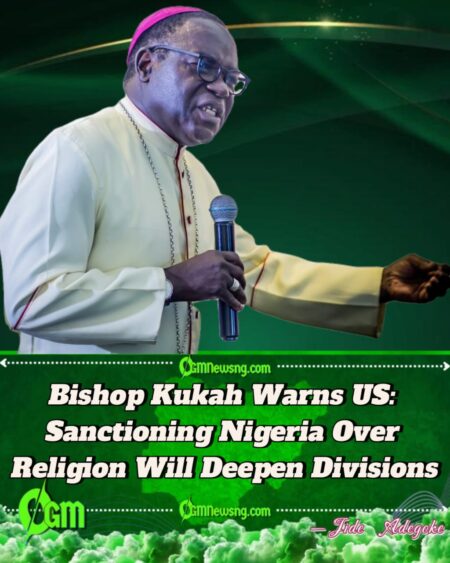
Matthew Kukah, the Catholic Bishop of the Sokoto Diocese, has appealed to the United States government not to redesignate Nigeria as a “Country of Particular Concern” (CPC). The bishop made this call on Tuesday at the launch of the Aid to the Church in Need (ACN) 2025 Report on Religious Freedom in the World, held at the Augustinianum Hall in Vatican City.
The CPC designation, issued by the US government, identifies countries that engage in “systematic, ongoing, egregious violations of religious freedom.” Kukah argued that such a move against Nigeria at this time would worsen existing divisions and hinder efforts to promote peace and understanding among the country’s diverse religious groups. He cautioned that punitive measures or sanctions tied to such a designation would deepen distrust and escalate social tensions.
Matthew Kukah: The Label Could Undermine Peace Efforts
Matthew Kukah, the Catholic Bishop of Sokoto, said that ongoing efforts to address religious and communal challenges in Nigeria would be undermined if the US government proceeds with the redesignation. He emphasized that Nigeria’s situation, while complex, is being managed through dialogue, reconciliation initiatives, and community-driven peacebuilding efforts that require global support rather than external condemnation.
Kukah pointed out that recent claims of a “Christian genocide” in Nigeria were often exaggerated or politically motivated. He noted that while violence has affected many communities, including Christians and Muslims alike, the narrative of systematic persecution distorts the reality on the ground and risks internationalizing local conflicts. He appealed for a more balanced understanding of Nigeria’s internal struggles and the progress being made toward rebuilding trust between faith groups.
Kukah: Buhari’s Era Marked a Low Point in Interfaith Relations
Matthew Kukah, the Catholic Bishop of Sokoto, reflected on Nigeria’s recent past, describing the administration of the late former President Muhammadu Buhari as “the worst phase in the history of interfaith relations in Nigeria.” He cited widespread violence against Christians, their exclusion from power, and perceived government indifference as key factors that eroded national unity.
However, Kukah noted that the current leadership and civil society actors have been making renewed efforts to bridge religious divides and foster inclusion. He urged the international community, especially the United States, to encourage these positive developments through engagement, partnership, and support rather than punitive classification. According to him, “Nigerians today feel vulnerable and unprotected irrespective of their faith, ethnicity, or social class,” and the focus should be on building mutual security rather than amplifying sectarian fears.
Table of Contents
Discover more from OGM News NG
Subscribe to get the latest posts sent to your email.