









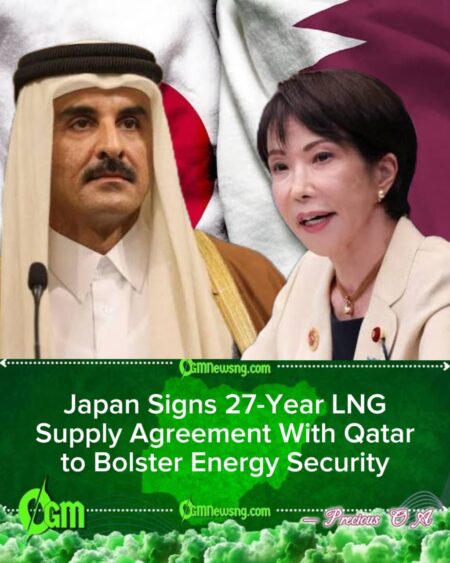
Japan has signed a 27-year agreement to purchase liquefied natural gas from Qatar, marking one of the longest energy supply contracts in the country’s history. The deal is intended to provide long-term stability for Japan’s energy needs amid shifting global markets and ongoing geopolitical uncertainty.
The agreement involves annual LNG shipments that will supply Japanese utilities over nearly three decades, reinforcing the country’s strategy of securing dependable energy sources through diversified partnerships. Officials described the contract as a cornerstone of long-term planning.
Government representatives said the deal reflects lessons learned from recent supply disruptions, emphasizing the importance of predictable energy flows for economic stability and industrial continuity.
Details of the LNG Supply Arrangement
Japan will receive LNG from Qatar’s North Field expansion projects, which are among the largest natural gas developments globally. The contract includes fixed volumes with pricing structures linked to international benchmarks.
The agreement was finalized between Japanese energy companies and QatarEnergy, the state-owned energy firm, following extended negotiations. Both sides highlighted mutual reliability and long-standing commercial ties.
Industry analysts noted that the length of the contract signals confidence in LNG’s continued role in the global energy mix, even as countries invest heavily in renewable alternatives.
Energy Security and Strategic Planning
Japan has long relied on imported energy resources due to limited domestic production, making supply security a central policy concern. LNG plays a critical role in powering electricity generation and supporting industrial output.
Following the 2011 Fukushima nuclear disaster, LNG imports increased significantly, reshaping the country’s energy portfolio. While nuclear power has gradually returned, LNG remains indispensable.
Energy planners say long-term contracts help shield consumers from market volatility and ensure stable pricing, particularly during periods of heightened geopolitical tension.
Japan and the Broader Asia-Pacific LNG Market
Japan remains the world’s largest LNG importer, and its purchasing decisions influence global trade patterns. The deal with Qatar reinforces Asia’s central role in LNG demand growth.
Japan’s commitment also supports Qatar’s strategy to secure long-term buyers as it expands production capacity over the next decade. The arrangement strengthens bilateral economic relations.
Market observers say the agreement may encourage similar long-term contracts across the region as countries seek certainty amid energy transition pressures.
Global Implications of the Long-Term Deal
Japan’s agreement comes as global energy markets adjust to supply realignments caused by geopolitical conflicts and shifting trade routes. Long-term contracts are increasingly viewed as stabilizing mechanisms.
Producers benefit from guaranteed demand, while buyers gain predictability, creating a mutually reinforcing structure that supports investment and infrastructure development.
The deal may also influence pricing trends, as long-duration contracts often moderate exposure to short-term price spikes seen in spot markets.
Outlook for Energy Transition and Policy Balance
Japan continues to pursue decarbonization goals, including expanded renewable energy deployment and hydrogen development. Officials stressed that LNG is viewed as a transitional fuel supporting that shift.
Japan is expected to balance long-term LNG commitments with investments in cleaner technologies, ensuring energy security while progressing toward emissions reduction targets.
Japa’s approach highlights the challenge many advanced economies face: maintaining reliable energy supplies while navigating the complexities of a global energy transition.
Table of Contents
Discover more from OGM News NG
Subscribe to get the latest posts sent to your email.