








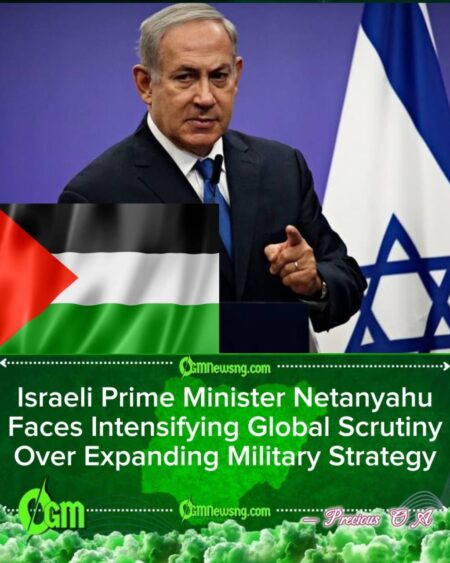
Israeli Prime Minister Benjamin Netanyahu has declared that there will “never be a Palestinian state,” a statement that has immediately intensified global debate over the long-standing conflict and further complicated diplomatic efforts already under strain. His sharp and sweeping remarks have been interpreted as a definitive rejection of a decades-old diplomatic vision, and world officials are now attempting to understand the deeper motivations and consequences behind such a bold stance in a moment already characterized by political instability and strategic uncertainty.
Netanyahu’s remarks arrive during a period when world leaders are attempting to revive diplomatic initiatives, creating renewed uncertainty about whether any progress can be achieved in the near future. The timing of such a forceful announcement has left diplomats questioning whether any meaningful negotiations can proceed under this hardened posture, particularly because multiple international envoys had been preparing proposals intended to revive stalled discussions. As these newly revived conversations collide with Netanyahu’s unyielding declaration, many fear that the delicate diplomatic momentum may evaporate entirely.
Netanyahu’s declaration has already prompted analysts to warn that regional and global positions may harden, making negotiations increasingly difficult. Observers note that even small shifts in rhetoric can dramatically alter the political terrain in the region, and Netanyahu’s sweeping rejection of Palestinian statehood has the potential to set off a chain reaction of recalibrations across numerous capitals. Experts now believe the path ahead may be marked by heightened caution, reduced flexibility, and a narrowing of possible diplomatic openings.
Reactions Across the Middle East
Netanyahu’s statement has drawn strong criticism from several Middle Eastern governments, many of whom consider it a direct rejection of a decades-long international framework for peace. Leaders across the region, some already navigating domestic unrest and complicated alliances, now face the added challenge of responding to a declaration that undermines what many believed was the baseline structure for resolving the conflict. The frustration expressed by these governments suggests that diplomatic relations in the Middle East could experience fresh strain.
Netanyahu’s firm wording is also influencing internal political discussions among neighboring states as leaders assess how this stance may reshape long-term regional alliances. Some analysts suggest that countries which once positioned themselves as mediators may need to rethink their role, while others could seek to strengthen new coalitions in response to Israel’s firm opposition to Palestinian sovereignty. These shifting dynamics contribute to an increasingly unpredictable political environment.
Leaders across the region warn that Netanyahu’s refusal to consider Palestinian statehood could escalate existing tensions and undermine upcoming diplomatic gatherings. Several nations had been preparing for high-level talks aimed at de-escalation, but the climate surrounding those events may now be significantly more confrontational. There is growing concern that efforts to stabilize the region could be overshadowed by disputes stemming from this highly consequential declaration.
Global Partners Express Concern
Netanyahu’s comments have unsettled numerous Western partners who continue to support a two-state solution as the foundation for long-term peace. These governments have long maintained that both Israelis and Palestinians must have viable pathways toward sovereignty and coexistence, and Netanyahu’s absolute phrasing has forced them to reconsider how closely their policies can align with current Israeli positions. Several officials have expressed quiet concern that this stance could complicate years of diplomatic investment.
International organizations have called for clarity as they attempt to interpret whether Netanyahu’s words reflect a permanent policy shift or a strategic domestic message. Many institutions involved in regional mediation require stability and predictability, and the ambiguity surrounding whether this represents tactical rhetoric or definitive policy creates towering challenges for organizations charged with maintaining peace efforts, coordinating humanitarian support, and monitoring ceasefire conditions.
Netanyahu’s position has left humanitarian groups concerned about future coordination, particularly in areas involving conflict mitigation and aid delivery. Many of these organizations depend on open communication and good-faith cooperation from all parties, and the firm rejection of Palestinian statehood introduces the possibility of increased obstacles to resource access, protection efforts, and long-term planning for vulnerable communities.
Impact on Palestinian Leadership
Netanyahu’s stance has been met with immediate condemnation from Palestinian officials, who argue that the statement confirms long-standing fears about Israel’s unwillingness to support sovereign recognition. These officials describe the comments as a direct blow to their people’s aspirations for independence and a significant setback to decades of painstaking diplomatic engagement meant to secure basic political and territorial rights.
Public sentiment in Palestinian territories has intensified following Netanyahu’s remarks, with many residents warning that prospects for a negotiated future now appear increasingly remote. Communities already strained by economic hardship and security challenges are reacting with deep frustration, believing that diplomatic options are shrinking while their daily lives become more constrained by the failure to establish a clear political horizon.
Civil groups throughout the region suspect that Netanyahu’s declaration may hinder any short-term progress and further inflame existing grievances. They argue that entrenched positions on both sides could lead to increased volatility and discourage younger generations from believing in diplomacy as a viable path forward, creating long-term risks for regional stability.
Implications for U.S. Diplomatic Efforts
Netanyahu’s refusal to consider Palestinian statehood places U.S. diplomats in a challenging position as they work to maintain regional stability while balancing multiple international expectations. The United States, traditionally seen as a crucial intermediary between Israelis and Palestinians, must now navigate the widening gap between its foreign policy objectives and the increasingly rigid rhetoric emerging from the Israeli leadership.
Netanyahu’s position is prompting new discussions in Washington, where policymakers are evaluating how his words may affect ongoing diplomatic strategies in the Middle East. Senior officials are reportedly reviewing both current initiatives and long-term commitments, concerned that U.S. efforts could be undermined if regional partners view American strategy as misaligned with evolving realities.
Several U.S. legislators have expressed concern that Netanyahu’s latest remarks may complicate American interests and undermine long-term peace objectives. Lawmakers are seeking comprehensive briefings to assess how potential diplomatic fallout could influence American influence, strategic partnerships, and regional security planning.
Broader Impact on Future Peace Prospects
Netanyahu’s declaration introduces new uncertainty into the future of peace negotiations, potentially delaying diplomatic progress for years. Experts warn that once leaders adopt uncompromising positions, the structural foundation for productive talks can weaken dramatically, requiring enormous efforts to reconstruct trust and shared purpose.
Netanyahu’s opposition to Palestinian statehood is expected to embolden hard-line factions on all sides, reducing incentives for compromise and increasing political polarization. Such polarization often spills into public opinion, making governments less willing to take risks required for breakthroughs and more prone to reinforcing rigid positions.
International observers fear that Netanyahu’s position may force global mediators to reconsider traditional diplomatic frameworks, given the increased difficulty of achieving consensus. There is speculation that alternative approaches may need to be drafted, though the viability and acceptance of such approaches remain deeply uncertain amid worsening regional tensions.
Table of Contents
Discover more from OGM News NG
Subscribe to get the latest posts sent to your email.