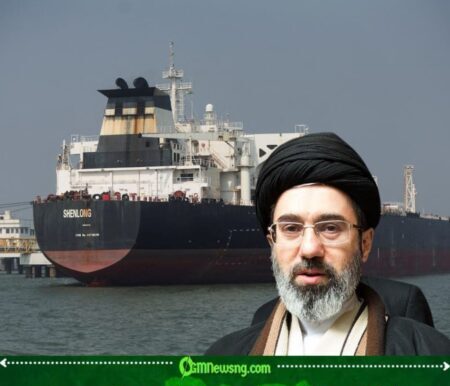









Iran warned the United Kingdom that sending warships to the Strait of Hormuz could provoke a military response, escalating tensions in one of the world’s most strategically important waterways. Iran stated that any country joining naval operations against it in the region could face retaliation if it perceives the move as a direct threat to its security.
The warning comes amid rising geopolitical tensions linked to the broader conflict involving Iran, the United States, and Israel. Military activity around the Persian Gulf has intensified in recent weeks, increasing concerns about the safety of international shipping routes.
The Strait of Hormuz remains a vital corridor for global energy supplies, with roughly one-fifth of the world’s oil passing through the narrow waterway connecting the Persian Gulf with international markets.
Rising Tensions Around the Strategic Waterway
Iran has repeatedly emphasized that it views the strait as an area of strategic importance and has warned that foreign military activity there could be interpreted as hostile. Iran said its armed forces are prepared to respond if outside navies attempt to challenge its control or threaten its interests in nearby waters.
Security incidents involving commercial vessels and military patrols have increased in the region, contributing to an atmosphere of uncertainty among shipping companies and governments. Several ships have been damaged or targeted during recent confrontations in the broader Gulf region.
Analysts note that any military confrontation in the Strait of Hormuz could have far-reaching consequences for international trade and global energy markets.
Iran Issues Direct Warning to Britain
Iran reiterated its warning specifically toward the United Kingdom as discussions about international naval escorts continued. Iran said that participation by foreign navies in operations aimed at countering Iranian actions could be viewed as a direct escalation of the conflict.
British officials have indicated that they are carefully evaluating their response to growing tensions in the Gulf. Some policymakers in London have emphasized the need to avoid actions that could widen the conflict.
They has previously signaled that vessels linked to the United States or its allies may be considered legitimate targets if Tehran believes they threaten Iranian interests in the region.
Strategic Importance of the Strait of Hormuz
The Strait of Hormuz is widely regarded as one of the most critical chokepoints in global energy transportation. Every day, large volumes of crude oil and liquefied natural gas pass through the narrow channel toward markets in Asia, Europe, and other regions.
Because of its significance to international energy supplies, the waterway has long been a focal point of geopolitical tensions. Even temporary disruptions can affect oil prices and global economic stability.
Military strategists often describe the strait as both strategically vital and geographically vulnerable due to its narrow width and heavy shipping traffic.
Iran Maintains Defensive Position
Iran said its military posture in the region is intended to defend national sovereignty and prevent foreign interference in nearby waters. Iran insisted that outside military forces entering the strait with hostile intentions would face consequences.
Tehran has long argued that security in the Persian Gulf should primarily be handled by regional countries rather than external powers. Iranian leaders frequently emphasize the importance of sovereignty and territorial control over surrounding waters.
They also maintains a large fleet of fast attack boats and coastal defense systems capable of operating within the narrow confines of the strait.
Global Concern Over Escalation
The growing tensions surrounding the Strait of Hormuz have prompted concern among governments and international organizations. Diplomats from multiple countries have called for restraint and renewed dialogue to prevent further escalation.
Shipping companies and energy markets are closely monitoring the situation, as any disruption to the strait could have immediate economic effects worldwide.
As diplomatic discussions continue, the possibility of increased military activity in the region remains a major concern for policymakers seeking to maintain stability in global trade and energy supplies.
Table of Contents
Discover more from OGM News NG
Subscribe to get the latest posts sent to your email.