









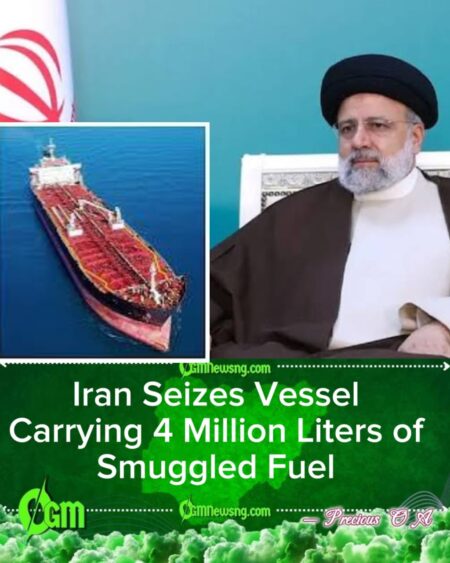
Iran reported that naval patrol units identified the suspicious ship during routine monitoring of shipping lanes commonly used by smugglers. Officials said the vessel exhibited irregular routing patterns and failed to provide complete documentation when approached, prompting a full inspection.
Iran stated that onboard inspections revealed massive storage tanks filled with refined petroleum products, far exceeding what would be expected for legitimate transport or private use. The volume — approximately four million liters — immediately raised red flags among maritime enforcement authorities.
Iran confirmed that the crew was detained for questioning, and the ship was escorted to a secure port where a more detailed forensic and customs investigation is now underway.
Why Fuel Smuggling Has Intensified
Iran has long struggled with fuel smuggling due to domestic subsidies that make gasoline and diesel significantly cheaper than in neighboring countries. This price gap creates lucrative opportunities for criminal networks.
Iran officials say smuggling rings exploit remote coastal routes and small private tankers to move fuel to foreign markets where resale profits can be enormous. The practice drains national resources and disrupts domestic supply chains.
Economists note that currency fluctuations, inflation, and sanctions-related supply limitations have further widened the incentive gap, making fuel trafficking one of the most persistent forms of black-market trade in the region.
National Security and Economic Concerns
Iran has framed fuel smuggling as both an economic and national security threat, citing its impact on government budgets and public welfare programs. Subsidized fuel is intended to support citizens, not illegal exports, officials argue.
Iran has also warned that smuggling routes are increasingly being used for other illicit activities, including weapons trafficking and organized crime logistics, heightening the strategic importance of maritime enforcement.
Security analysts say controlling fuel smuggling also reduces the ability of criminal groups to fund destabilizing activities, particularly in border and coastal provinces.
Regional Maritime Implications
Iran operates along one of the world’s busiest energy corridors, where commercial shipping, fishing vessels, and private tankers move through narrow maritime passages daily. This density creates ideal cover for smugglers.
Iran has expanded its radar, drone, and patrol vessel presence in recent years, significantly improving detection capabilities. Officials claim that the number of fuel seizures has steadily increased as a result.
Neighboring countries have quietly expressed concern that fuel smuggling networks can undermine their own energy markets, complicating regional fuel pricing and regulatory enforcement.
Legal Proceedings and Enforcement Measures
Iran confirmed that legal action will be taken against the ship’s operators, including potential prison sentences, asset forfeiture, and blacklisting from regional maritime registries.
Iran has introduced stricter documentation requirements and vessel-tracking mandates to prevent repeat offenses, including mandatory GPS transponders and digital cargo declarations.
Legal experts say the severity of penalties reflects the government’s desire to send a strong deterrent message to trafficking networks operating across the Gulf.
What Comes Next
Iran is expected to expand joint coastal surveillance programs and deploy additional fast-response units to high-risk smuggling corridors.
Iran may also revise subsidy structures and fuel distribution mechanisms to reduce black-market incentives, though such reforms remain politically sensitive due to public cost-of-living concerns.
As maritime monitoring intensifies, this latest seizure underscores a broader campaign aimed at protecting national fuel reserves, strengthening border security, and restoring tighter control over one of the region’s most profitable underground economies.
Table of Contents
Discover more from OGM News NG
Subscribe to get the latest posts sent to your email.