









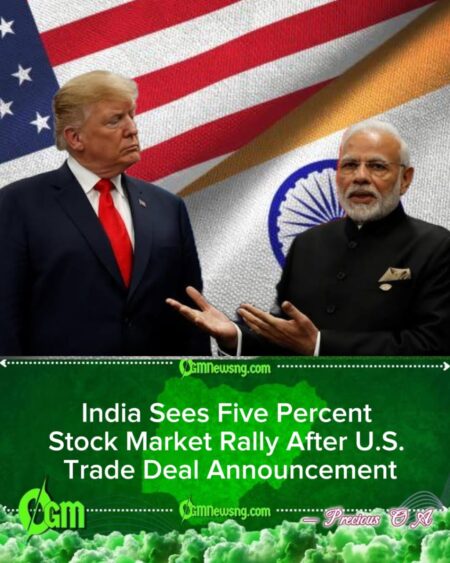
India recorded a sharp rally in its stock markets after the announcement of a new trade deal with the United States, with benchmark indices climbing roughly five percent in a single session. The surge reflected strong investor confidence in the economic implications of closer bilateral trade ties.
India’s market performance was driven by heavy buying across sectors, particularly banking, information technology, manufacturing, and export-oriented industries. Analysts noted that the scale of the gain suggested expectations of sustained benefits rather than a short-term reaction.
India’s financial regulators monitored trading activity closely as volumes surged, while market participants interpreted the rally as a sign of optimism about future growth and improved access to international markets.
India and the Scope of the Trade Deal
India is expected to benefit from provisions aimed at reducing tariffs, easing regulatory barriers, and expanding market access for key goods and services. Officials described the agreement as a step toward deeper economic integration with the United States.
India’s export sector was among the biggest beneficiaries, with investors anticipating increased demand for pharmaceuticals, technology services, and industrial products. The agreement was also seen as encouraging greater foreign direct investment.
Trade experts noted that the deal aligns with broader efforts to diversify supply chains and strengthen economic partnerships amid shifting global trade dynamics.
Sectoral Performance Across the Market
Financial stocks led the rally, with major banks posting significant gains as investors anticipated increased capital flows and improved credit conditions. Market strategists highlighted optimism about long-term economic stability.
Technology firms also saw strong momentum, reflecting expectations that enhanced trade cooperation would support services exports and cross-border digital commerce.
Manufacturing and infrastructure-related stocks advanced as well, supported by projections of higher demand and expanded industrial output under the new trade framework.
Investor Sentiment and Market Confidence
India’s market rally was underpinned by a noticeable shift in investor sentiment, with domestic and international funds increasing exposure to equities. Analysts pointed to renewed confidence in policy direction and economic resilience.
India’s currency remained relatively stable during the rally, suggesting that investors viewed the trade deal as supportive rather than disruptive to macroeconomic fundamentals.
Market observers emphasized that sustained gains would depend on effective implementation of the agreement and continued policy clarity from both governments.
Global and Regional Implications
The reaction in Indian markets was closely watched by investors across Asia, with some regional indices also showing modest gains. The development was interpreted as a signal of strengthening economic ties between major economies.
Economists noted that enhanced U.S.–India trade relations could influence global supply chains, particularly in sectors seeking alternatives to concentrated manufacturing hubs.
The agreement was also seen as reinforcing India’s position as a key player in international trade and economic diplomacy.
Outlook for Growth and Stability
India faces the challenge of translating market optimism into tangible economic outcomes, including job creation and industrial expansion. Policymakers have emphasized the importance of maintaining reform momentum.
They corporate sector is expected to benefit from greater predictability in trade policy, which could encourage long-term investment and expansion plans.
Indi’s markets will continue to track developments related to the agreement, with investors focusing on execution, regulatory alignment, and broader global economic conditions in the months ahead.
Table of Contents
Discover more from OGM News NG
Subscribe to get the latest posts sent to your email.