








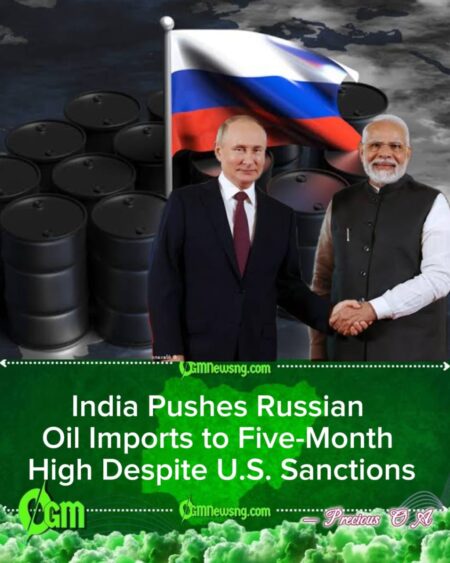
India has pushed its imports of Russian crude oil to a five-month high, underscoring New Delhi’s continued reliance on discounted energy supplies despite sustained U.S. and Western sanctions on Moscow. The rise highlights the complex balance India is attempting to maintain between safeguarding its energy security and navigating intensifying geopolitical pressures linked to the war in Ukraine.
India recorded a notable increase in Russian oil purchases over the past month, according to shipping and trade data, as refiners took advantage of competitive pricing. Analysts say the surge reflects a calculated economic decision rather than a shift in diplomatic alignment.
India has steadily emerged as one of Russia’s top crude buyers since European markets sharply reduced their purchases. This realignment has reshaped global oil flows, redirecting Russian barrels toward Asia.
Market observers note that the recent increase brings imports to their highest level in five months, reinforcing Russia’s importance to India’s evolving energy mix.
Drivers Behind the Increase
India has prioritized affordability in its crude procurement strategy as domestic fuel demand continues to grow alongside economic expansion. Discounted Russian oil has allowed refiners to protect margins while keeping retail fuel prices relatively stable.
Global oil price volatility, driven by geopolitical tensions and supply constraints, has further encouraged refiners to seek long-term, cost-effective sources. Russian grades have remained attractive under these conditions.
India has also benefited from flexible payment mechanisms and shipping arrangements that have enabled trade to continue despite sanctions-related hurdles.
Navigating U.S. Sanctions Pressure
India maintains that its oil purchases comply with international law and do not violate sanctions, which are not universally binding. Officials have repeatedly stated that national energy needs remain the primary consideration.
The United States has urged partners to reduce reliance on Russian energy, arguing that continued purchases undermine efforts to pressure Moscow economically. Diplomatic engagement between Washington and New Delhi has intensified as imports rise.
They has responded by emphasizing its strategic autonomy, stressing that it will not compromise energy security while remaining open to dialogue with allies.
Impact on India’s Energy Security
crude, making price stability a critical economic concern. Russian oil, often sold at a discount to global benchmarks, has helped cushion the impact of rising international prices.
India has diversified its supplier base over the years, but Russia’s growing share reflects current market realities rather than a permanent dependency, according to energy experts.
Refiners have adjusted blends and logistics to accommodate higher Russian volumes, demonstrating flexibility in managing supply chains under changing global conditions.
Global Oil Market Implications
India has become a central player in the reconfiguration of global oil trade, absorbing volumes once destined for Europe. This shift has altered tanker routes, insurance arrangements, and pricing dynamics.
Other Asian economies are closely watching India’s approach as they weigh similar trade-offs between economic advantage and geopolitical alignment. The trend has contributed to a more fragmented global energy market.
India’s purchasing patterns also influence global benchmarks, as sustained demand for Russian crude helps stabilize Moscow’s export revenues despite sanctions.
Outlook and Strategic Calculations
India is expected to continue balancing pragmatic energy decisions with diplomatic engagement, especially as sanctions regimes and global alliances evolve. Future import levels may fluctuate depending on price spreads and political developments.
Policy analysts suggest that New Delhi will seek to avoid overdependence on any single supplier, even as Russian oil remains economically attractive in the near term.
They approach illustrates how major emerging economies are navigating a multipolar world, where economic interests, strategic autonomy, and geopolitical pressures increasingly intersect in shaping energy policy.
Table of Contents
Discover more from OGM News NG
Subscribe to get the latest posts sent to your email.