






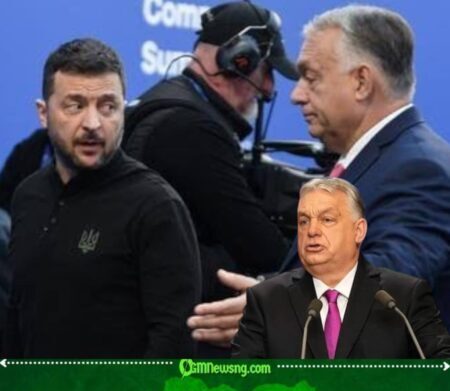
Hungary has moved to block the European Union’s proposed €90 billion financial assistance package for Ukraine, triggering renewed tensions within the bloc over how far collective support for Kyiv should extend. The decision places Budapest at odds with several member states that argue sustained funding is essential to Ukraine’s economic and military resilience.
Hungary’s government signaled that it would not support the loan in its current form, citing concerns about long-term financial commitments and the broader strategic direction of EU policy toward the conflict. Officials in Budapest have repeatedly emphasized national sovereignty and fiscal caution in their public statements.
The proposal, designed to stabilize Ukraine’s economy amid ongoing conflict and reconstruction needs, requires unanimous backing from EU member states. Without Hungary’s approval, the package cannot proceed under its present structure, intensifying diplomatic negotiations behind closed doors.
Political Calculations Within the Bloc
Hungary has often taken a distinct approach to EU foreign policy decisions, particularly those involving sanctions and financial commitments tied to the war in Ukraine. Analysts suggest that Budapest’s position reflects both domestic political calculations and strategic considerations about relations with Moscow and Brussels.
Hungary argues that further large-scale borrowing could strain EU finances and shift long-term burdens onto taxpayers across the bloc. Supporters of the loan counter that the costs of inaction—economic instability, migration pressures, and regional insecurity—could be far greater.
Diplomats from other EU countries have expressed frustration, noting that unity has been a cornerstone of the bloc’s response to the conflict. The standoff underscores the complexity of maintaining consensus among 27 member states with differing political priorities.
Economic Implications and Hungary’s Concerns
Hungary has raised questions about how the €90 billion would be structured, repaid, and monitored, calling for clearer accountability mechanisms. Officials contend that financial oversight must be rigorous to ensure funds are used effectively and transparently.
Hungary’s stance also reflects broader debates within the EU about shared debt instruments. While some leaders see collective borrowing as a tool for solidarity, others worry about precedent and long-term fiscal integration.
Economists warn that delays in funding could affect Ukraine’s currency stability, reconstruction efforts, and public services. However, they also acknowledge that financial packages of this magnitude require careful legal and economic safeguards.
Hungary and the Future of EU Unity
Hungary’s veto has reignited questions about decision-making rules within the EU, particularly the requirement for unanimity on major financial and foreign policy initiatives. Some policymakers argue that qualified majority voting should replace unanimity in certain cases to prevent deadlock.
Hungary maintains that its position is consistent with treaty rights and democratic accountability. Government representatives have emphasized that smaller member states must retain the ability to influence major financial decisions.
Observers note that the dispute could shape future debates about institutional reform, as the EU balances national sovereignty with collective action during crises.
Diplomatic Reactions Across Europe
Hungary’s move prompted swift responses from leaders in Germany, France, and other member states who reiterated their commitment to supporting Ukraine. They stressed that unity sends a powerful signal internationally.
Hungary has indicated openness to further negotiations, suggesting that adjustments to the proposal could reopen discussions. Behind the scenes, diplomats are reportedly exploring compromises that address Budapest’s fiscal concerns while preserving aid objectives.
The European Commission has refrained from public confrontation, instead emphasizing dialogue and the importance of maintaining cohesion. The situation highlights the delicate balance between consensus-building and urgent geopolitical realities.
Broader Geopolitical Stakes
Hungary’s decision comes at a time when global attention remains fixed on the trajectory of the war and the stability of Eastern Europe. The EU’s ability to deliver coordinated support is widely viewed as a test of its strategic credibility.
Hungary has argued that sustainable peace and long-term security require diplomatic engagement alongside financial assistance. Critics, however, contend that withholding funds may weaken Ukraine’s negotiating position.
The coming weeks will likely determine whether a revised proposal can bridge the divide. For now, the blocked loan underscores the enduring challenge of aligning national interests within a union facing one of the most significant geopolitical crises in its history.
Table of Contents
Discover more from OGM News NG
Subscribe to get the latest posts sent to your email.