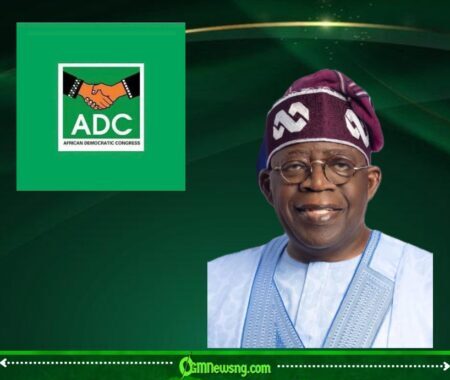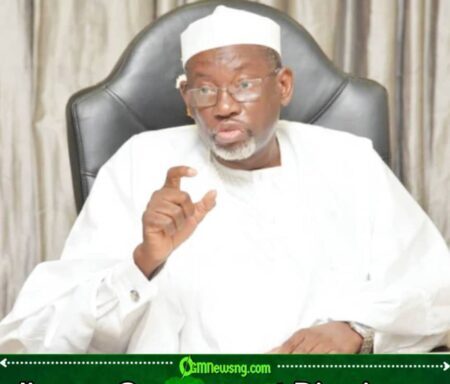




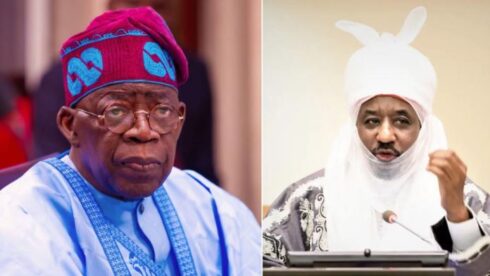
The once strong alliance between President Bola Ahmed Tinubu and the Emir of Kano, Muhammad Sanusi II, has deteriorated into a cold war. Once political allies, the two now find themselves on opposite sides due to political tensions over the Kano Emirate, conflicting views on governance, and legal battles. The breakdown of their relationship became evident when Muhammad Sanusi recently refused to assist the presidency in explaining its economic policies, prompting a sharp rebuttal from the federal government.
The Early Alliance: A Shared Opposition to Jonathan’s Administration
The bond between Tinubu and Sanusi was forged in 2013 when the latter, as Governor of the Central Bank of Nigeria (CBN), was dismissed by then-President Goodluck Jonathan. Sanusi had accused the Nigerian National Petroleum Corporation (NNPC) of failing to account for $20 billion in oil revenue, a revelation that made him a symbol of anti-corruption and a rallying figure for the opposition, led by Tinubu’s All Progressives Congress (APC).
Following his suspension, opposition leaders, including Tinubu, welcomed Sanusi back to Nigeria, cementing their political camaraderie. This alliance played a pivotal role in his ascension to the Kano Emirate throne in 2014, with support from prominent figures, including Tinubu. His appointment by then-Kano State Governor Rabiu Kwankwaso was seen as a direct challenge to Jonathan’s administration, reinforcing Sanusi’s role as a key opposition figure.
Muhammad Sanusi’s Activism and Dethronement by Ganduje
Despite assuming the traditional role of Emir, Sanusi did not shy away from political activism, particularly in advocating for good governance in Northern Nigeria. His outspoken criticism of Governor Abdullahi Ganduje of Kano State eventually led to his removal on March 9, 2020. He was subsequently banished to Nasarawa State, with Alhaji Aminu Ado Bayero installed as his successor.
Following his dethronement, former Kaduna State Governor Nasir El-Rufai remained a staunch ally of Sanusi, offering him appointments in Kaduna State institutions. El-Rufai’s continued opposition to the APC-led federal government may have influenced Sanusi’s growing discontent with Tinubu’s administration, according to political analysts. This shift became evident as Muhammad Sanusi moved from initially praising Tinubu’s economic policies to openly withdrawing his support.
Public Breakup: Economic Disagreements and Political Friction
In June 2023, Muhammad Sanusi met with President Tinubu and commended him for bold economic reforms, including fuel subsidy removal and exchange rate unification. However, months later, he reversed his stance, stating that while these policies appeared beneficial on paper, they failed to address the immediate struggles of ordinary Nigerians.
Speaking at the 12th Memorial Lecture of Chief Gani Fawehinmi, Sanusi declared that he would not explain Tinubu’s economic policies to Nigerians, stating, “I don’t want to help the government.” This unexpected withdrawal of support triggered a swift response from the federal government, with Information Minister Mohammed Idris insisting that Tinubu did not require Sanusi’s endorsement.
Presidential adviser Bayo Onanuga further criticized Muhammad Sanusi’s remarks, accusing him of allowing personal grievances to cloud his judgment. “His Highness has a responsibility to contribute constructively rather than undermine reforms aimed at collective progress,” Onanuga stated.
The Kano Emirate Legal Battle: The Final Straw
According to insiders, a key factor in the breakdown of Tinubu and Muhammad Sanusi’s relationship is the ongoing legal battle over the Kano Emirate. Ganduje, now the APC National Chairman, has openly supported Ado Bayero’s reinstatement, allegedly mobilizing federal resources to achieve this goal.
A Senior Advocate of Nigeria revealed that the presidency did not support Sanusi in his legal bid to retain the throne, aligning instead with Ganduje’s faction. “The presidency is backing Bayero and has used the Federal High Court against Sanusi, even though the Supreme Court has ruled that the High Court lacks jurisdiction over traditional rulership matters,” the source disclosed.
Additionally, political analysts suggest that Tinubu’s long-term strategy involves splitting Kano State ahead of the 2027 elections. Muhammad Sanusi’s perceived loyalty to Kwankwaso, a key opposition figure, has made him a political liability for the APC. Reports indicate that Bayero had private meetings with influential traditional rulers from the South-West before securing federal backing for his reinstatement.
Political Fallout and the Future of the Emirate
Observers note that the deepening political interference in the Kano Emirate crisis is eroding public trust in traditional institutions. While some believe Sanusi should have privately addressed his concerns with Tinubu, others argue that his critique reflects widespread frustration with the government’s economic policies.
Public affairs analyst Mustapha Kwaru commented, “Sanusi’s withdrawal of support for Tinubu mirrors the sentiments of many Nigerians struggling with inflation and unemployment. While his concerns are legitimate, the confrontational approach may further divide the polity.”
With the legal battle over the Kano Emirate still unresolved and Tinubu’s government firmly aligned with Bayero, the rift between the president and Sanusi appears irreversible. As the 2027 elections approach, the political significance of Kano State will only intensify, potentially widening the gap between the former allies.
Table of Contents
Discover more from OGM News NG
Subscribe to get the latest posts sent to your email.