







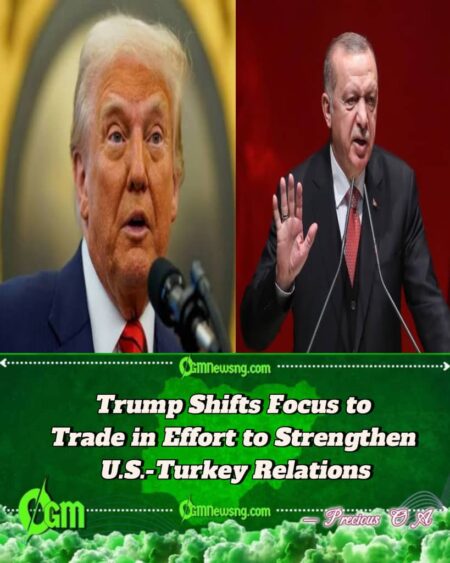
Trump is set to welcome Turkish President Recep Tayyip Erdoğan to the White House for discussions that will spotlight both economic cooperation and strategic diplomacy. The meeting is expected to reinforce the significance of U.S.-Turkey relations, which have long blended elements of partnership with recurring tensions. As NATO allies, the two nations share security commitments but often diverge on policy approaches, making the announcement of new trade agreements a focal point of this visit.
Trump has highlighted the upcoming trade deals as “major,” signaling that the agreements will cover sectors ranging from technology to defense-related industries. By framing the talks around economic progress, the administration aims to shift attention toward shared interests rather than disputes that have strained the relationship in recent years. Analysts suggest that this approach may provide both leaders with a political advantage while appealing to domestic audiences eager for tangible results.
Strategic observers point out that while trade may dominate the headlines, deeper challenges remain unresolved. Issues such as Turkey’s role in regional conflicts, human rights practices, and its independent foreign policy choices are likely to influence the outcome of discussions. Nevertheless, both sides appear intent on using the promise of economic growth as a bridge to strengthen ties.
Economic Agendas and Responses
Trump has repeatedly emphasized bilateral agreements as central to his vision of global trade. He argues that one-on-one negotiations allow the United States to secure stronger terms and greater benefits for American businesses and workers. The decision to prioritize Turkey reflects both economic opportunity and geopolitical calculation, particularly as Ankara seeks to assert its independence in regional affairs.
Trump’s pursuit of trade partnerships comes at a time when Turkey is looking to diversify its economic ties beyond Europe. Facing shifting alliances and economic pressures at home, Erdoğan has embraced opportunities to strengthen relations with Washington. A set of trade deals with the United States would not only boost Turkey’s economy but also reinforce its global standing as a strategic partner capable of balancing Western and regional interests.
Supporters of the administration’s approach argue that enhanced economic cooperation will create mutual benefits while reinforcing NATO’s collective security framework. By anchoring the U.S.-Turkey relationship in trade, they believe tensions in other areas can be managed more effectively. Critics, however, caution that economic agreements may mask unresolved disputes, leaving the alliance vulnerable to recurring instability.
Trump’s Diplomatic Calculations
Trump has presented the White House meeting as a demonstration of his ability to strengthen alliances while advancing America’s economic interests. This reflects his broader diplomatic style, which often combines bold promises with high-profile gestures designed to showcase leadership on the world stage. The promise of “major” trade deals fits neatly into this pattern, emphasizing speed and ambition.
Trump’s announcement has also prompted reactions from business leaders, who view the talks as an opportunity to expand investment and trade channels. U.S. industries connected to energy, defense manufacturing, and technology are watching closely, anticipating openings in Turkey’s growing markets. The administration has suggested that the deals will open doors for American companies while offering Ankara new avenues for development.
Trump’s decision to place economic cooperation at the center of discussions has drawn international attention. Allies within NATO are watching closely, given Turkey’s role as a pivotal member situated at the crossroads of Europe and the Middle East. Some European officials worry that a stronger U.S.-Turkey economic partnership could shift Ankara further away from its commitments to the European Union.
Observers suggest that while the trade deals may provide short-term wins, their long-term impact will depend on implementation and trust between the two governments. Success will require balancing economic ambition with the complexities of international diplomacy, a task that has historically challenged even the strongest U.S. administrations.
Table of Contents
Discover more from OGM News NG
Subscribe to get the latest posts sent to your email.