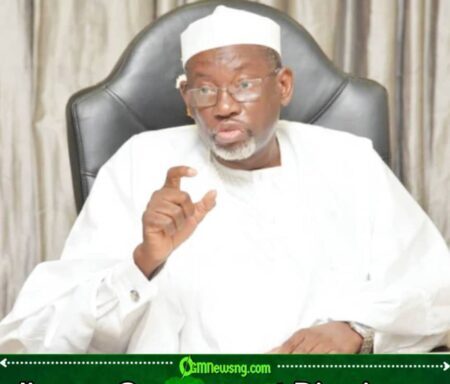






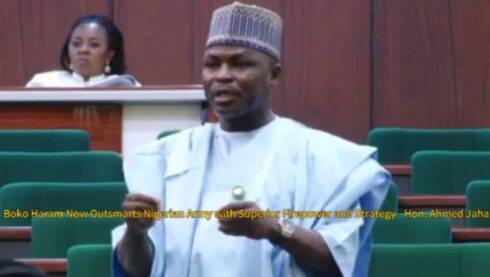
Honorable Ahmed Jaha, a member of the House of Representatives from Borno State, has issued a chilling warning regarding the resurgence of Boko Haram in the northeast. Speaking at a plenary session, Jaha declared, “Boko Haram is now more sophisticated and advanced than the Nigerian Army. They are gradually coming back with renewed strategies and precision.” His words shocked many lawmakers, reigniting fears of another wave of insurgent dominance in regions previously declared liberated.
Ahmed Jaha’s statement not only exposes vulnerabilities in Nigeria’s counter-insurgency efforts but also questions the capacity and commitment of the country’s military establishment. According to him, the insurgents have adapted to modern warfare techniques, with access to superior weaponry and intelligence-gathering tools. He warned that unless urgent measures are taken, the military may lose its grip on vast territories once again.
A Grim Comparison: Terrorists Versus Soldiers
Hon. Ahmed Jaha didn’t mince words when comparing the operational capabilities of Boko Haram to those of the Nigerian Army. “It is unfortunate that while our soldiers are still using outdated tactics and worn-out weapons, Boko Haram fighters are deploying drones, encrypted communication, and guerrilla strategies,” he said. This stark contrast has sparked concerns over how Nigeria’s defense budget is allocated and why its armed forces remain technologically backward.
The Borno lawmaker emphasized that the insurgents are not just better armed but also strategically disciplined. Unlike the past, when Boko Haram’s operations were characterized by chaotic ambushes, they now execute coordinated strikes with logistical efficiency, suggesting backing from external sources and advanced training. “This is no longer a band of rag-tag fighters. They operate like a shadow army,” Jaha warned.
Military Spending in Question Amid Rising Insecurity
The Nigerian federal government allocates billions of naira annually to defense, yet Hon. Ahmed Jaha questioned the transparency and effectiveness of these expenditures. “Where is the defense money going?” he asked during his address. He criticized the lack of accountability in military procurement processes, alleging that corruption may be undermining national security from within.
Jaha called for a forensic audit of defense contracts and military procurement over the last decade. “If the funds were rightly spent, there is no reason why terrorists should outmatch us,” he asserted. The growing sophistication of Boko Haram underlines an institutional failure that could only be reversed by radical reforms in military administration and an uncompromising stance against internal sabotage.
Northeast Civilians Caught in the Crossfire Again
According to Ahmed Jaha, communities in Borno, Yobe, and Adamawa States are reliving the trauma of insurgency. “There’s a creeping sense of déjà vu in the northeast. Locals are fleeing again. Towns are being surrounded again. Schools are shutting down again,” he lamented. He criticized the government’s premature declaration that Boko Haram had been “technically defeated,” calling it a dangerous narrative that lulled authorities into complacency.
He also revealed that many IDPs (Internally Displaced Persons) who had returned to their hometowns are now being displaced once more. “It is heartbreaking that people who tried to rebuild their lives are being forced to abandon their homes again due to renewed attacks,” Ahmed Jaha said. He called for emergency humanitarian assistance and a revised counterterrorism framework to protect civilians.
Intelligence Failure and the Role of External Forces
Ahmed Jaha condemned the Nigerian intelligence community for failing to anticipate and neutralize Boko Haram’s resurgence. He stressed the need for more collaboration with international intelligence agencies. “There’s a strategic intelligence blackout. Either we don’t have the tools, or someone is deliberately withholding information,” he said, raising eyebrows among fellow lawmakers.
He also hinted at possible foreign involvement in strengthening Boko Haram, suggesting that illicit arms flows and ideological indoctrination are being facilitated through porous borders. “We must treat this insurgency as a geopolitical chess game. Someone, somewhere is benefitting from this chaos,” Ahmed Jaha declared, urging the federal government to investigate international linkages more aggressively.
The Way Forward: A Call for National Mobilization
Concluding his remarks, Hon. Ahmed Jaha called for a national security summit involving former military chiefs, intelligence experts, and regional stakeholders. “We need an all-hands-on-deck approach. This is beyond the military. It’s about Nigeria’s survival as a sovereign entity,” he asserted. He warned that continued underestimation of the enemy would plunge the country into an irreversible security crisis.
He advocated for the deployment of modern warfare tools, reintegration programs for repentant militants based on proper screening, and aggressive community intelligence gathering. “We must reclaim not just our land but our people’s trust. Right now, even the most patriotic Nigerian in the northeast is beginning to doubt the state’s ability to protect them,” Jaha concluded solemnly.
Table of Contents
Discover more from OGM News NG
Subscribe to get the latest posts sent to your email.