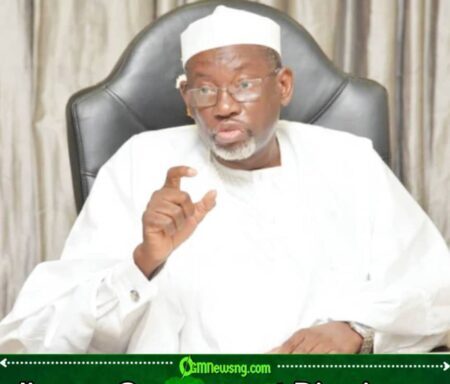






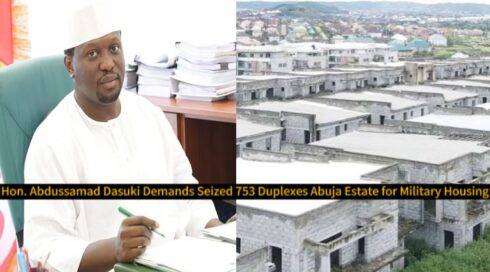
Hon. Abdussamad Dasuki, the federal lawmaker representing Kebbe/Tambuwal in Sokoto State, ignited national debate after urging the Federal Government to assign the recently confiscated Abuja estate—comprising 753 luxury duplexes and apartments—to the Nigerian military. According to Abdussamad Dasuki, such a move would rectify the glaring accommodation crisis in the Armed Forces and serve as a tangible gesture of national gratitude. He said, “We must ensure that those who keep us safe and their families have a decent place to lay their heads every night.”
Abdussamad Dasuki’s impassioned plea, delivered on the floor of the National Assembly, has resonated with many who view military welfare as a long-neglected national priority. However, critics argue that the call, though cloaked in patriotism, could be masking an agenda of political posturing or favoritism. They raise questions about the legality and ethics of reallocating seized property—originally acquired through illicit means—to an institution that should be insulated from political influences.
Unmasking the Estate: A Fortress of Corruption Turned Haven of Hope?
At the heart of this debate is the estate in Abuja—valued in the tens of billions of naira—originally linked to a former Central Bank of Nigeria (CBN) Governor. The Federal High Court ruled in favor of the government, transferring ownership due to evidence of extensive financial misappropriation. For many, the estate has come to symbolize the excesses of Nigeria’s elite and the deep-rooted corruption embedded in public institutions.
Yet, Abdussamad Dasuki insists that this same symbol of impunity can be repurposed into a beacon of national responsibility. “We must not allow this opportunity to address a critical area of military well-being to slip by,” he emphasized. But critics counter that transforming a property rooted in criminality into a military asset may set a dangerous precedent—an ethical compromise that sanitizes corruption through utility.
Military Housing Crisis: A National Shame in Uniform
Abdussamad Abdussamad Dasuki brought a long-simmering crisis back into the national spotlight—the deplorable state of military accommodation. From dilapidated barracks to overcrowded compounds, soldiers and their families often endure inhumane conditions despite risking their lives for national security. “By prioritizing the welfare of the Armed Forces and their families, national security will be strengthened,” Dasuki said, directly tying morale to mission readiness.
Independent audits by military advocacy groups reveal a housing deficit affecting over 45% of active-duty personnel. In this light, Dasuki’s proposal, while controversial, aligns with urgent national needs. Still, stakeholders argue that sustainable policy reform—not reactive redistribution of seized assets—is the real solution to the deep-rooted infrastructural decay plaguing Nigeria’s Armed Forces.
Legal Hurdles and Ethical Minefields in Asset Reallocation
While Abdussamad Dasuki’s suggestion appeals emotionally and strategically, the legal framework for reallocating confiscated assets remains murky. The Proceeds of Crime (Recovery and Management) Act does provide a legal basis for federal appropriation, but it also mandates transparency, due process, and multi-agency collaboration. Legal experts warn that bypassing these mechanisms for expedient reallocation could trigger lawsuits and damage the integrity of Nigeria’s anti-corruption institutions.
Moreover, civil society organizations argue that such high-value assets should be liquidated and the proceeds channeled into public trust funds—not handed over wholesale to another arm of government. This, they say, ensures broader public benefit and avoids the perception of selective reward or institutional favoritism that Dasuki’s proposal could unwittingly promote.
Public Reaction: Applause, Outrage, and Distrust Collide
The public response to Abdussamad Dasuki’s proposal has been sharply polarized. On social media, many Nigerians praised his boldness and practical thinking, calling the idea a rare display of political empathy for soldiers. Hashtags like #HomesForHeroes and #DasukiForTheTroops trended within hours of his address. “We will also be showing clearly to these gallant men and women who bear arms in our defence that we are indeed grateful for their service,” Dasuki reaffirmed.
Yet, others saw it as an opportunistic deflection from broader governance failures. Activists and economists argue that Nigeria’s tendency to treat corruption fallout as political bounty undermines the very justice system that produced the forfeiture. They warn that, without a strategic policy framework, such gestures—however well-intentioned—risk morphing into glorified tokenism.
The Bigger Picture: Military Welfare as a National Priority or Political Tool?
In conclusion, Hon. Abdussamad Dasuki’s proposal has opened a larger national conversation: should the welfare of the Armed Forces depend on political goodwill and incidental asset seizures? While his statements underscore a critical need—“our commitment to the wellbeing of those who keep us safe will be indubitable”—they also expose how Nigeria’s failure to institutionalize military support creates dependence on reactive, sometimes controversial decisions.
As lawmakers deliberate, the decision could set a far-reaching precedent. Will Nigeria seize this moment to initiate a holistic welfare strategy for its troops, or will this be yet another flashpoint in its long history of politicized resource allocation? The nation watches closely, caught between the echoes of Abdussamad Dasuki’s rallying cry and the shadows of a complex legal and ethical dilemma.
Table of Contents
Discover more from OGM News NG
Subscribe to get the latest posts sent to your email.