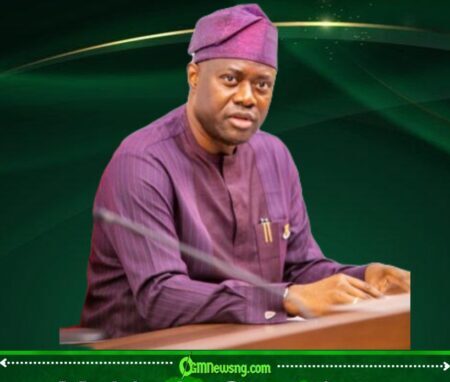






Governor Uba Sani, in a rare moment of political candor, openly admitted that Northern Nigeria’s political elite have failed their people over the past two decades. Speaking during a high-level policy forum in Kaduna, the governor stated, “When you’re fighting a government that you were part of, you contributed to the situation where it is today.” His blunt acknowledgment has sent shockwaves through the political establishment, drawing attention from national commentators, political analysts, and grassroots activists alike.
In a region long plagued by insecurity, poverty, and chronic underdevelopment, Governor Uba Sani’s admission represents an unusual act of self-reflection. He further urged former and current officeholders to accept collective responsibility. “Anybody from Northern Nigeria who held a political office in the last 20 years, all of us must look at ourselves in the mirror and apologize to the people of Northern Nigeria,” he declared. The governor’s bold statement has sparked widespread debate on the accountability of Northern leaders and the urgency of reform.
Kaduna’s Power Dynamics: Dismissal of SDP Stirs Political Rivalries
Governor Uba Sani’s disdain for opposition parties was just as striking. In the same address, he made a sweeping dismissal of the Social Democratic Party (SDP), questioning its relevance and strength in Kaduna State. “I think, for me in Kaduna, I can say that I haven’t seen any major opposition, to be very frank. So, SDP, what is SDP? Let’s be frank,” he said, sparking a flurry of responses from opposition figures across the state.
The governor’s remarks, while underscoring his perceived dominance in the political arena, have provoked strong reactions. SDP spokespersons accused him of arrogance and complacency, warning that underestimating emerging political movements could backfire. Critics argue that Sani’s confidence may reflect a wider issue of political insulation and detachment from the electorate’s evolving sentiments.
Political Accountability: A Turning Point or Mere Rhetoric?
Governor Uba Sani’s open call for Northern politicians to apologize has reignited a national conversation about accountability. While some applaud his courage to speak the truth, others view it as political posturing. For a sitting governor to lump himself with past and present leaders and admit failure is unprecedented, but skeptics question whether it will lead to tangible policy changes or merely fizzle as political theatre.
Policy analysts warn that words without concrete actions risk eroding public trust further. “Northern Nigeria needs more than apologies; it needs revolutionary governance,” said Dr. Amina Shehu, a political science lecturer. Sani’s remarks, though powerful, now place the spotlight squarely on his administration’s ability to deliver reforms, especially in critical sectors like education, healthcare, and security.
Rattling the Northern Establishment: Responses from Political Heavyweights
Reactions from across the Northern political class have been swift and divided. Some former governors and ministers took to media outlets to defend their records, subtly rebuking Governor Uba Sani for what they perceive as a populist strategy. Others, however, have cautiously echoed his sentiments, recognizing the region’s mounting socio-economic challenges and the growing disillusionment among the youth.
Former governor of Kano State, Ibrahim Shekarau, acknowledged the need for introspection but challenged Sani to match words with strategic action. Meanwhile, civil society groups have hailed the governor’s stance as a much-needed wake-up call. “For once, a Northern leader is publicly confronting the truth we’ve all whispered in private,” said Balarabe Musa Foundation spokesperson, Zainab Gambo.
Kaduna’s Development Dilemma: Walking the Talk Amidst Criticism
Governor Uba Sani’s administration now faces renewed scrutiny. His bold rhetoric has elevated expectations, with many demanding accelerated development efforts in Kaduna. While the governor has launched some infrastructure and security projects, critics argue that rural communities remain marginalized and urban poverty is intensifying.
The governor’s aides maintain that the administration is on course to fulfill its promises. However, opposition parties like the SDP and the PDP have seized the moment to question the state’s spending priorities, budget transparency, and public service delivery. With his own words echoing as a challenge, Uba Sani must now navigate a delicate path between political realism and genuine reform.
Implications for 2027: Shaping the Northern Political Narrative
Governor Uba Sani’s comments may have planted the seeds of a broader political reawakening. Analysts suggest his self-critical tone could either isolate him from the traditional power brokers or elevate him as a reformist voice ahead of the 2027 general elections. Either way, the political climate in the North is shifting, and Governor Uba Sani’s role could be pivotal.
With youths increasingly demanding change and digital media amplifying every political move, Governor Uba Sani’s controversial remarks may set a precedent for future political discourse. Whether this signals a new era of transparency or remains a fleeting headline depends on the governor’s next steps—and whether other leaders will follow his lead or cling to the old playbook of denial and deflection.
Table of Contents
Discover more from OGM News NG
Subscribe to get the latest posts sent to your email.