






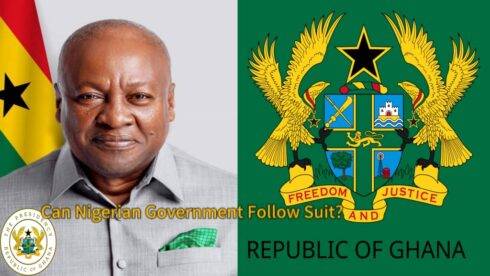
President John Mahama of Ghana has issued a groundbreaking directive prohibiting first-class travel for all government appointees. This decision is part of the government’s efforts to reduce public spending amid the country’s ongoing economic challenges. The directive highlights John Mahama’s firm commitment to fiscal responsibility and effective resource allocation.
Sources from the Presidency confirm that this cost-cutting measure has already been communicated to all ministries, departments, and agencies. John Mahama’s administration has emphasized immediate compliance as a step toward demonstrating financial prudence and setting a positive example for public sector governance.
President John Mahama’s Response to Economic Pressures
President John Mahama’s directive comes at a time when Ghana faces severe economic pressures, including rising inflation, currency depreciation, and growing public debt. The President’s administration has adopted stringent fiscal policies to stabilize the economy and rebuild public trust in government spending practices.
The travel ban is seen as a symbolic yet impactful response to these financial challenges. Economic analysts have commended John Mahama for demonstrating leadership in addressing the country’s fiscal crisis, emphasizing that such measures can free up funds for essential sectors, including healthcare and education.
President Mahama’s Leadership in Shaping Public Perception
President Mahama’s travel ban has the potential to reshape public perception of the government’s financial management. Citizens have frequently criticized the extravagant spending habits of government officials, viewing such practices as disconnected from the daily struggles of ordinary Ghanaians.
Political commentators believe that this directive strengthens John Mahama’s position as a leader willing to make difficult decisions in the country’s best interest. With elections on the horizon, the President’s move may bolster public trust and confidence in his administration’s commitment to economic recovery.
Compliance and Monitoring Under President John Mahama’s Watch
To ensure adherence to the first-class travel ban, President John Mahama’s administration is expected to implement rigorous monitoring mechanisms. These measures will include enhanced travel authorization protocols and regular budgetary audits to prevent violations.
The Chief of Staff’s office will oversee compliance and enforce disciplinary measures for any appointees found flouting the directive. John Mahama’s government aims to promote a culture of accountability by establishing these frameworks and discouraging attempts to bypass the policy.
Diverse Reactions to President John Mahama’s Decision
President John Mahama’s directive has sparked varied reactions from political stakeholders. While several government officials have praised the initiative as a demonstration of financial discipline, others have privately expressed concerns about the potential impact on international engagements.
Opposition parties have cautiously welcomed the travel ban but urged President John Mahama to implement comprehensive reforms beyond symbolic gestures. They argue that more holistic measures are necessary to tackle Ghana’s economic challenges and achieve sustainable fiscal stability.
Broader Implications of President John Mahama’s Leadership Decision
President John Mahama’s ban on first-class travel is part of a broader strategy to reform public sector operations and enhance financial discipline. Analysts believe that this directive could pave the way for further cost-cutting initiatives, including fleet management reforms and greater transparency in government procurement.
This move by Akufo-Addo is likely to influence governance practices across Africa as other leaders observe Ghana’s efforts to demonstrate fiscal responsibility. By leading by example, John Mahama is setting a precedent for effective governance and responsible resource management in the face of economic adversity.
Table of Contents
Discover more from OGM News NG
Subscribe to get the latest posts sent to your email.