






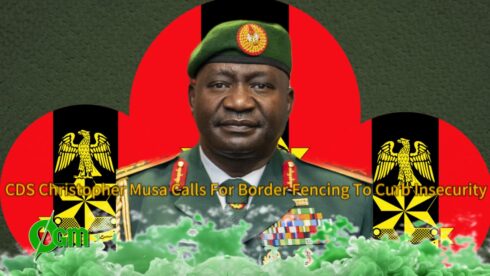
General Christopher Musa,The Chief of Defence Staff, has stirred national debate by urging a radical overhaul of the Nigerian Police Force. He emphasized that while increasing the number of officers is important, the key lies in adopting the rigorous and continuous training model used by the military. According to him, the armed forces, despite their limited manpower, remain effective because of the consistency and depth of their training programs.
This controversial recommendation, seen by some as a move toward militarizing civil policing, has been met with mixed reactions. While security experts laud the idea as timely, civil rights groups warn it may erode democratic policing principles. Christopher Musa’s statement challenges the status quo of conventional law enforcement in Nigeria, proposing a shift toward a more tactical, defense-oriented approach.
Urgent Call for Border Fencing Sparks Political Tension
In an alarming security advisory, General Christopher Musa called for immediate fencing of Nigeria’s land borders. He warned that the country faces imminent threats from unstable neighboring states like Niger, Burkina Faso, and Mali, where extremist violence is escalating. “All the countries around us do not share our ideology,” he stated, underscoring the urgency of physically protecting Nigeria’s territorial integrity.
The call has triggered fierce debate within policy circles. Critics question the feasibility and cost of fencing thousands of kilometers of porous borders, while others see it as a necessary shield against growing regional instability. Christopher Musa’s warning comes at a time of increased cross-border terrorism and migration crises, raising fresh concerns about Nigeria’s preparedness for spillover violence.
Killings in Sahel Could Spill Into Nigeria—Musa Warns
Citing the brutal insurgencies ravaging Niger, Mali, and Burkina Faso, Gen. Christopher Musa painted a grim picture of what Nigeria could face if proactive measures are not taken. “If these killings continue in the next one year, they will be an issue,” he cautioned, hinting at the possible regional contagion of terror and lawlessness.
His comments draw attention to the rapid rise of jihadist factions in the Sahel, many of which have links with global terrorist organizations. Nigerian defense analysts are beginning to sound the alarm that the country’s northern border states could become conduits or even battlegrounds if proactive strategies—like fencing and enhanced surveillance—are not implemented urgently.
Police React: ‘We Are Not Soldiers’—Internal Rift Brews
Within the Nigerian Police Force, Gen. Christopher Musa’s comments have not gone unnoticed. Senior police officials, speaking anonymously, expressed discomfort with the idea of adopting a military-style doctrine, saying it contradicts the community-policing mandate the force has been working to implement in recent years.
Rank-and-file officers also worry that such a shift could widen the gulf between police and citizens. Critics warn that transforming police officers into quasi-soldiers could lead to excessive force, abuse of power, and eroded public trust. “We need better funding and training, yes—but not at the cost of our civilian identity,” one officer remarked.
Experts Say Nigeria’s Border Crisis Is a Time Bomb
Security analysts have backed Gen. Christopher Musa’s border fencing proposal, citing Nigeria’s poor record of monitoring illegal migration and arms smuggling. They argue that border communities are fast becoming no-go zones for law enforcement and are vulnerable to influence from foreign insurgent groups.
However, some international observers argue that fencing is only a temporary fix and that broader regional cooperation is necessary. “You can build a wall, but if your neighbors are on fire, the smoke will still get in,” a West African policy expert noted. The long-term solution, they insist, lies in intelligence sharing, cross-border patrols, and economic cooperation.
Civil Society Groups Sound Alarm on Militarization
Human rights organizations have issued sharp warnings over Gen. Christopher Musa’s remarks, calling them a dangerous flirtation with authoritarianism. They fear that increased military influence in civilian affairs could roll back democratic gains and civil liberties in a country still healing from past military rule.
Some groups are already mobilizing to resist any policy that shifts Nigeria’s policing ethos toward combat readiness. “We understand the security challenges, but turning the police into a military extension is not the answer,” said the director of a leading civil society group. This brewing civil-military tension could define the next phase of Nigeria’s internal security debate.
Table of Contents
Discover more from OGM News NG
Subscribe to get the latest posts sent to your email.