




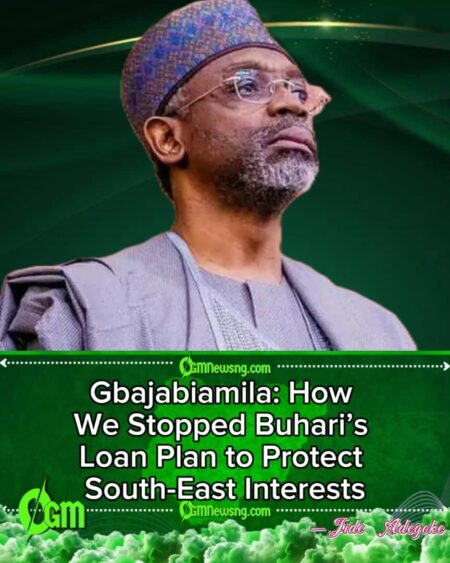
Femi Gbajabiamila, Chief of Staff to President Bola Tinubu, has disclosed that the House of Representatives under his leadership rejected a federal government request for foreign loans after discovering that the South-East region was excluded from the proposed projects. The former Speaker said he personally led months of negotiations to ensure equitable distribution of the loan-funded infrastructure across all geopolitical zones.
Gbajabiamila, who presided over the Green Chamber between 2019 and 2023 during the second term of former President Muhammadu Buhari, explained that lawmakers insisted on fairness as a condition for approval. According to him, the decision reflected the commitment of the ninth assembly to national unity and balanced development rather than partisan interests.
Both Femi Gbajabiamila and Lawmakers’ Stand for Equity
The presidential aide recounted that the loan proposal presented to the National Assembly contained several projects for other regions but left out the South-East entirely. He said many members considered the omission unacceptable and contrary to the principles of federal character. As Speaker, he directed relevant committees to engage the executive arm to correct the imbalance before any legislative approval could be considered.
He noted that the House endured pressure to pass the request quickly because of the country’s urgent infrastructure needs. However, the leadership maintained that borrowing in the name of all Nigerians must benefit every part of the country. “We could not in good conscience approve a facility that treated one region as if it did not exist,” he was quoted as saying.
Months of Negotiations with the Executive
Gbajabiamila explained that the disagreement led to prolonged consultations between the legislature and officials of the Buhari administration. Technical teams were asked to redesign the project list to accommodate roads, power, and social infrastructure in the South-East. The process, he said, lasted several months and delayed passage of the loan request.
Eventually, the executive yielded and included projects across the five South-East states, paving the way for approval. The former Speaker Femi Gbajabiamila described the outcome as a victory for democracy, stressing that the legislature must always act as a check on the executive in the interest of citizens.
Implications for National Unity
Political analysts have described Gbajabiamila’s revelation as significant amid ongoing debates about marginalisation and inclusive governance. Supporters argue that the stance taken by the ninth assembly demonstrated that elected representatives can rise above party lines to defend national cohesion. Critics, however, say the disclosure raises questions about how such an omission occurred in the first place.
Gbajabiamila urged current lawmakers to remain vigilant and ensure that future development financing reflects Nigeria’s diversity. He added that equitable infrastructure distribution remains critical to reducing regional tensions and promoting economic growth.
Table of Contents
Discover more from OGM News NG
Subscribe to get the latest posts sent to your email.